How to Protect a Rooftop Garden from Strong Wind
Wind is one of the biggest differences between gardening at ground level and gardening on a rooftop. If you want to protect a rooftop garden from wind, you need to reduce its force, support vulnerable plants, and use stable containers.
A plant that grows happily in a sheltered garden can behave very differently several floors above the street. Rooftop wind can dry containers faster, damage leaves, bend stems, break branches, and even move lightweight pots.
I learned this quickly in my own rooftop garden.
The solution is not to try to block every bit of wind. Instead, I reduce its force, support vulnerable plants, use stable containers, and pay attention to where different plants are placed.
With a few practical changes, even an exposed rooftop can support vegetables, fruit, herbs, and ornamental plants successfully.
Why Wind Is a Bigger Problem on Rooftops
Rooftops are often more exposed than balconies surrounded by neighbouring buildings.
Wind can move across an open roof with very little to slow it down.
This creates several problems for container plants:
- leaves lose moisture faster,
- potting mix dries more quickly,
- tall plants sway and bend,
- stems can break,
- fruit-heavy branches may need extra support,
- lightweight containers can move or tip over.
Wind damage is not always dramatic.
Sometimes the first sign is simply a plant that needs watering much sooner than expected.
At other times, one strong gust can break a branch that has been growing for months.
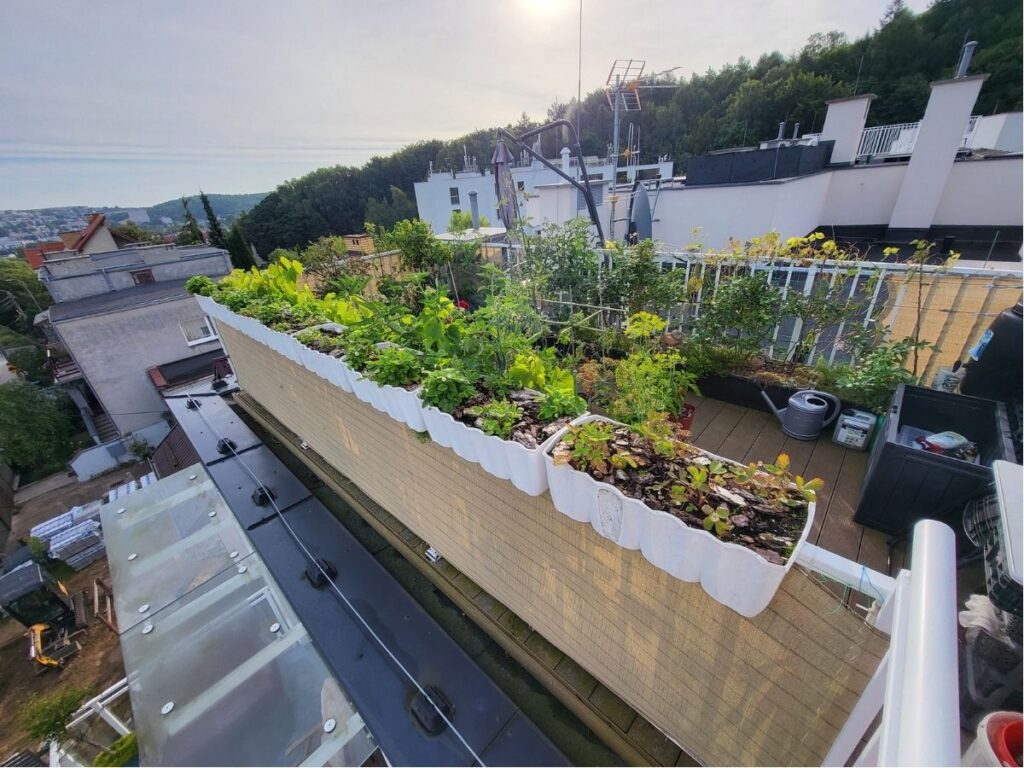
Rooftop gardens are exposed to open air from several directions, so reducing wind pressure around the growing area can make a big difference.
Start With a Windbreak Around the Rooftop
The simplest ways to protect a rooftop garden from wind is to reduce wind pressure around the growing area.
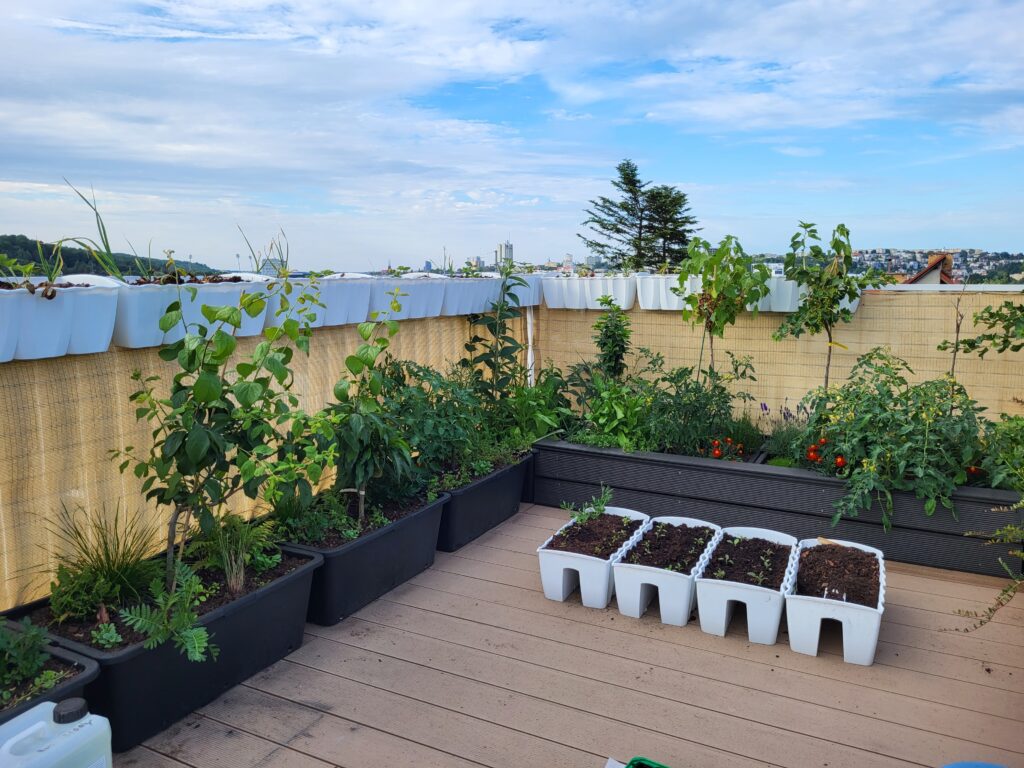
One of the most useful changes I made was adding a porous fabric screen around the rooftop railings.
The material does not create a completely solid wall.
That is important.
A permeable screen allows some air to pass through while reducing the force of the wind reaching the plants.
A completely solid sheet can catch much more wind and may create stronger turbulence around its edges. On an exposed roof, any screen or structure also needs to be securely installed and suitable for the building.
The goal is simple:
reduce wind speed, not build a sealed room around the garden.
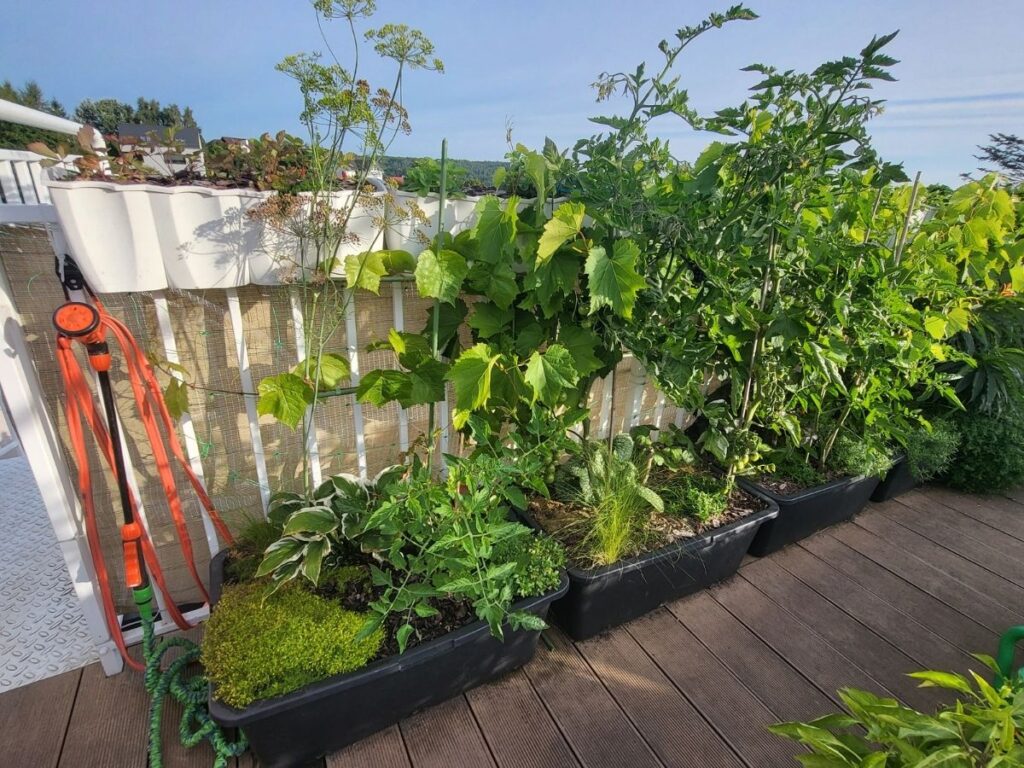
A porous screen around the railing helps reduce wind exposure while still allowing air to move through the rooftop garden.
Secure the Wind Screen Properly
A windbreak is only useful if it stays in place.
Wind constantly pulls, pushes, and vibrates material attached to a railing.
For that reason, the screen should be attached at several points rather than hanging from only one or two fasteners.
On my rooftop, the fabric is fixed directly to the railing so the load is distributed across several attachment points.
Check the attachments during the season.
UV exposure, movement, and weather can weaken cords, clips, or ties over time.
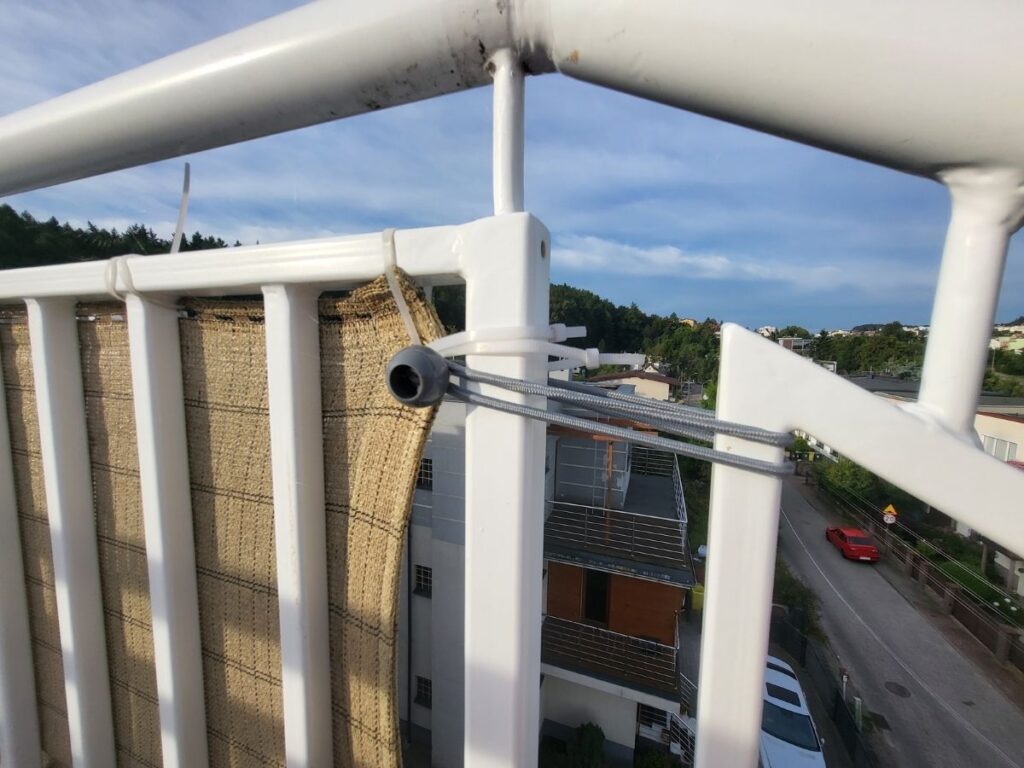
Wind screens should be fixed at several points so they cannot flap freely or pull heavily on one attachment.
Support Tall Plants Before They Need It
Tall plants are especially vulnerable on rooftops.
Tomatoes are a good example.
A young tomato plant may look sturdy, but later in the season it can become tall, heavy, and covered with fruit.
Waiting until the plant starts falling over is usually too late.
I install supports early and gradually secure the plant as it grows.
Useful supports include:
- wooden or bamboo stakes,
- metal stakes,
- vertical supports,
- horizontal crosspieces,
- plant cages,
- metal support rings.
The support should stabilize the plant without preventing natural growth.
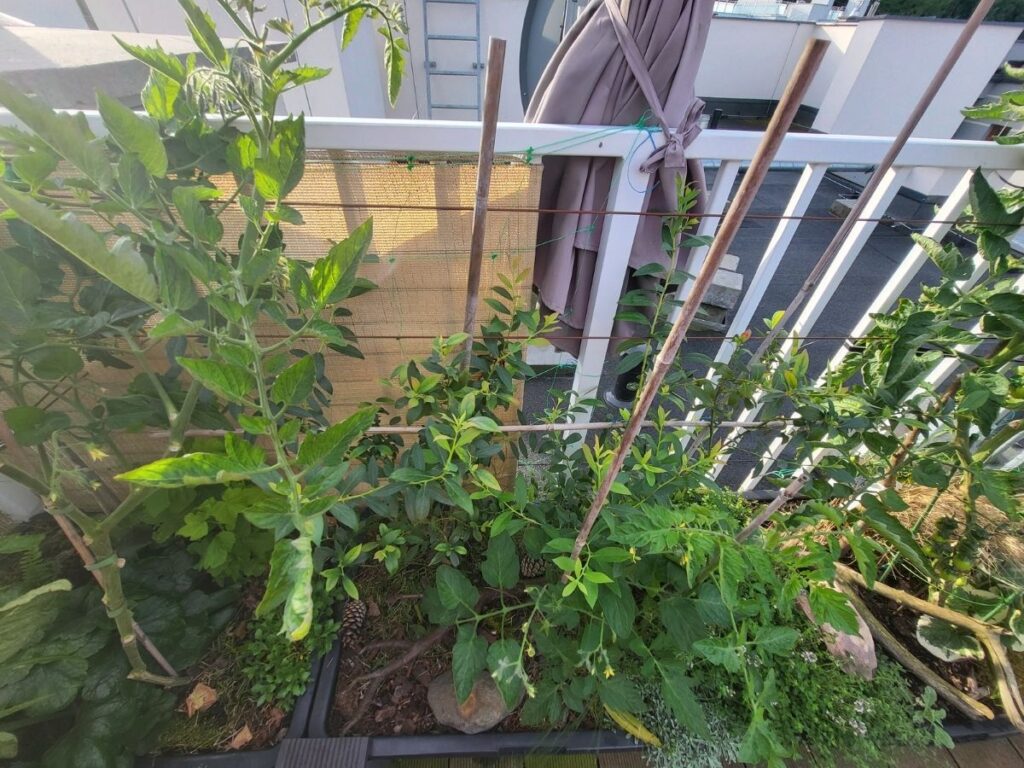
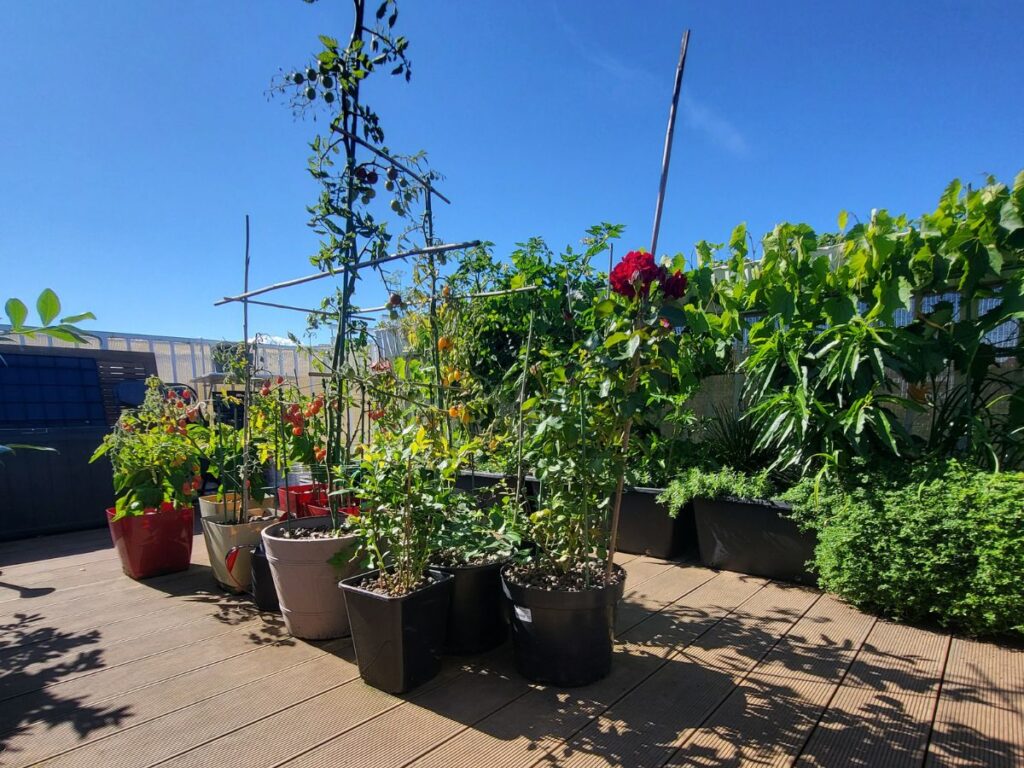
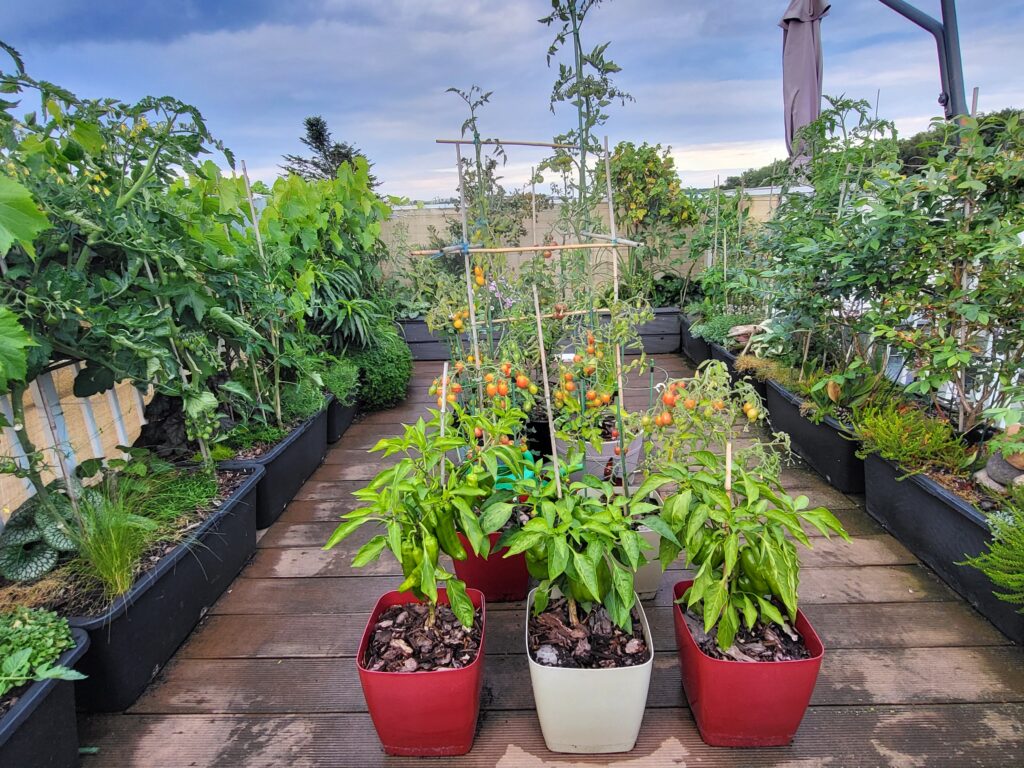
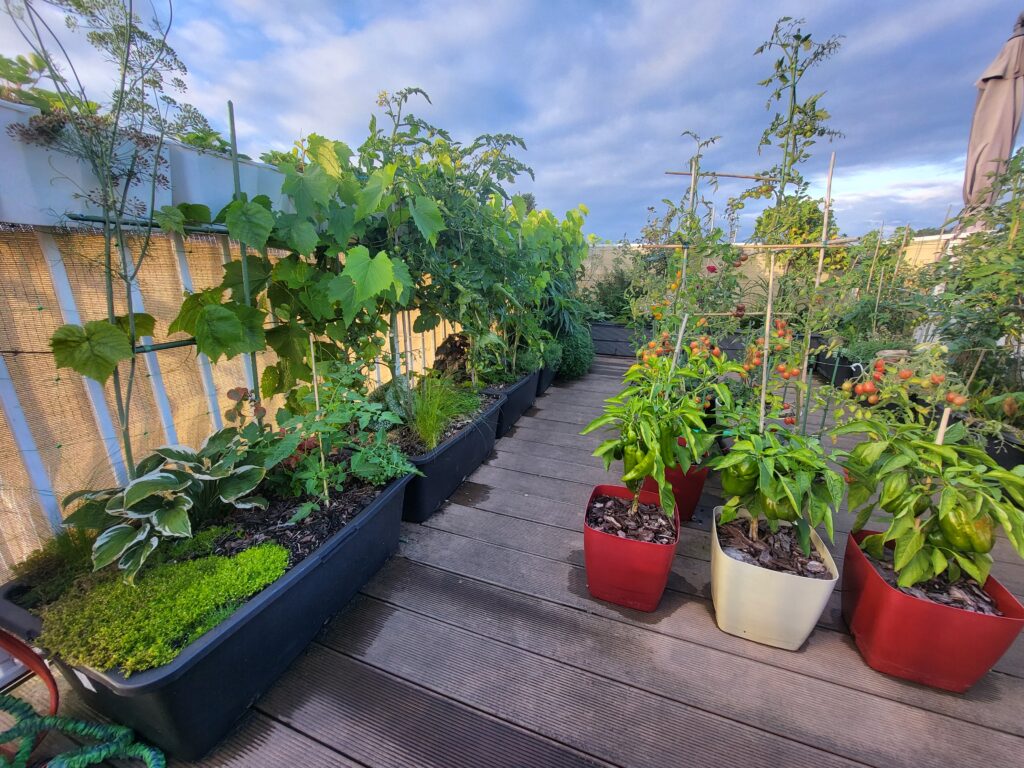
Combining vertical stakes with horizontal supports gives tall tomato plants much more stability in windy rooftop conditions.
Use Support Rings for Bushy or Fruiting Plants
A single stake works well for some plants, but others need support from several directions.
Metal rings or plant cages can be especially useful for bushy tomatoes and plants carrying heavy fruit.
Instead of tying every stem individually, the ring helps keep the whole plant inside a stable structure.
This reduces excessive movement and helps prevent stems from bending under their own weight.
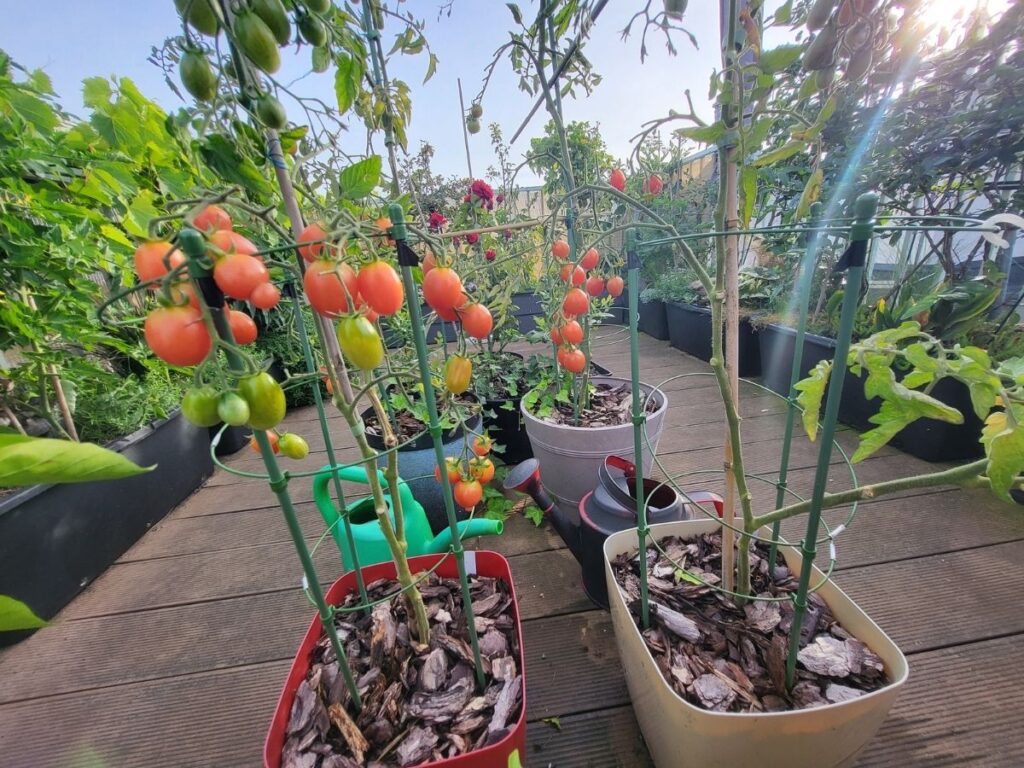
Metal support rings stabilize fruiting plants from several directions and reduce excessive movement in strong wind.
Tie Plants Gently to Their Supports
A support only works if the plant can use it.
Tall stems and young trees may need to be tied to stakes.
But the tie should not be so tight that it cuts into the stem.
Plants continue to thicken during the season, so check ties regularly and loosen or reposition them when necessary.
The aim is to stop violent movement while still allowing a little natural flexibility.
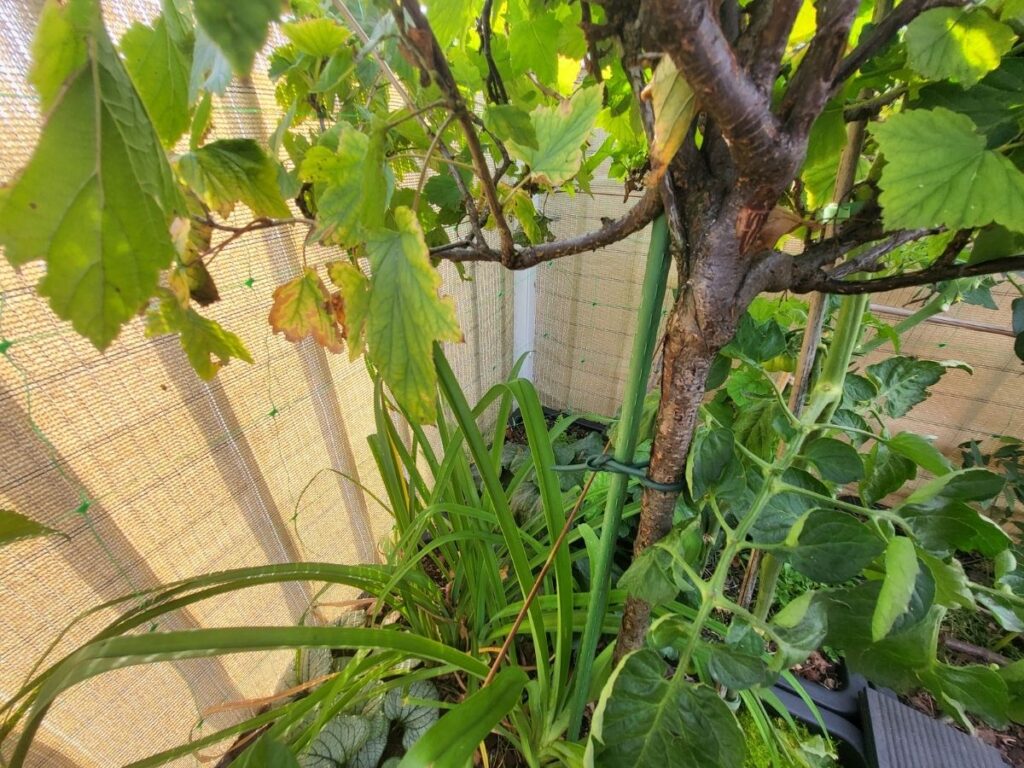
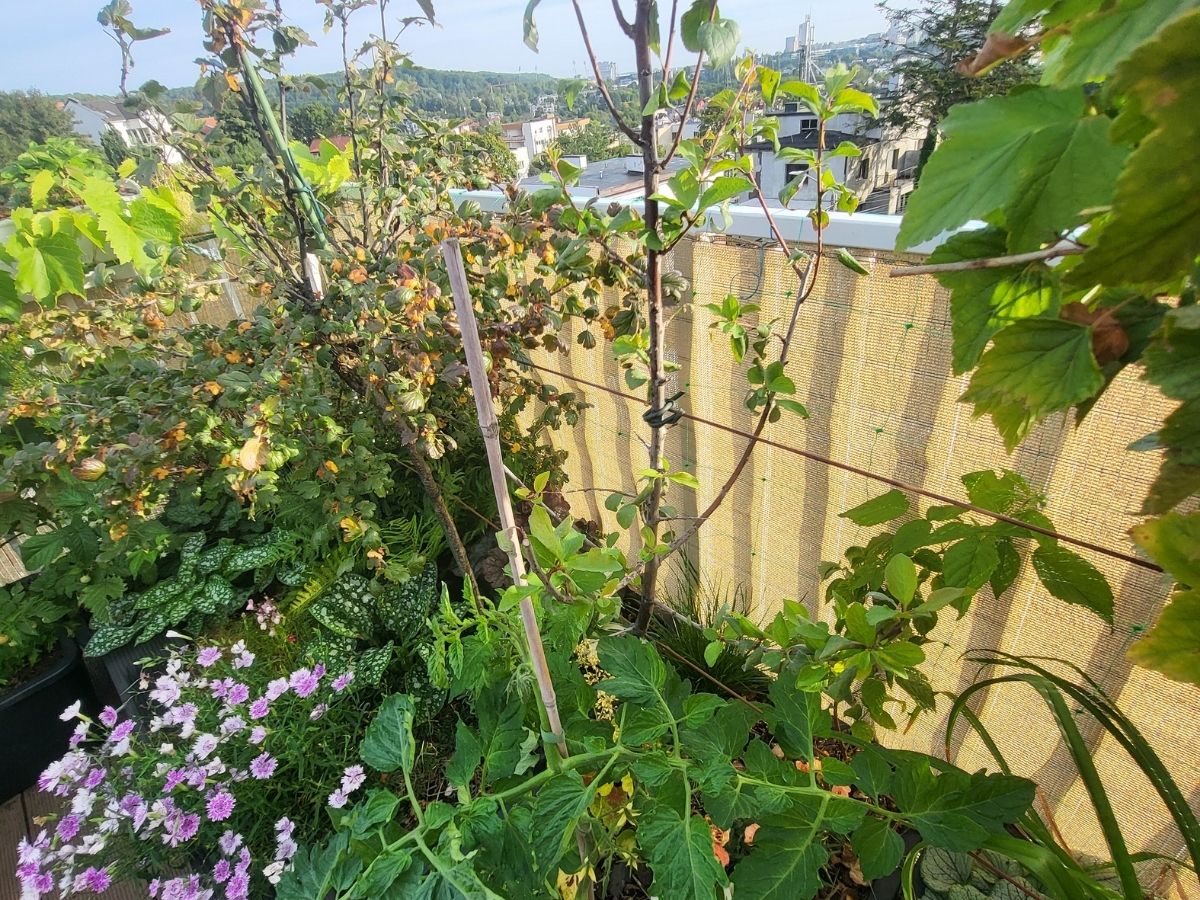
Secure tall plants to stakes without tying them too tightly, and check the ties as stems grow thicker.
Large Containers Are More Stable
Container choice also matters in a windy garden.
Small lightweight pots can dry quickly and are easier for strong gusts to move.
Larger containers are usually more stable because they contain more potting mix and have a wider base.
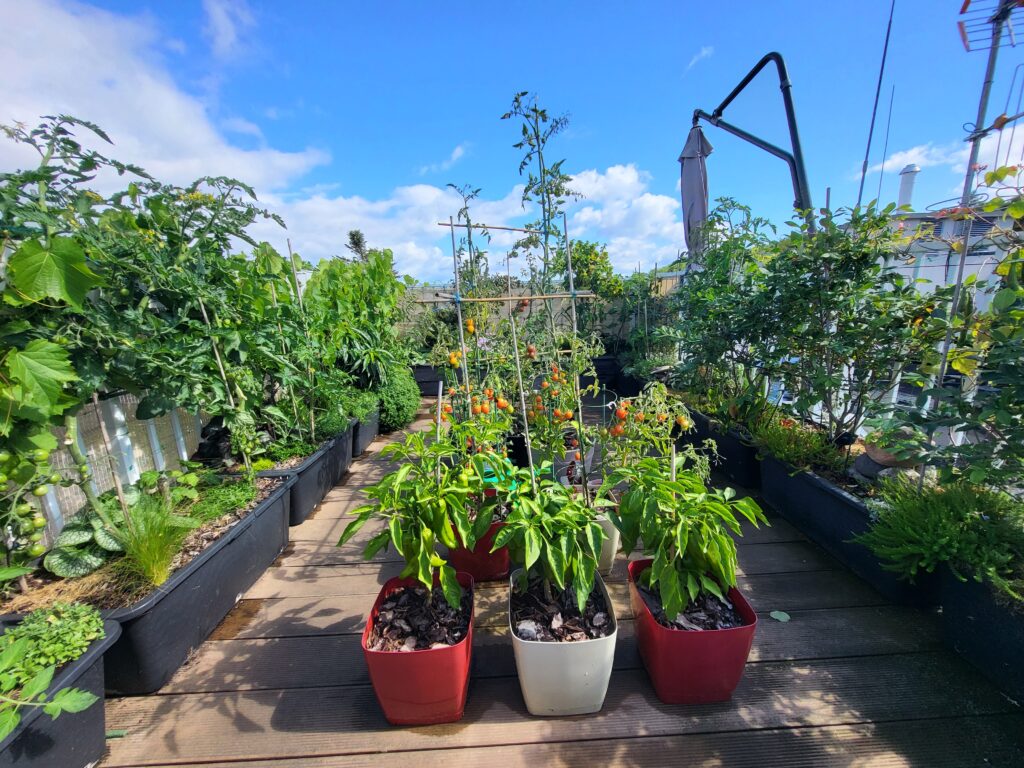
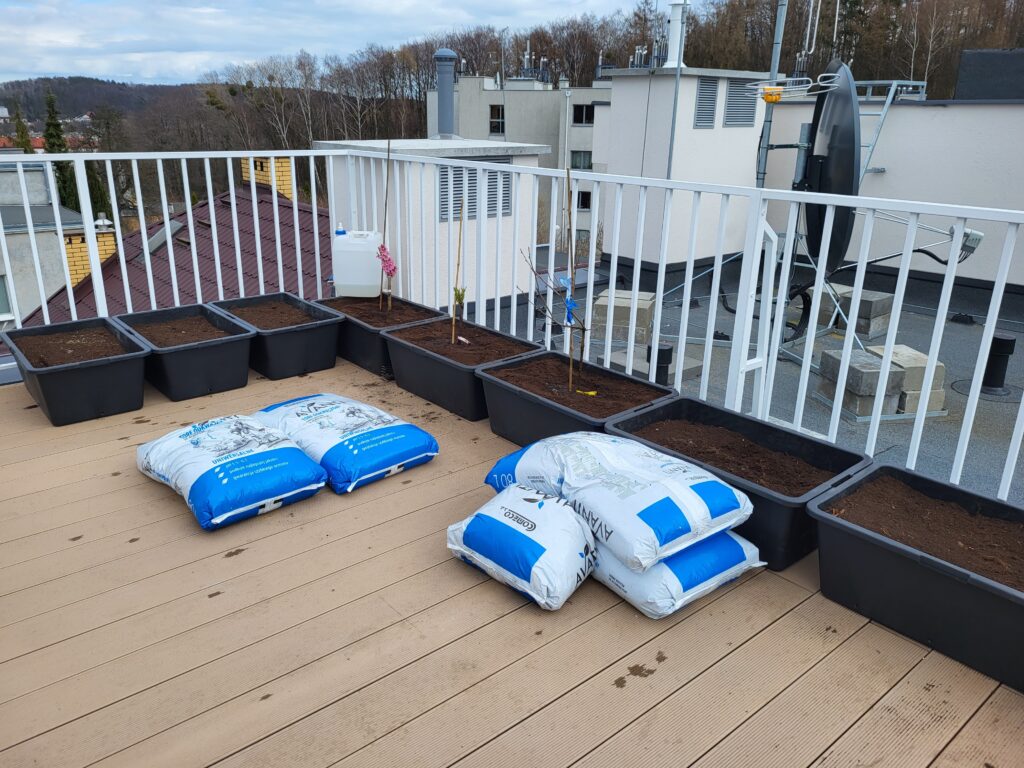
This is one reason I use large containers, including 80-liter construction tubs, for many plants on my rooftop.
They are not impossible to move, but once filled with soil and established plants, they are far more stable than small lightweight pots.
Large containers also hold moisture more steadily, which helps because wind increases evaporation.
If you are still deciding what type of container to use, read Best Containers for Balcony Gardening: Size, Drainage, and Materials.
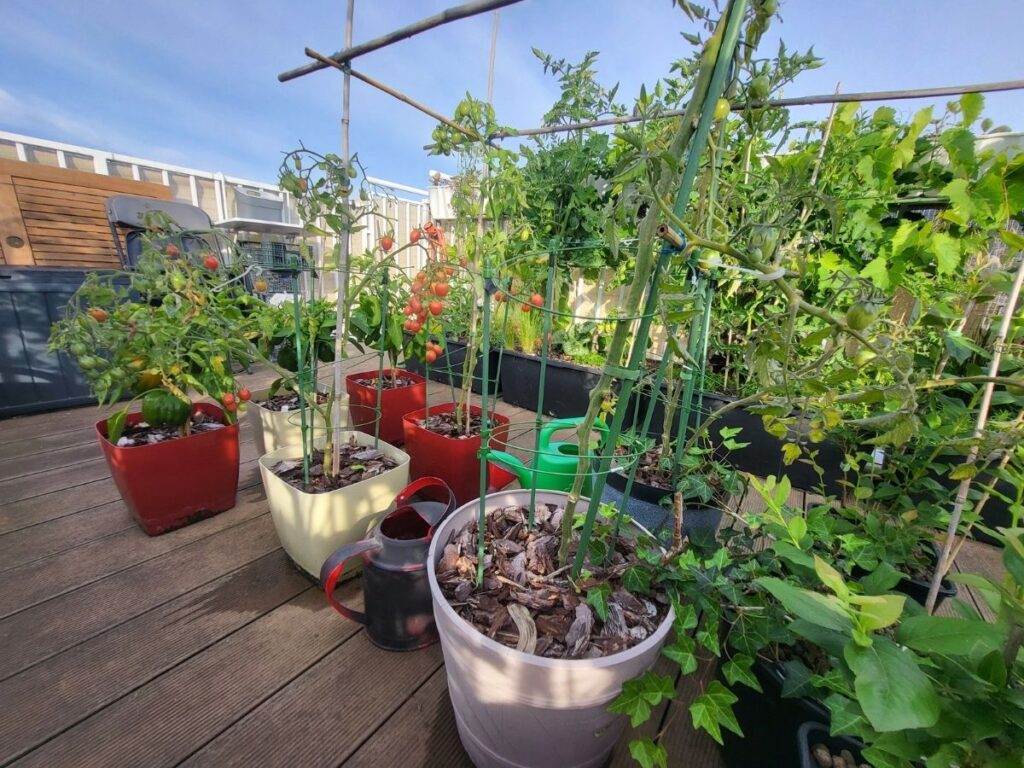
Larger containers are usually more stable in exposed conditions and also hold moisture longer than small lightweight pots.
Group Containers Instead of Isolating Them
Another simple strategy is to avoid placing every pot alone in the most exposed part of the roof.
Grouping containers can create a more protected growing area.
Larger plants can partly shelter smaller ones, and containers placed close together are generally less exposed than a single pot standing alone.
This does not mean packing plants so tightly that air cannot circulate.
It simply means using the garden layout intelligently.
On my rooftop, many containers are arranged in groups or placed close to wind screens and larger planted areas.
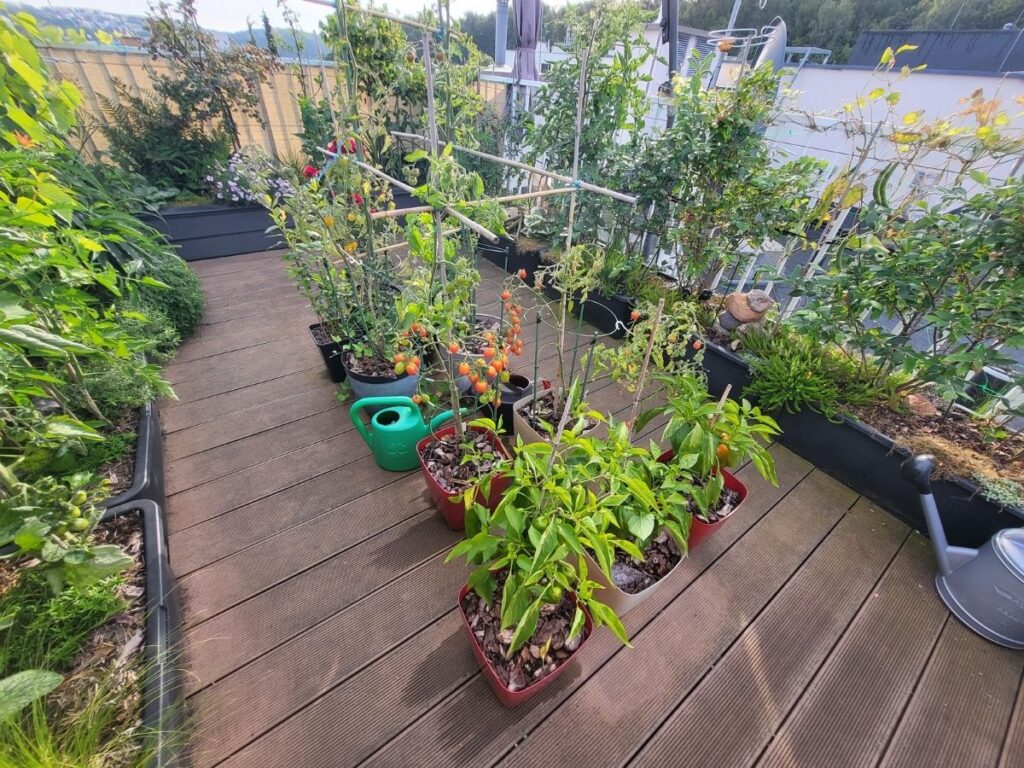
Grouping containers creates a more sheltered growing area and helps protect smaller plants from direct exposure.
Put Vulnerable Plants in More Protected Positions
Not every part of a rooftop receives the same amount of wind.
Corners, walls, screens, storage structures, and larger plants can create calmer microclimates.
Use those places for plants that are:
- tall,
- delicate,
- newly planted,
- heavily laden with fruit,
- prone to damaged leaves.
More robust plants can tolerate more exposed positions.
Observe the garden during windy weather.
You will quickly see which corners are calm and which act like wind tunnels.
That information is more useful than assuming the whole rooftop behaves the same way.
Wind Also Makes Containers Dry Faster
Wind does more than bend plants.
It also increases water loss.
Leaves lose moisture faster in moving air, and exposed potting mix can dry sooner than expected.
This means a rooftop container garden may need more frequent moisture checks during windy weather, even when temperatures are not extremely high.
Do not automatically water everything just because it is windy.
Check the soil first.
The article How to Water a Balcony Garden Properly explains how to test moisture below the surface instead of relying on a fixed watering schedule.
Protect Fruit-Heavy Plants
A plant becomes more vulnerable when it begins carrying fruit.
A tomato stem holding several clusters can be surprisingly heavy.
The same applies to:
- peppers,
- cucumbers,
- berries,
- young fruit trees,
- climbing crops.
Wind adds another force to branches that are already carrying weight.
Support should therefore be adjusted during the season.
A structure that was sufficient in June may be inadequate once a plant is twice as tall and full of fruit.
Check Plants After Strong Wind
After a windy day or storm, walk through the garden and inspect the plants.
Look for:
- loosened ties,
- bent stakes,
- damaged branches,
- moved containers,
- torn leaves,
- damaged wind screens,
- dry soil.
Small damage is often easy to correct if you find it early.
A loose branch can be supported.
A damaged tie can be replaced.
A leaning plant can be stabilized before the next windy day.
Wind Damage Can Happen Quickly
Even with protection, occasional damage is unavoidable.
Branches can break, especially when they are:
- long,
- heavily loaded,
- already weakened,
- repeatedly moved by wind.
I have had branches damaged in my own rooftop garden despite using supports and wind protection.
That is part of gardening in an exposed location.
The goal is not zero damage.
The goal is to reduce unnecessary losses.
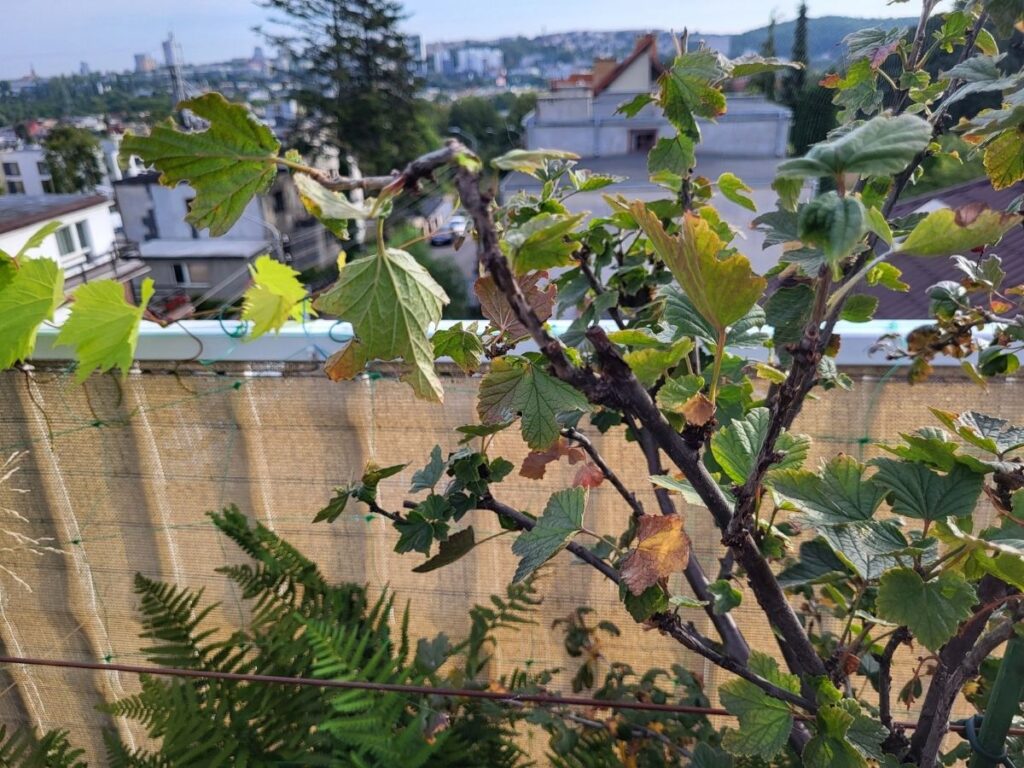
Strong wind can damage even established plants, especially long or heavily loaded branches.
Do Not Build Wind Protection That Creates a New Problem
It can be tempting to cover every exposed side with solid material.
Be careful.
A rooftop windbreak becomes part of the environment of the building and can experience substantial wind pressure.
Avoid attaching large improvised solid panels, sheets, or heavy structures without knowing whether they are suitable for the location.
If a planned installation affects the building structure or safety barriers, check building rules and seek appropriate professional advice.
For ordinary container gardening, a properly secured permeable screen is often a simpler solution.
A Simple Way to Protect a Rooftop Garden from Wind for Beginners
You do not need complicated equipment. To protect a rooftop garden from wind, focus on stable containers, strong supports, smart placement, and a properly secured wind screen.
A practical system can be built around five ideas:
1. Reduce wind at the perimeter
Use a suitable porous screen where allowed.
2. Support tall plants
Install stakes, cages, or rings before plants become unstable.
3. Use stable containers
Larger, heavier pots are usually safer than lightweight containers for tall plants.
4. Use the rooftop layout
Group containers and place vulnerable plants in more sheltered areas.
5. Inspect after bad weather
Repair loose supports and damaged ties before the next windy period.
These simple habits prevent many of the problems that make rooftop gardening frustrating for beginners.
What I Have Learned From My Rooftop Garden
At first, it is easy to think of wind as an occasional weather problem.
On a rooftop, it is better to think of wind as part of the growing environment.
It affects:
- where I place plants,
- which containers I choose,
- how I support tomatoes,
- how often I check soil moisture,
- how I protect the edges of the garden.
The biggest improvement came from combining several small solutions rather than relying on one.
The wind screen reduces exposure.
Large containers improve stability.
Stakes support tall plants.
Metal rings protect bushy fruiting plants.
And regular checks catch problems before they become serious.
That combination has allowed me to grow tall tomatoes, fruit plants, vines, herbs, flowers, and many other plants on an exposed rooftop.
Final Thoughts
Strong wind does not mean you cannot have a productive rooftop garden.
It simply means the garden needs to be designed for the conditions.
Reduce wind where possible, use stable containers, support tall plants early, and watch how air moves through the space.
You do not need to eliminate wind completely.
You only need to prevent it from controlling the garden.
Once plants are properly supported and the most exposed areas are protected, a rooftop can become a surprisingly productive growing space.
Want the Complete Step-by-Step Guide?
Balcony & Rooftop Gardening for Beginners
A Practical Guide to Containers, Soil, Watering, and Starting Your First Garden
The book goes deeper into planning your space, choosing containers, preparing soil, watering correctly, dealing with rooftop conditions, setting up different types of small-space gardens, and caring for your plants during their crucial first weeks.
Digital edition · PDF + EPUB · Instant download · $14.99
Interested in reading future Garden Above the City books early?
Join the Reader Team for occasional opportunities to read selected books and resources before or around publication.