How to Water a Balcony Garden Properly
Watering looks like one of the simplest parts of balcony gardening. You add water, the plants drink it, and the job is done.
In practice, watering container plants is one of the things beginners most often have to learn by experience.
A small pot can dry out surprisingly fast on a sunny day. A large container may still be moist below the surface even when the top looks dry. Wind can remove moisture faster than expected, especially on an exposed balcony or rooftop.
The good news is that you do not need a complicated watering schedule. You mainly need to learn how to check the soil, understand your containers, and recognize when your plants actually need water.
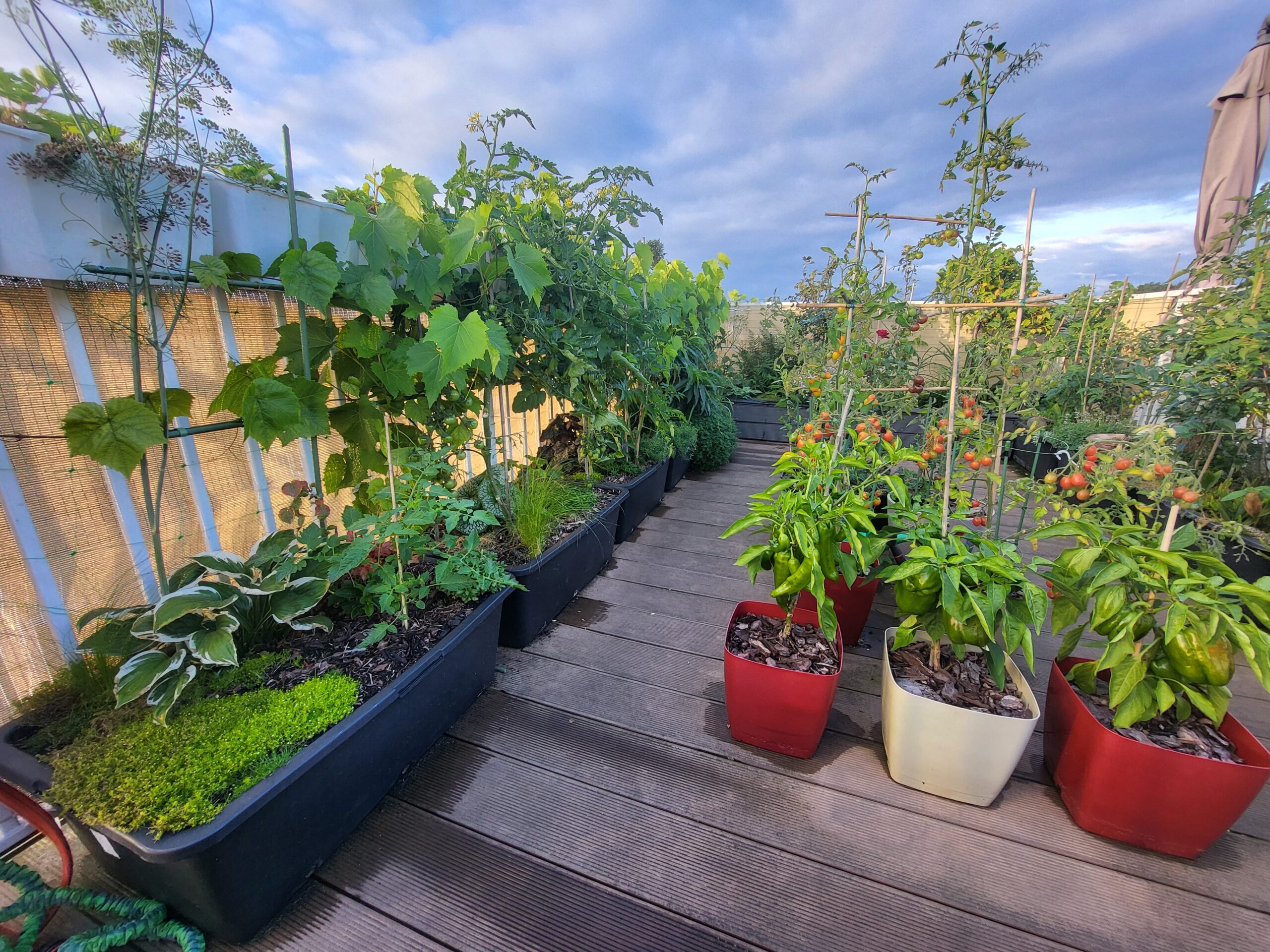
I grow vegetables, fruits, herbs, and ornamental plants in containers on a rooftop garden, including large 80-liter construction tubs. Over time, I have found that checking the plants and soil works much better than watering automatically according to the calendar.
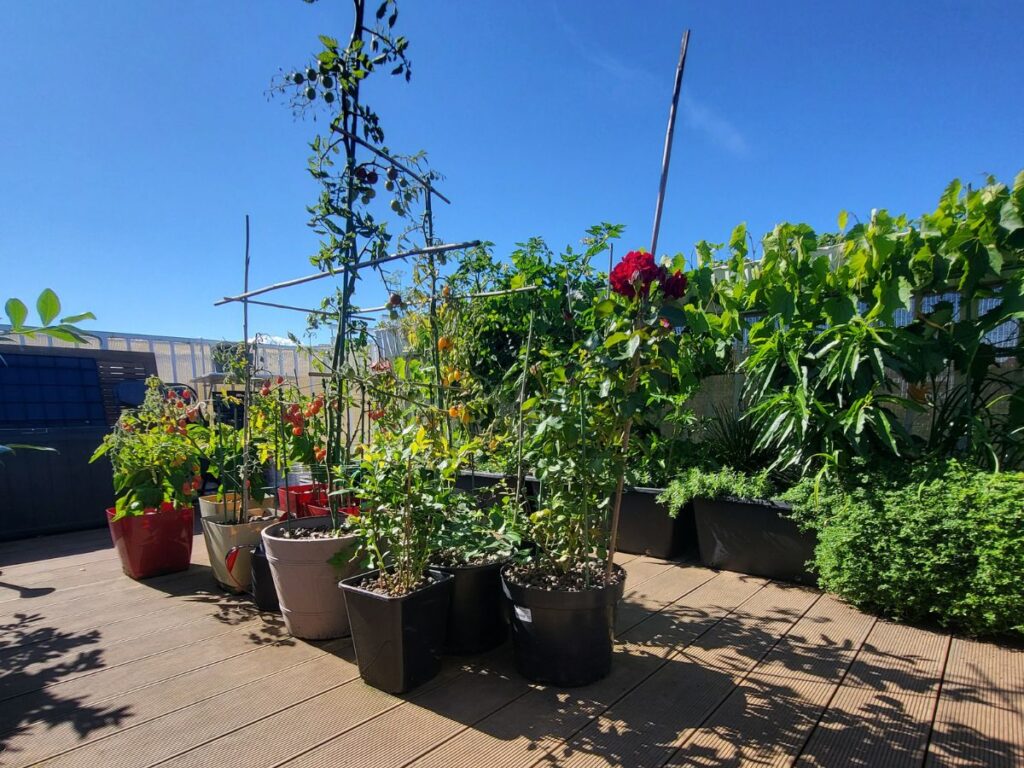
A real rooftop garden contains containers of different sizes, and each can dry out at a different rate.
Why Container Plants Need More Attention to Watering
Plants growing in the ground can send their roots deeper and farther in search of moisture.
A plant in a container cannot.
Its entire root system depends on the limited amount of soil inside the pot. Once that soil dries out, there is nowhere else for the roots to find water.
This is especially important on balconies and rooftops, where containers may be exposed to:
- direct sunlight,
- warm walls and paving,
- strong wind,
- higher temperatures,
- limited shade.
During hot weather, some containers may need checking every day.
That does not mean every plant needs watering every day. It means you should check rather than assume.
If you are still choosing containers for your garden, read Best Containers for Balcony Gardening: Size, Drainage, and Materials. Container size and drainage have a major effect on how quickly soil dries.
Check the Soil Before You Water
One of the simplest watering tools is your finger.
Push your finger about 1–2 inches (2–5 cm) into the soil.
If the soil feels moist below the surface, the plant may not need water yet.
If it feels dry at that depth, it is usually time to water.
The surface alone can be misleading. On a sunny or windy balcony, the top layer may look completely dry while the soil underneath still contains plenty of moisture.
This is particularly noticeable in larger containers.
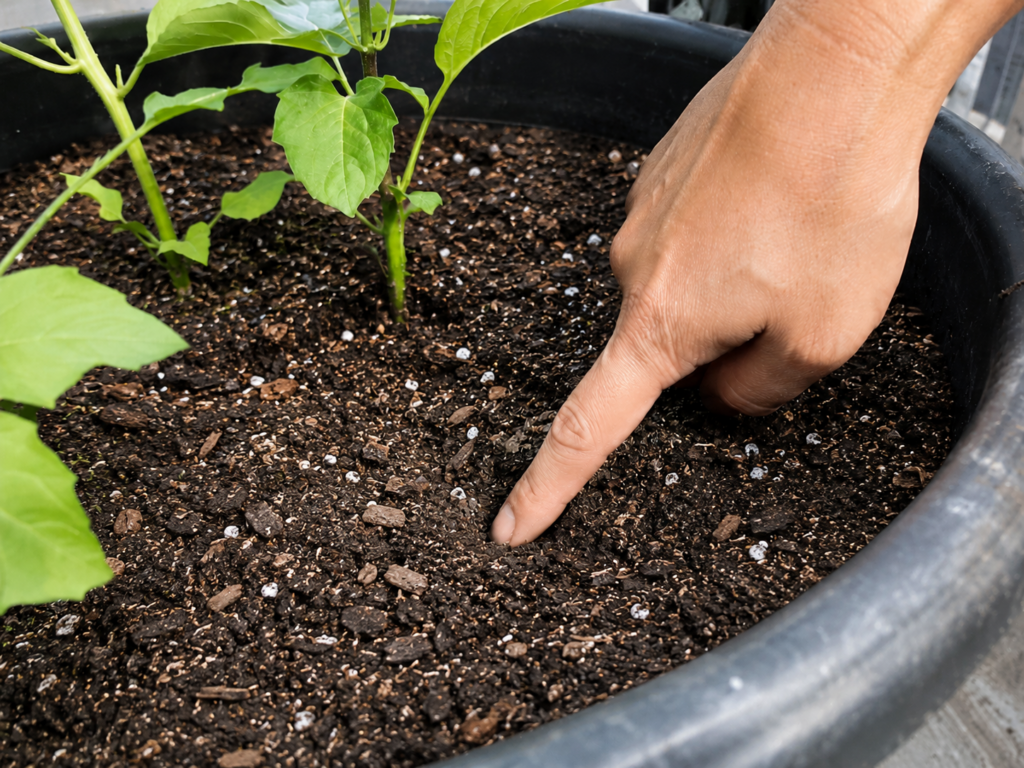
Check the soil below the surface before watering. The top layer can dry while the soil underneath is still moist.
Water the Soil, Not Just the Plant
When watering, aim most of the water at the soil around the base of the plant.
The goal is to wet the root zone thoroughly.
A quick splash over the surface may make the soil look wet without providing enough moisture deeper in the container.
Water slowly enough that the soil has time to absorb it.
With larger pots, I prefer to move around the container rather than pour all the water into one small spot. This helps moisture reach more of the root system.
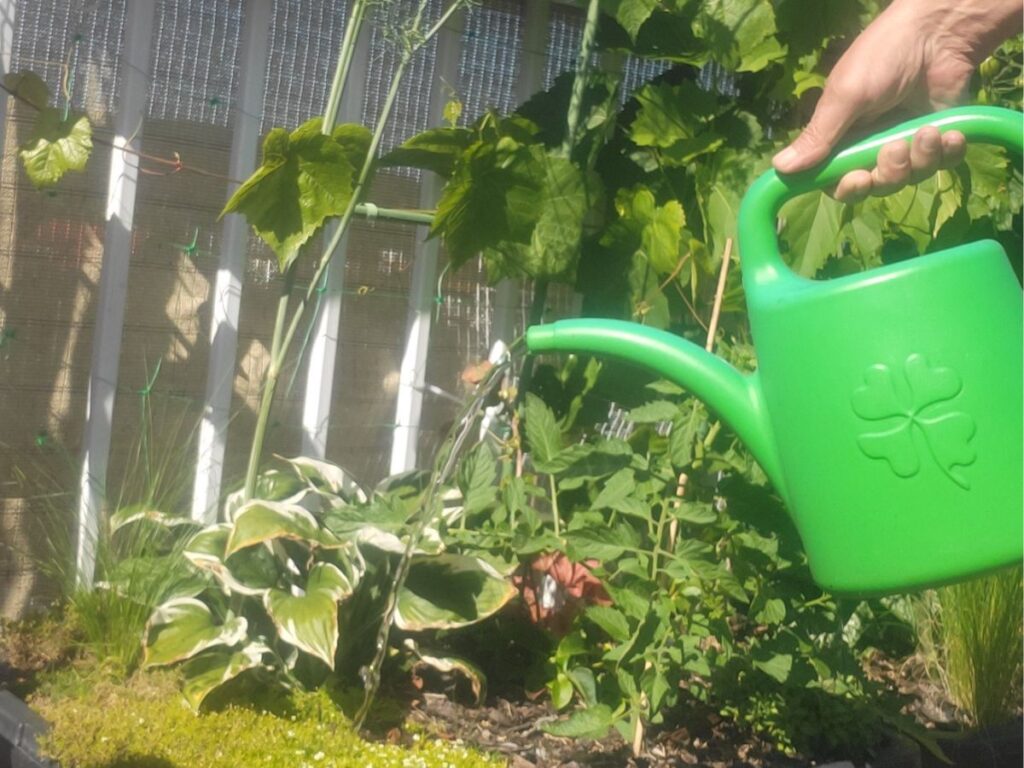
Watering slowly around the base of the plants helps moisture reach the root zone instead of only wetting the surface.
Water Deeply Rather Than Little and Often
A common mistake is giving plants a very small amount of water every time.
This can leave only the upper layer of soil wet.
Instead, water thoroughly so moisture reaches deeper into the container.
In a container with good drainage, excess water should eventually be able to escape through the drainage holes.
That is one reason drainage is so important.
If water cannot leave the container, roots may remain in constantly wet soil. That can create just as many problems as allowing the soil to become completely dry.
For more about drainage and soil structure, see Best Soil for Balcony Gardens and Container Plants.
Small Pots Dry Faster Than Large Containers
Container size makes a huge difference.
A small pot contains relatively little soil, so it has less water stored around the roots.
Large containers hold much more growing medium and usually maintain moisture more steadily.
This is one reason I like using large containers for many plants on my rooftop garden. My 80-liter construction tubs do not usually dry as quickly as small individual pots.
That does not mean large containers cannot dry out. In hot, sunny, windy conditions, they still need regular checking.
But they usually give the gardener a larger margin for error.
Smaller containers contain less soil and can dry out much faster than large tubs, especially in warm weather.
Sun and Wind Change How Often You Need to Water
There is no single answer to the question:
How often should I water my balcony garden?
The answer changes with the weather.
A container that stays moist for several days during cool, cloudy weather may dry much faster during a hot week.
Strong wind also matters.
Wind moving through leaves increases water loss from the plant, while exposed container surfaces can dry faster as well.
This effect can be even stronger on rooftops.
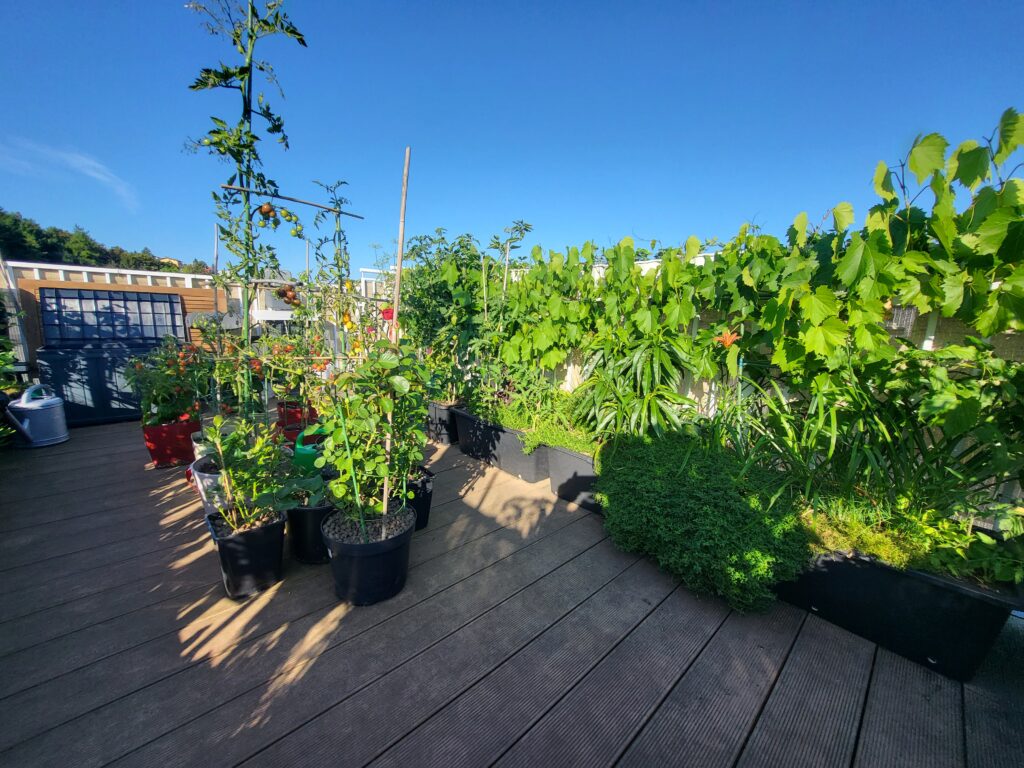
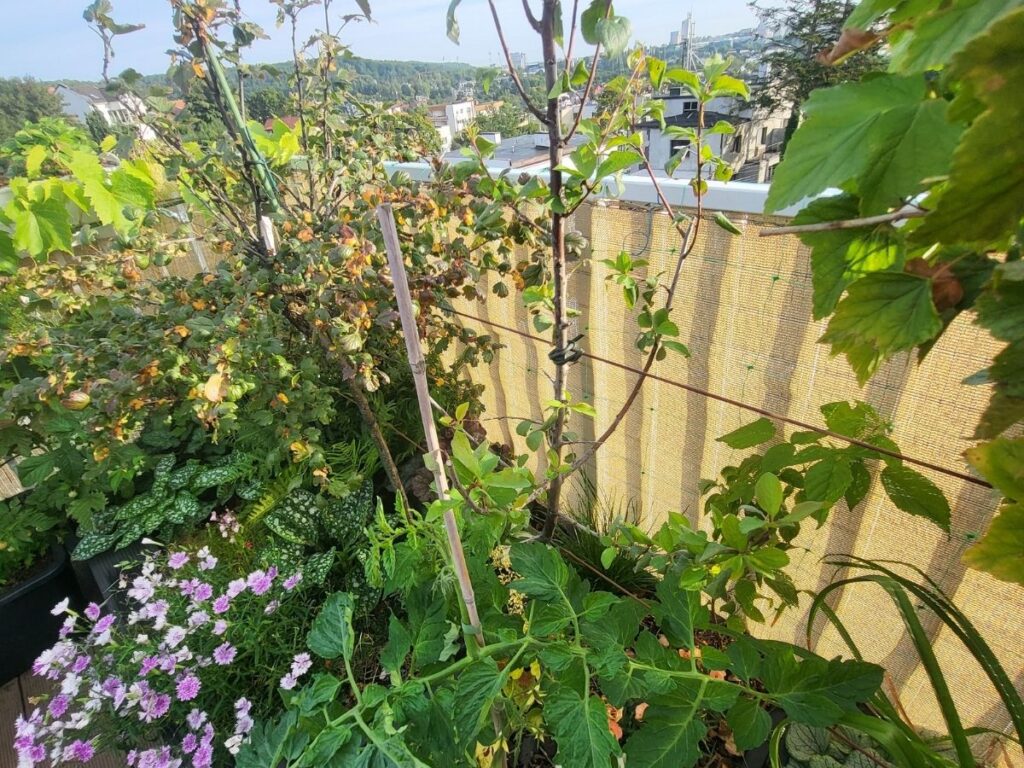
Full sun and exposed rooftop conditions can increase water use and make containers dry faster.
Check more often during:
- hot weather,
- sunny periods,
- strong wind,
- flowering and fruiting,
- rapid summer growth.
Check less frequently during:
- cool weather,
- cloudy periods,
- rainy periods,
- slower growth.
Do not turn these into fixed rules. They are reasons to inspect the soil more often or less often.
Different Plants Use Water Differently
Not every plant in your balcony garden should receive exactly the same treatment.
A large tomato plant carrying many fruits can use a considerable amount of water.
A smaller herb or slower-growing ornamental plant may use much less.
Young plants also behave differently from large mature plants.
As the growing season progresses, a plant that once occupied only a small part of its container can eventually fill much of it with roots.
That means its watering needs can change during the season.
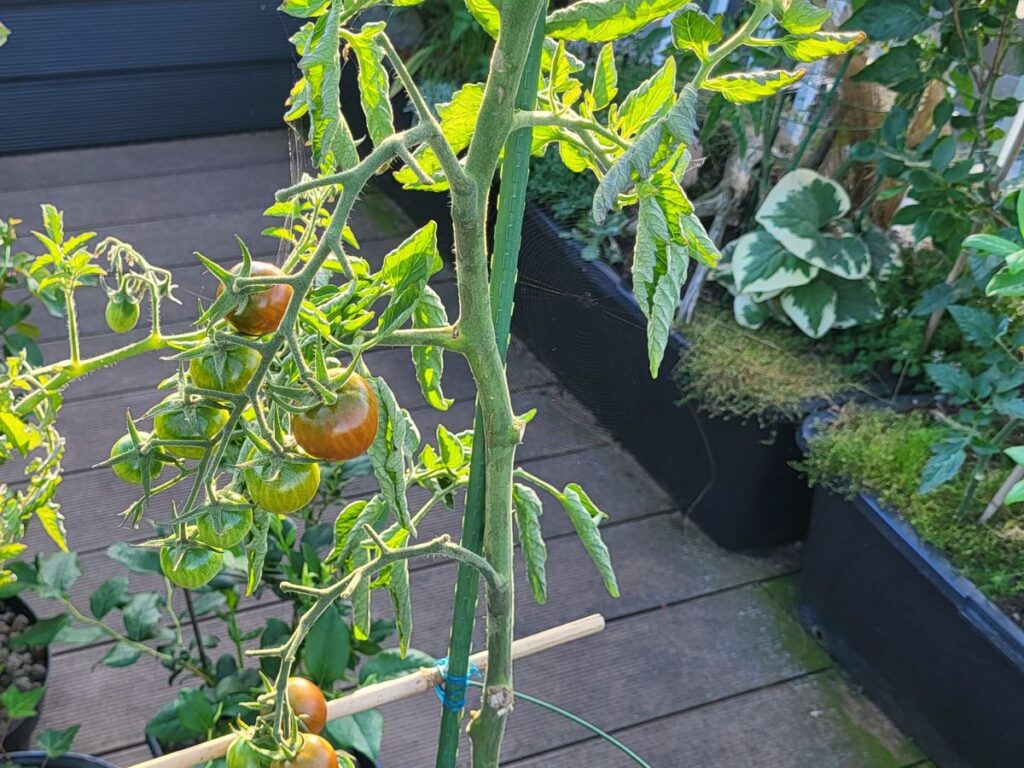
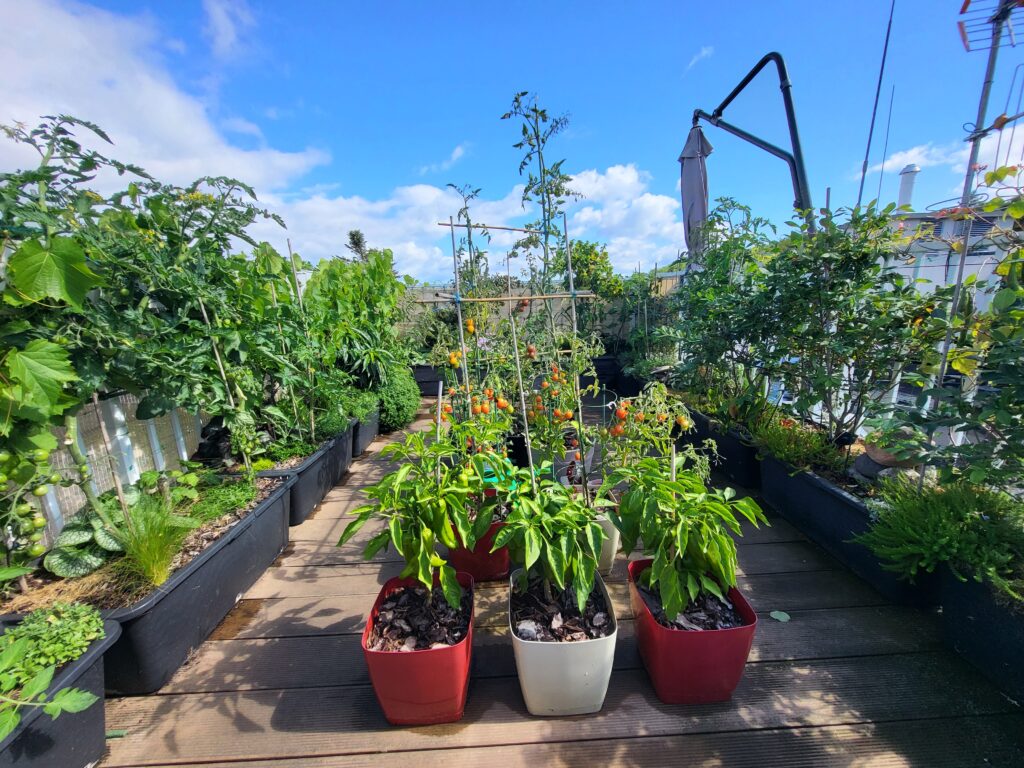
Large fruiting plants such as tomatoes can use much more water than they did earlier in the growing season.
Fruiting Plants Need Consistent Moisture
Tomatoes, peppers, berries, and other fruiting plants benefit from reasonably consistent access to water.
Repeatedly allowing the soil to become extremely dry and then soaking it heavily can stress plants.
The goal is not to keep the soil permanently wet.
The goal is to avoid large swings between bone-dry and waterlogged conditions.
This becomes especially important when plants are flowering and producing fruit.
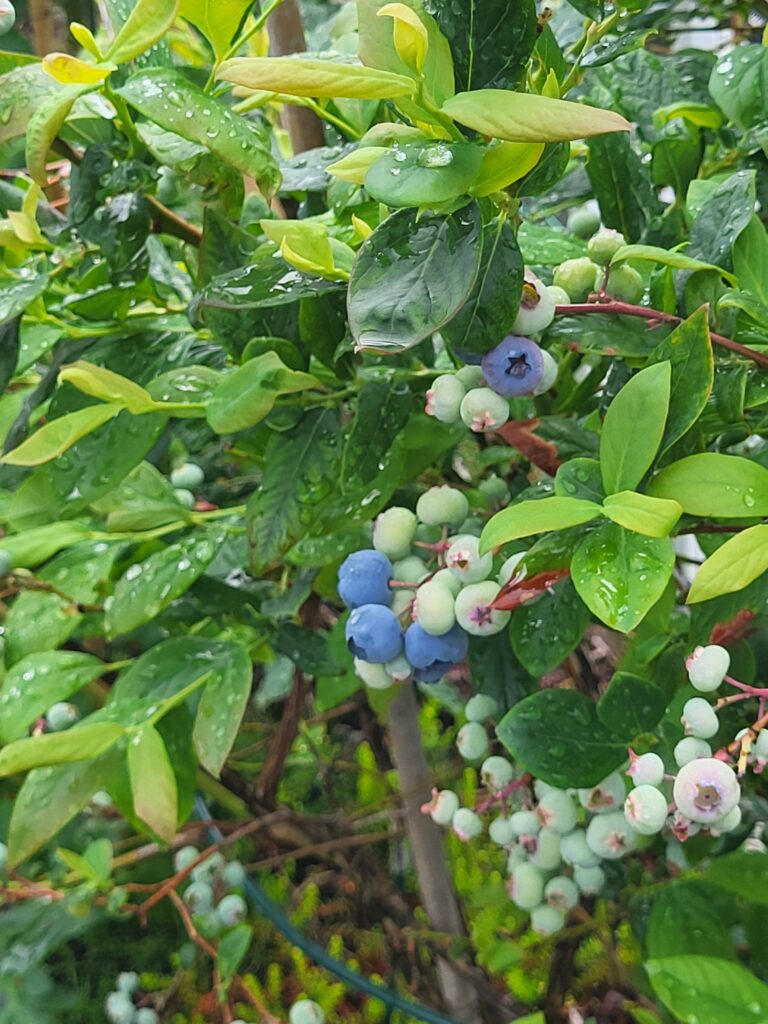
Fruiting container plants benefit from steady moisture without keeping the soil permanently waterlogged.
What Is the Best Time to Water a Balcony Garden?
Morning is usually the easiest and most practical time to water.
Plants begin the day with moisture available to them before temperatures rise.
Morning watering also allows wet leaves to dry relatively quickly if they happen to get splashed.
Evening watering can also work, especially during very hot weather, but avoid unnecessarily soaking foliage when it will remain wet for many hours.
More important than following the clock perfectly is not allowing a plant to suffer simply because it is the “wrong” time of day.
If a container is badly dry and the plant needs water, water it.
Plants do not read gardening schedules.
Do Not Rely Only on Wilted Leaves
Wilting can indicate that a plant needs water, but it should not be your main watering system.
By the time a plant is badly wilted, it may already be under significant stress.
There is another complication.
Plants can sometimes wilt during very hot conditions even when the soil still contains moisture.
That is why checking the soil is more reliable than judging only by the leaves.
Use several clues together:
- soil moisture,
- container weight,
- weather,
- plant condition,
- recent watering.
With experience, you will begin to recognize how quickly different containers in your own garden normally dry.
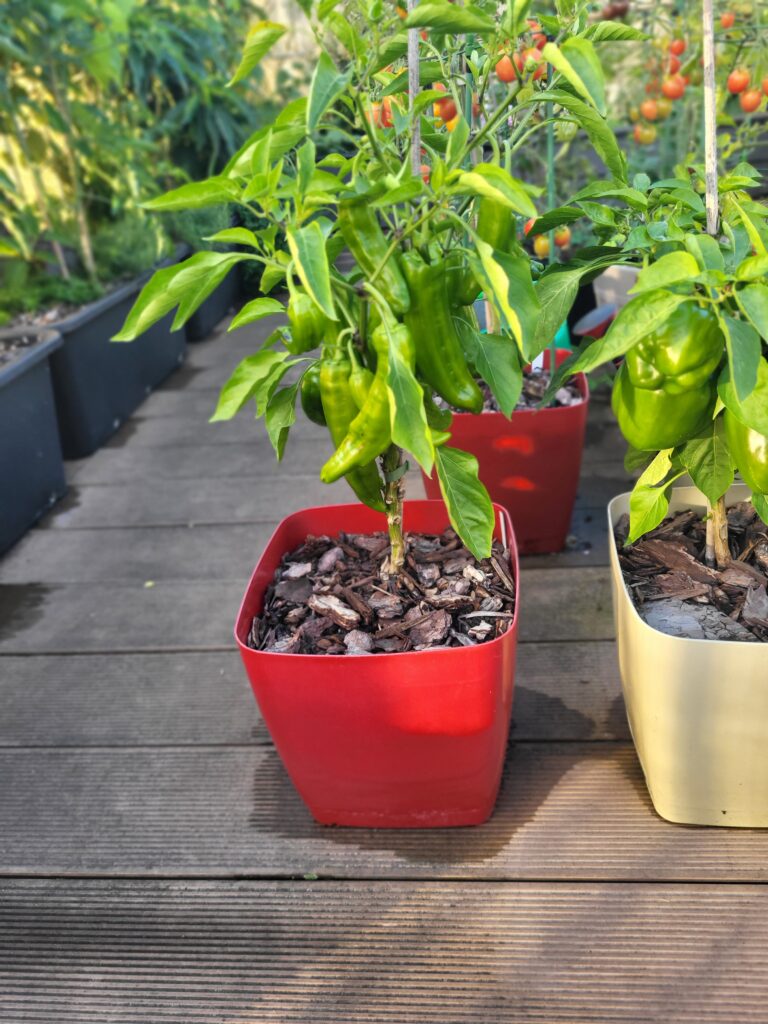
Mulch Can Help Containers Hold Moisture
Covering the surface of the potting mix can reduce evaporation.
Organic mulch such as bark can also protect the soil surface from strong sun.
This can be useful in containers that dry quickly.
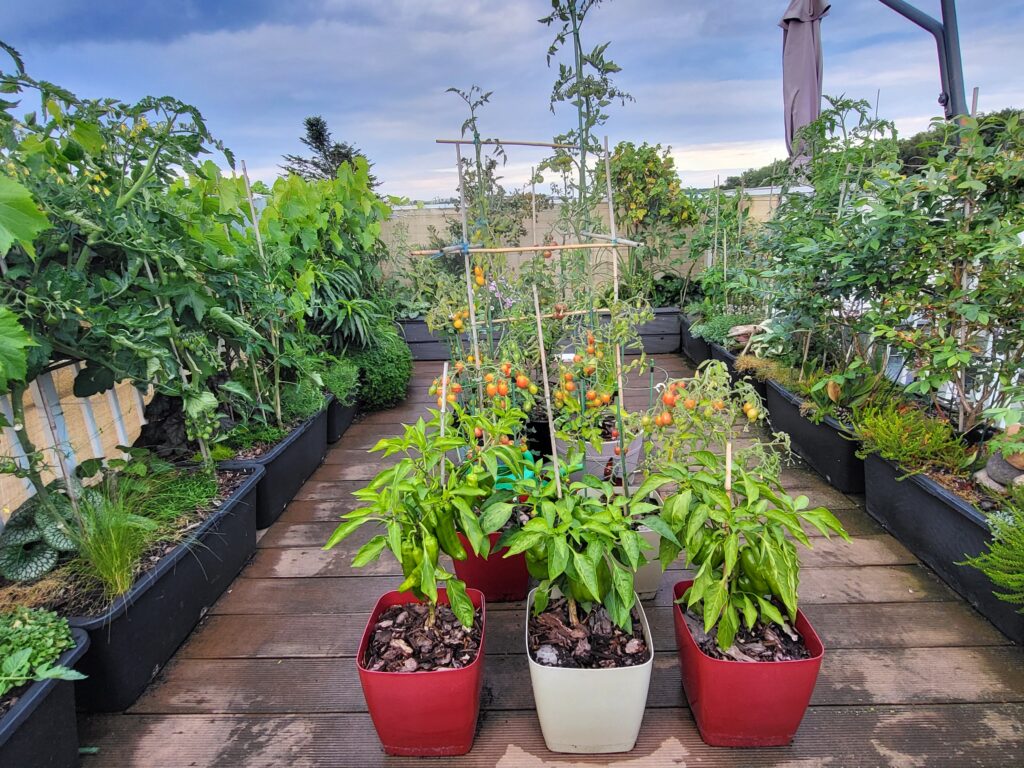
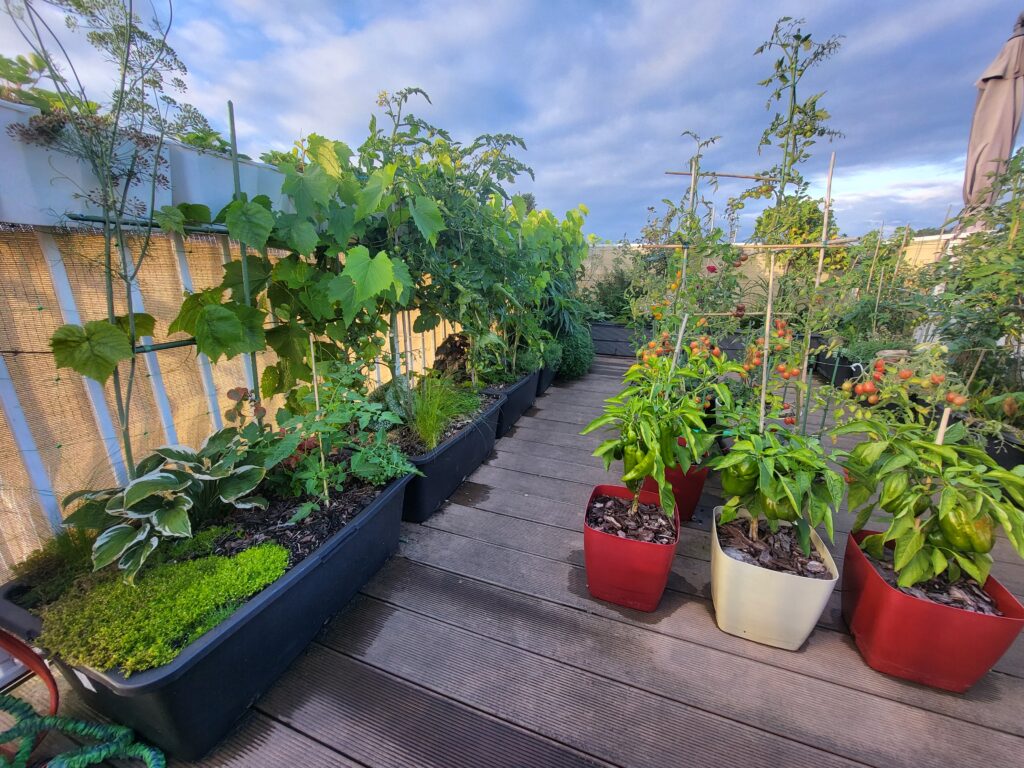
Do not pile mulch tightly against plant stems, and remember that mulch makes it harder to judge moisture simply by looking at the surface.
Check underneath it.The bark mulch visible in the pepper containers can support this section, but I would not repeat Photo 3 in the final article unless you want a longer, more image-heavy layout.
Rain Does Not Always Mean Your Containers Are Watered
After rain, it is tempting to assume that every pot has received enough water.
That is not always true.
Dense foliage can prevent some rain from reaching the soil. A short shower may wet leaves and only the very top of the potting mix.
Containers positioned close to walls, roofs, or balcony covers may receive even less rain than expected.
After light rain, I still check the soil.
A wet-looking plant is not necessarily a well-watered container.
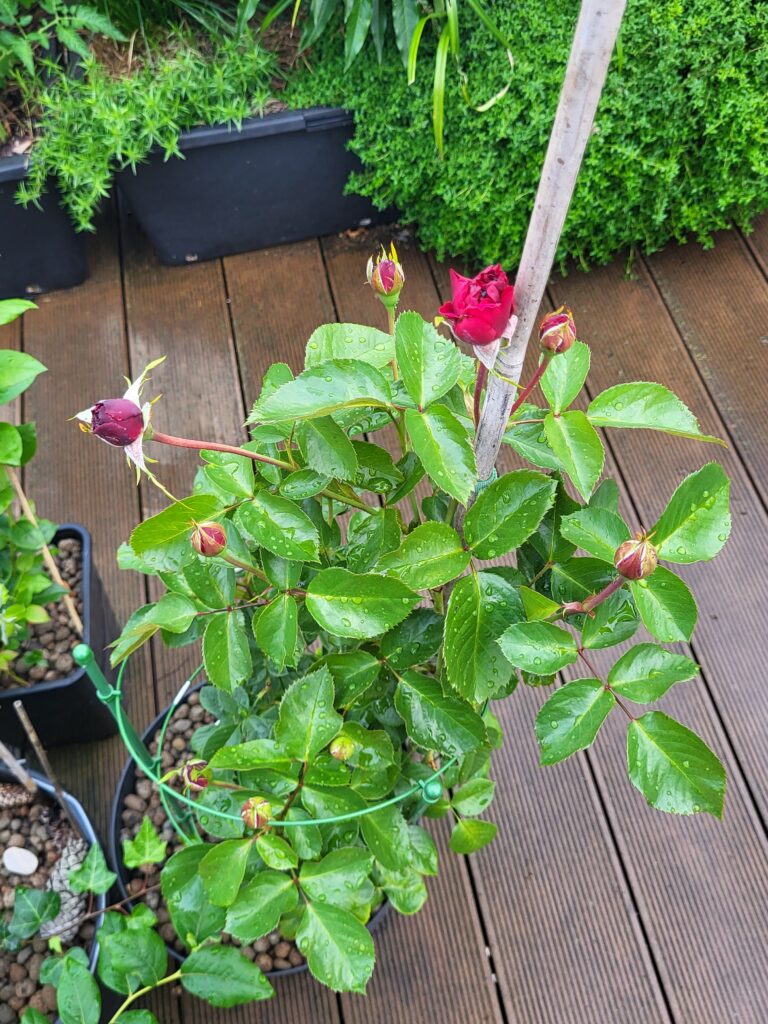
Wet leaves do not always mean the soil inside the container has received enough water.
A Simple Watering Routine for Beginners
You do not need complicated equipment to get started.
Use this simple routine:
1. Check the soil
Push a finger below the surface instead of judging only by appearance.
2. Check the weather
Hot sun and wind usually mean containers need more attention.
3. Look at the plant
Large, fast-growing and fruiting plants may use water faster.
4. Water slowly
Apply water to the soil around the root zone.
5. Water thoroughly
Allow moisture to move deeper into the container.
6. Let excess water drain
Good drainage protects roots from constantly saturated soil.
7. Check again later
Over time, you will learn how long each type of container normally stays moist.
This is much more useful than trying to follow a universal rule such as “water every two days.”
What I Have Learned From Watering a Rooftop Garden
One of the biggest lessons from my own rooftop garden is that container size matters enormously.
Small pots demand much more attention.
Large containers are generally more forgiving because they contain more soil and hold moisture more steadily.
But even large containers are affected by sun, wind, temperature, plant size, and the time of year.
That is why I do not treat the entire rooftop as one watering zone.
I check individual containers and plants.
Some need water.
Others can wait.
That simple habit prevents both unnecessary watering and plants being left dry for too long.
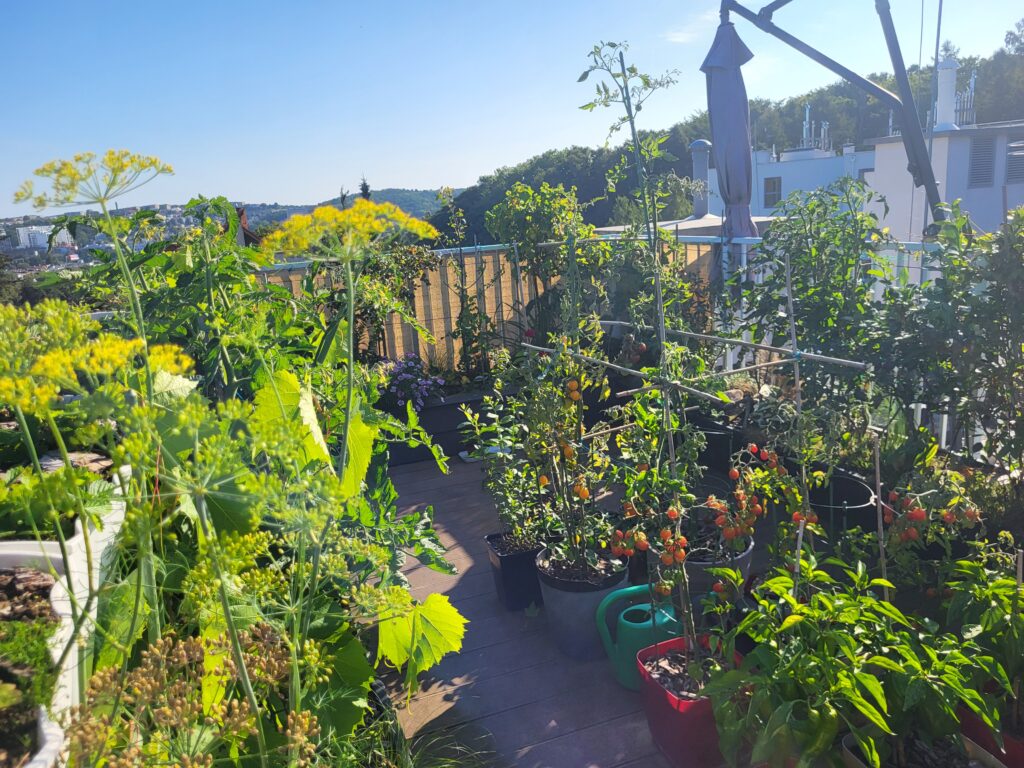
A mixed container garden rarely needs exactly the same amount of water everywhere. Check individual pots instead of treating the whole garden the same.
Final Thoughts
Learning how to water a balcony garden properly is mostly about observation.
Do not depend on a rigid schedule.
Check the soil. Watch the weather. Learn which containers dry quickly and which hold moisture longer.
As your plants grow, their needs will change.
Once you understand those patterns, watering becomes much easier — and you will spend less time wondering whether you are giving your plants too much or too little.
Want the Complete Step-by-Step Guide?
Balcony & Rooftop Gardening for Beginners
A Practical Guide to Containers, Soil, Watering, and Starting Your First Garden
The book goes deeper into planning your space, choosing containers, preparing soil, watering correctly, dealing with rooftop conditions, setting up different types of small-space gardens, and caring for your plants during their crucial first weeks.
Digital edition · PDF + EPUB · Instant download · $14.99
Interested in reading future Garden Above the City books early?
Join the Reader Team for occasional opportunities to read selected books and resources before or around publication.