How to Start a Balcony Garden: A Beginner’s Step-by-Step Guide
You do not need a large backyard to grow your own garden.
A balcony, rooftop, or small terrace can give you fresh herbs, tomatoes, strawberries, flowers, and even fruit — but the best way to begin is not by buying plants.
Start by understanding the space you already have.
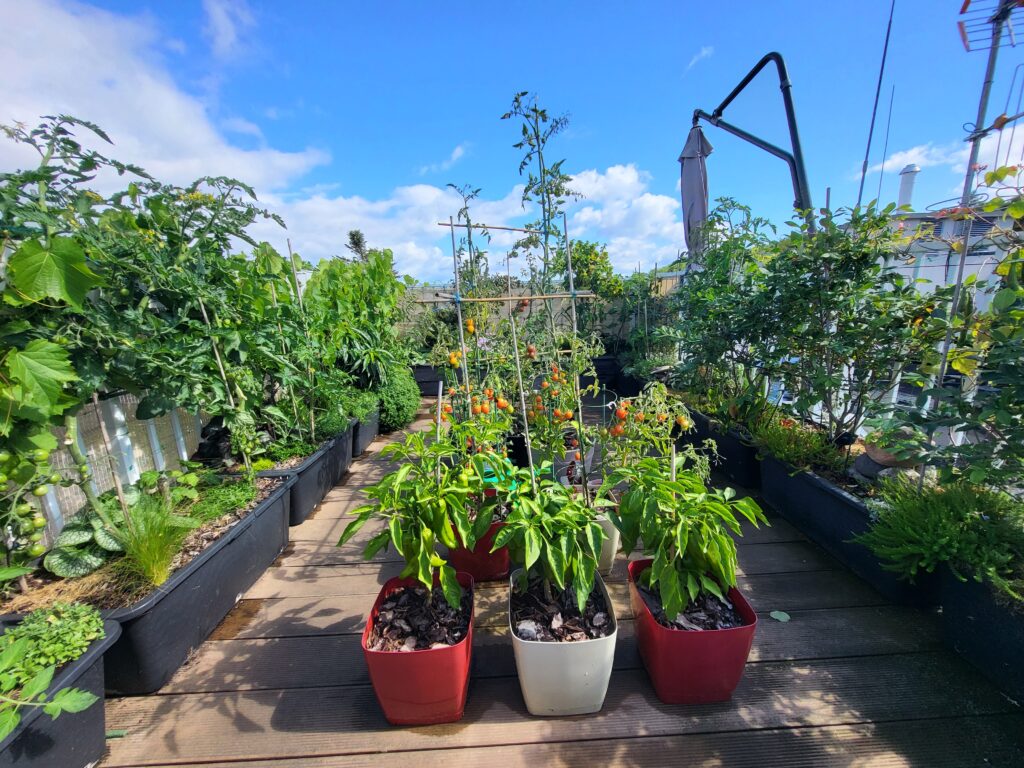
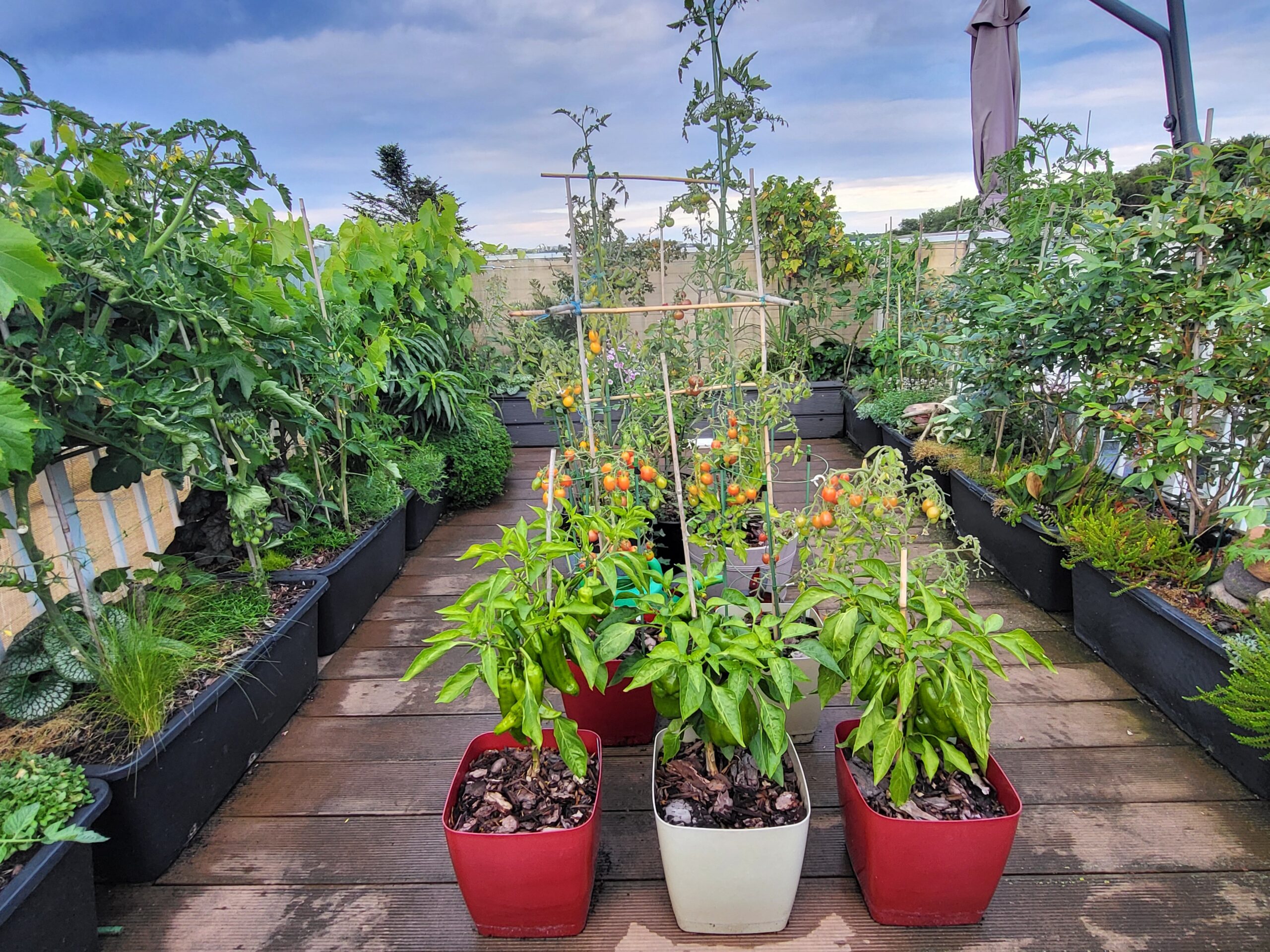
This is one of the most useful lessons I have learned from growing my own container garden on a rooftop. Sun, wind, water, container size, and local climate matter more than an impressive shopping list from a garden center.
A successful balcony garden does not have to be complicated. Start with a few good decisions, learn how your space behaves, and let the garden grow with your experience.
Here is how I would start.
1. Look at Your Space Before You Buy Anything
Before choosing tomatoes, strawberries, herbs, or flowers, spend some time looking at your balcony.
How much usable space do you really have?
Think about where containers can stand without blocking doors, walkways, drains, or access to the railing. Remember that plants grow. A small tomato seedling in spring can occupy a surprisingly large amount of space by midsummer.
Also think about weight.
Containers become much heavier when they are filled with soil and watered. On balconies and rooftop terraces, structural load limits should always be respected. If you are unsure what your balcony or rooftop can safely support, check with the building owner, administrator, or a qualified professional before installing large containers.
Drainage matters too.
Water must have somewhere to go without damaging the building or creating problems for your neighbors.
Your first question should therefore not be:
“What plants should I buy?”
It should be:
“What kind of garden can this space safely and comfortably support?”
2. Check How Much Sun You Really Get
Do not guess how sunny your balcony is.
Watch it.
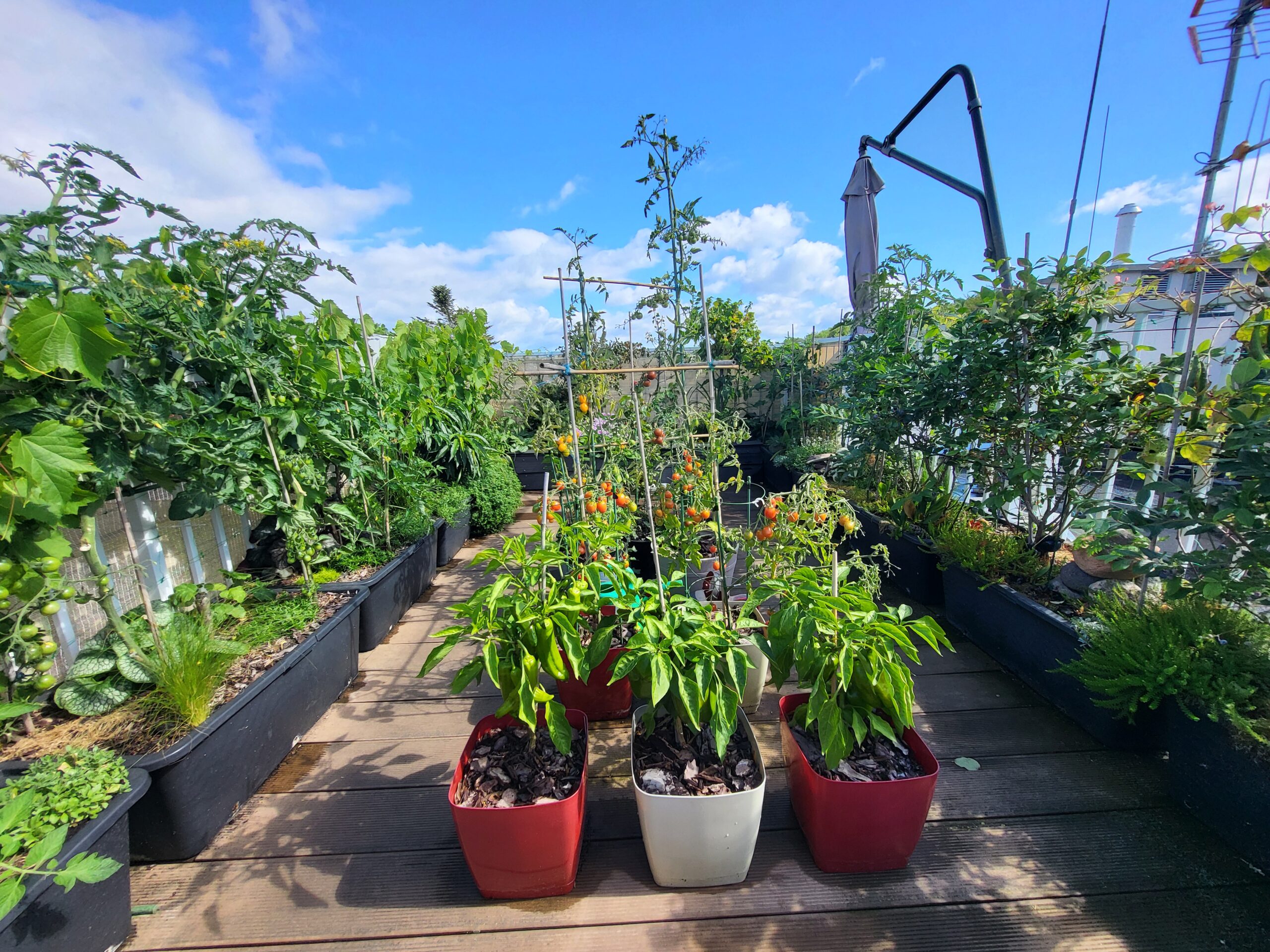
Check the space in the morning, around midday, and later in the afternoon. Buildings, walls, railings, neighboring balconies, and trees can all change the amount of direct sunlight reaching your plants.
A balcony that looks bright may receive only a few hours of direct sun. Another may become extremely hot in the afternoon.
This matters because different plants need different conditions.
Sun-loving vegetables such as tomatoes and peppers generally perform best with plenty of direct light. Many herbs also appreciate sunny conditions, while other plants tolerate partial shade much better.
The important point is simple:
“Choose plants for the light you actually have, not the light you wish you had.”
Observe first. Buy later.
3. Pay Attention to Wind
Wind is easy to underestimate, especially if you have previously gardened at ground level.
Higher balconies and rooftop terraces can be much more exposed. Wind can dry containers quickly, damage leaves, bend stems, knock over lightweight pots, and make tall plants difficult to manage.
I see this very clearly in my own rooftop garden.
Tomatoes and other tall plants need reliable support. Containers need to be stable. In exposed locations, grouping containers or using appropriate wind protection can make a significant difference.
Wind also affects watering. A hot, windy day can dry a container much faster than a calm day with the same temperature.
This is why copying somebody else’s watering schedule rarely works.
Their balcony is not your balcony.
4. Find Your Plant Hardiness Zone
This step is particularly important if you want to grow plants that will remain outdoors for several years.
Before buying perennial plants, shrubs, or fruit plants, find out which plant hardiness zone you live in.
Hardiness zones help gardeners estimate whether a plant can survive typical winter temperatures in a particular area.
This is useful for plants such as berries, fruit trees, perennial herbs, and many ornamental plants.
But container gardeners should be slightly more cautious.
A plant growing in the ground has its roots protected by a large mass of soil. In a container, the root system is much more exposed to cold. A plant that is normally hardy in your area may therefore need additional protection when grown in a pot.
The hardiness zone is not the only factor — wind, exposure, container size, and local microclimate matter too — but it is an excellent place to start.
Check it before buying expensive perennial plants, not after the first winter.
5. Choose the Container Before the Plant
One of the easiest beginner mistakes is choosing containers mainly by appearance.
A beautiful pot is not necessarily a good growing container.
The first thing I look for is drainage. Excess water must be able to leave the container.
Then comes size.
Small containers may look convenient, but they contain less soil and therefore have a smaller reserve of both water and nutrients. They can dry out surprisingly quickly on hot or windy days.
Larger containers are generally more forgiving.
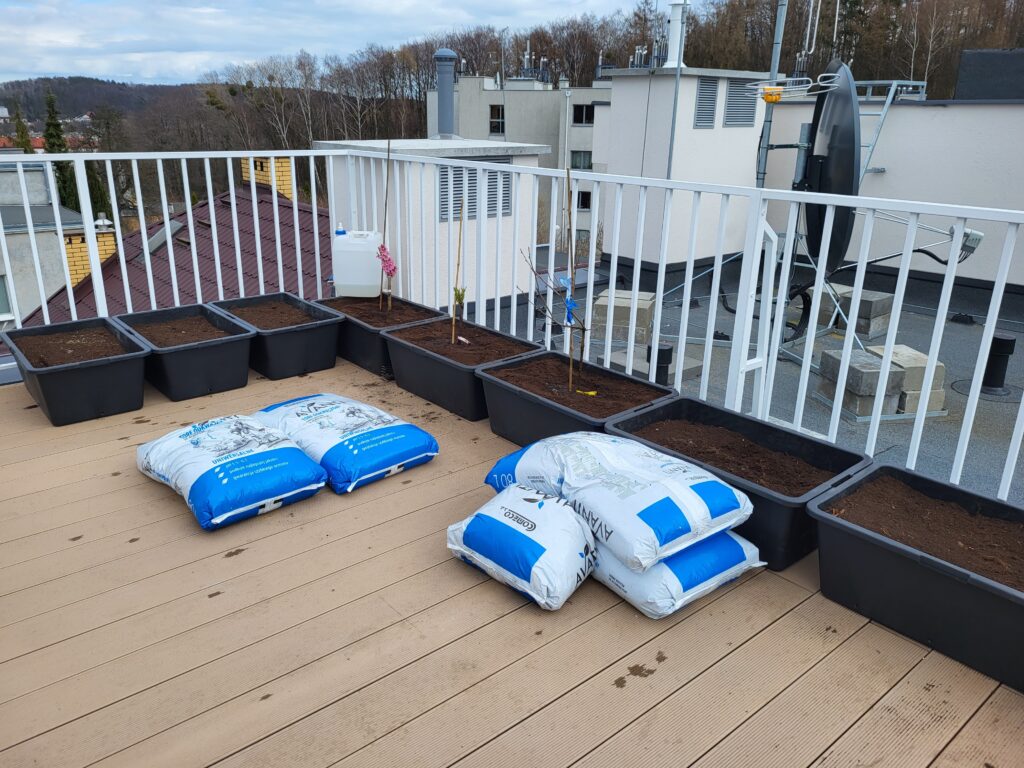
In my rooftop garden, I use large containers extensively, including 80-liter construction tubs. They are not elegant designer planters, but they give plants a substantial volume of soil, hold moisture better, and provide enough room for larger root systems.
That makes daily garden management easier.
You do not need 80-liter containers for every plant. Herbs, strawberries, flowers, peppers, and other crops have different requirements.
The principle is what matters:
“Give the plant enough soil to grow well and enough water reserve to survive a hot day without constant attention.”
6. Use Soil Made for Containers
A container is a small, closed growing environment.
That means the soil has to do several jobs at once. It must hold enough moisture, allow excess water to drain, provide air around the roots, and support the plant.
Simply filling pots with heavy soil dug from the ground is usually not the best solution.
Use a good-quality growing medium suitable for containers and adjust it when necessary for the plants you intend to grow.
Do not underestimate this step.
Plants can often recover from a missed feeding or an imperfect location. Poor drainage and unhealthy roots are much harder to fix once the container is full and the plant is established.
Start with the roots.
The part of the plant you cannot see determines much of what you eventually see above the soil.
7. Make Watering Practical From the Beginning
Before creating a garden with twenty containers, ask yourself:
“How am I going to water all of this in July?”
Watering a few pots is easy.
Watering a productive container garden during a hot, dry period is different.
Make sure water is easily accessible. Think about how long watering will take, where excess water will drain, and what will happen when you are away for several days.
More importantly, learn to check the soil rather than watering automatically according to the calendar.
Push a finger into the growing medium and check the moisture below the surface. When watering is needed, water thoroughly enough to reach the deeper root zone rather than repeatedly wetting only the top layer.
Then watch the plant and the weather.
Hot sun, wind, plant size, container size, and the type of growing medium all change how quickly water is used.
There is no universal rule such as “water every two days.”
The garden will tell you what it needs, but you have to look.
8. Start With Plants That Give You a Good Chance of Success
Your first season is not the time to prove that you can grow everything.
Choose plants that match your conditions and are reasonably easy to manage.
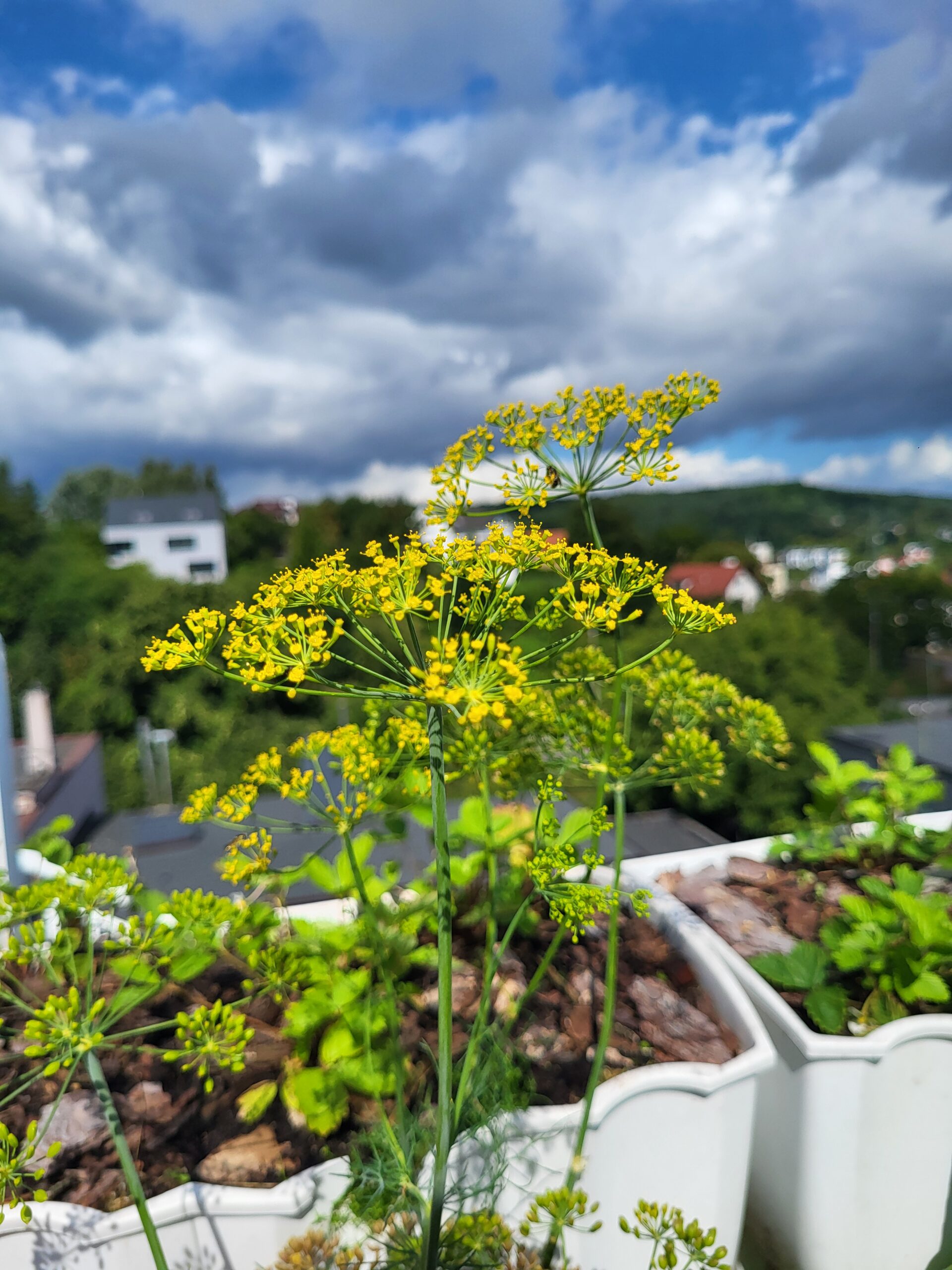
Herbs are an excellent place to start. Chives and thyme, for example, can be useful in the kitchen without requiring a large amount of space.
Strawberries can work very well in containers.
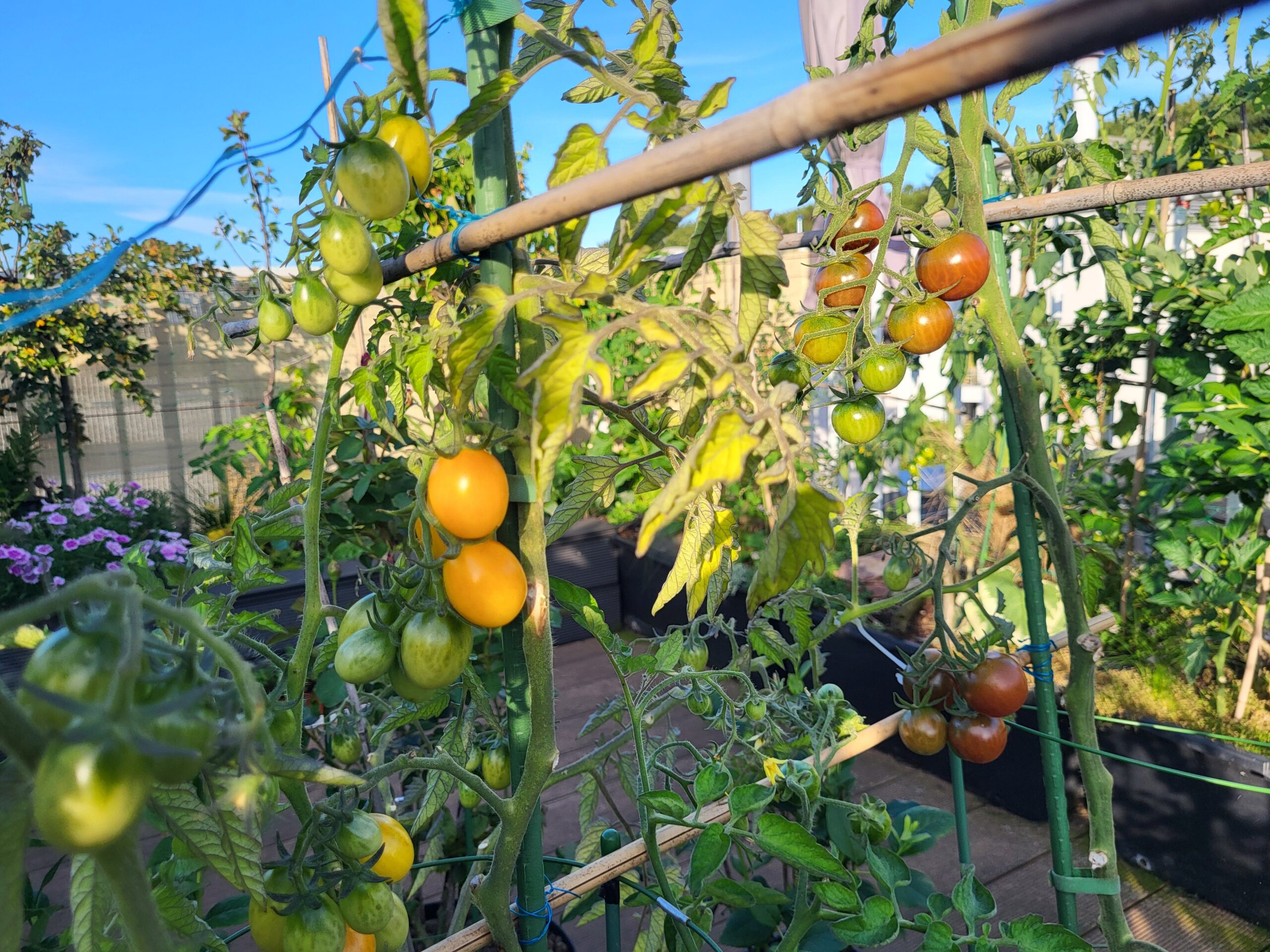
Tomatoes can be extremely rewarding if you have enough sun, an appropriately sized container, regular watering, and good support.
Peppers are another option for warm, sunny positions.
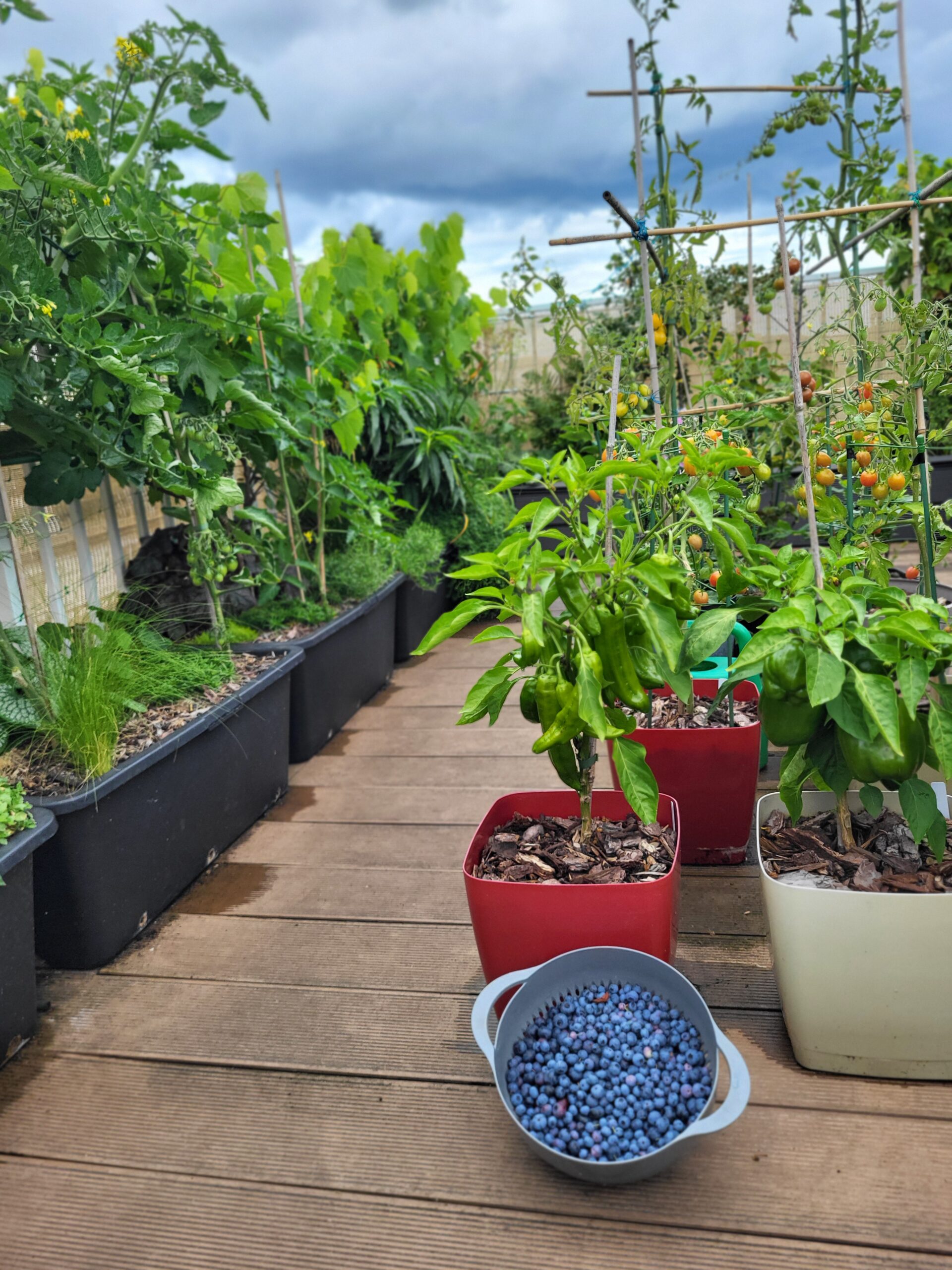
The exact list will depend on your climate and balcony conditions. That is why choosing plants comes after checking sun, wind, available space, and hardiness.
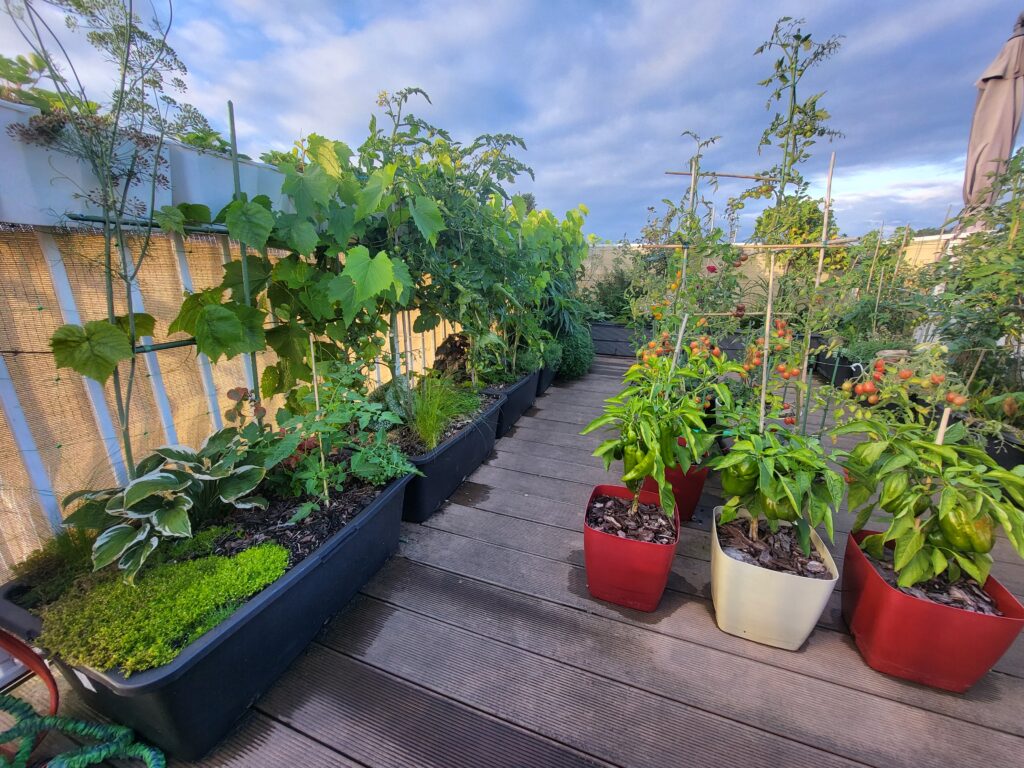
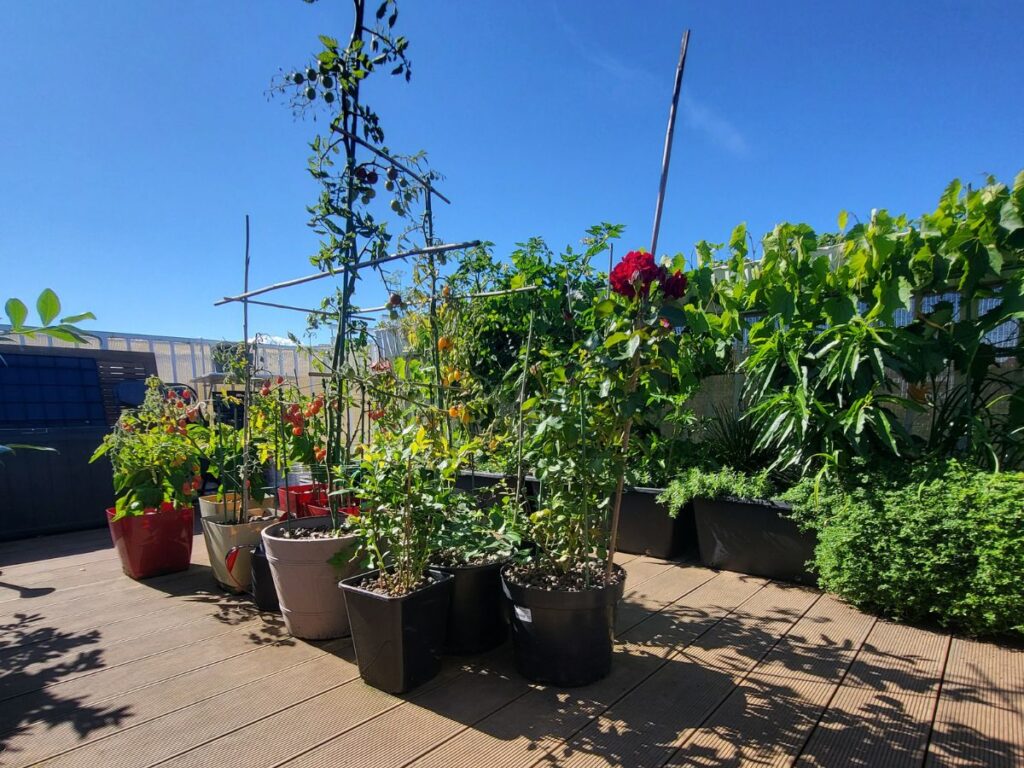
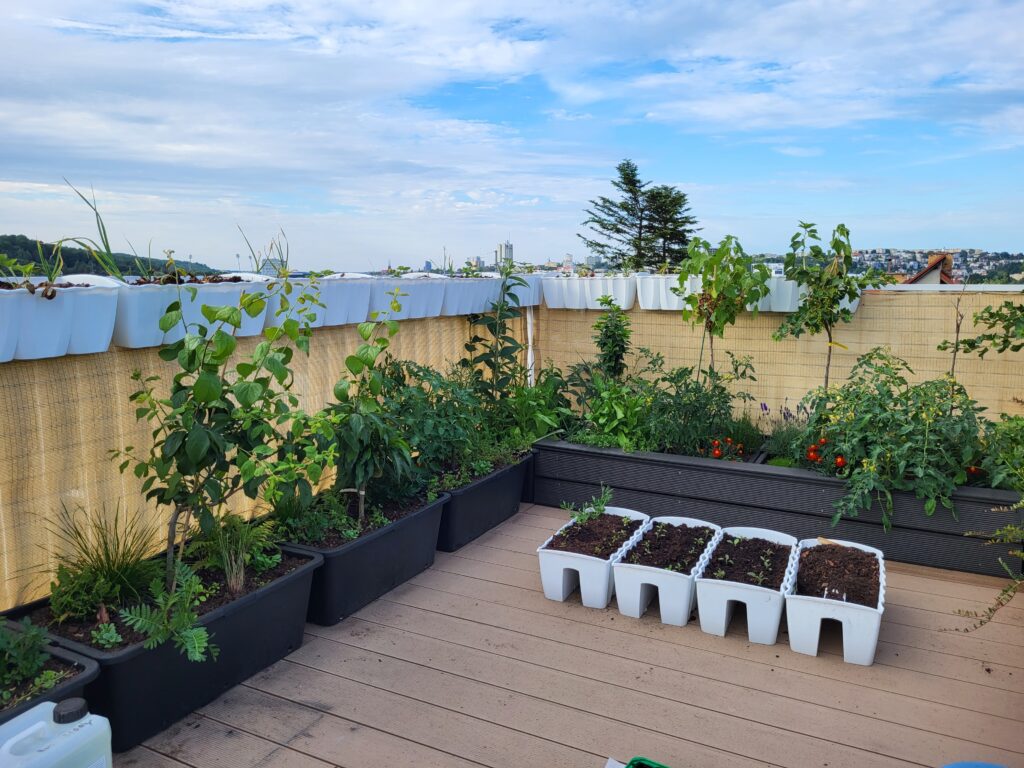
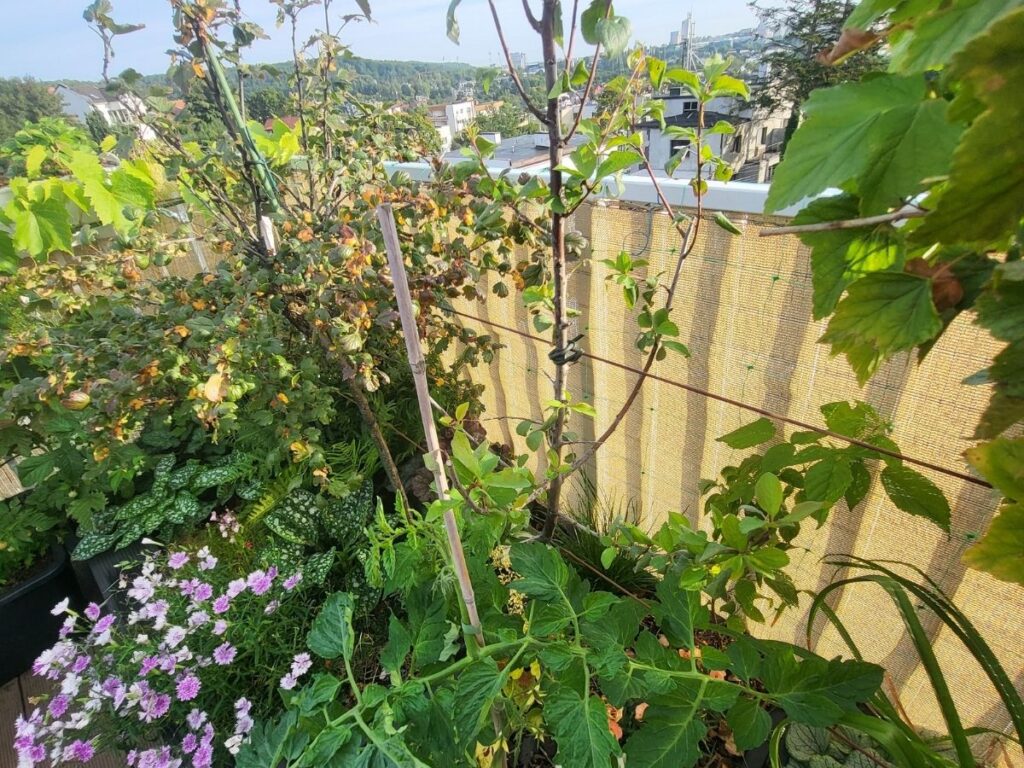
In my own garden, vegetables, fruits, herbs, and ornamental plants grow side by side. It does not have to be one or the other.
A productive garden can also be a beautiful garden.
9. Start Small
This may be the most useful advice in this entire guide.
You do not need to fill the whole balcony in your first weekend.
Start with three to five well-chosen containers.
Learn how quickly they dry.
Learn how plants respond to the sun.
See where the wind is strongest.
Notice which plants grow well and which struggle.
Find out how much time you actually enjoy spending on watering and maintenance.
Then add more.
A small garden that you understand is better than a large garden that becomes a daily problem.
Garden centers make it very easy to buy twenty plants in an afternoon.
The plants then spend the next several months reminding you of that decision.
10. Let the Garden Grow With Your Experience
Your first layout will probably not be your final layout.
That is normal.
Move containers when necessary. Replace plants that are poorly suited to the conditions. Add shade where the sun is too intense. Improve supports. Change the watering system. Try a larger container next season.
A container garden has one major advantage: it can change with you.
My own rooftop garden was not created in one perfect plan. It developed through observation, experiments, successes, and mistakes.
That experience is valuable.
After one growing season, you will understand your balcony far better than you did on the day you bought your first plant.
Your First Balcony Garden Can Be Simple
If you are just starting, remember these ten steps:
- Understand your available space.
- Observe the sunlight.
- Check wind and exposure.
- Find your plant hardiness zone.
- Choose suitable containers.
- Use good container soil.
- Plan how you will water.
- Choose beginner-friendly plants.
- Start with only a few containers.
- Expand as you gain experience.
You do not need a perfect balcony.
You need a space you understand and a few plants suited to it.
Start there.
The rest can grow one season at a time.
Want the Complete Step-by-Step Guide?
Balcony & Rooftop Gardening for Beginners
A Practical Guide to Containers, Soil, Watering, and Starting Your First Garden
The book goes deeper into planning your space, choosing containers, preparing soil, watering correctly, dealing with rooftop conditions, setting up different types of small-space gardens, and caring for your plants during their crucial first weeks.
Digital edition · PDF + EPUB · Instant download · $14.99
Interested in reading future Garden Above the City books early?
Join the Reader Team for occasional opportunities to read selected books and resources before or around publication.