What to Grow on a Balcony: Easy Plants for Beginners
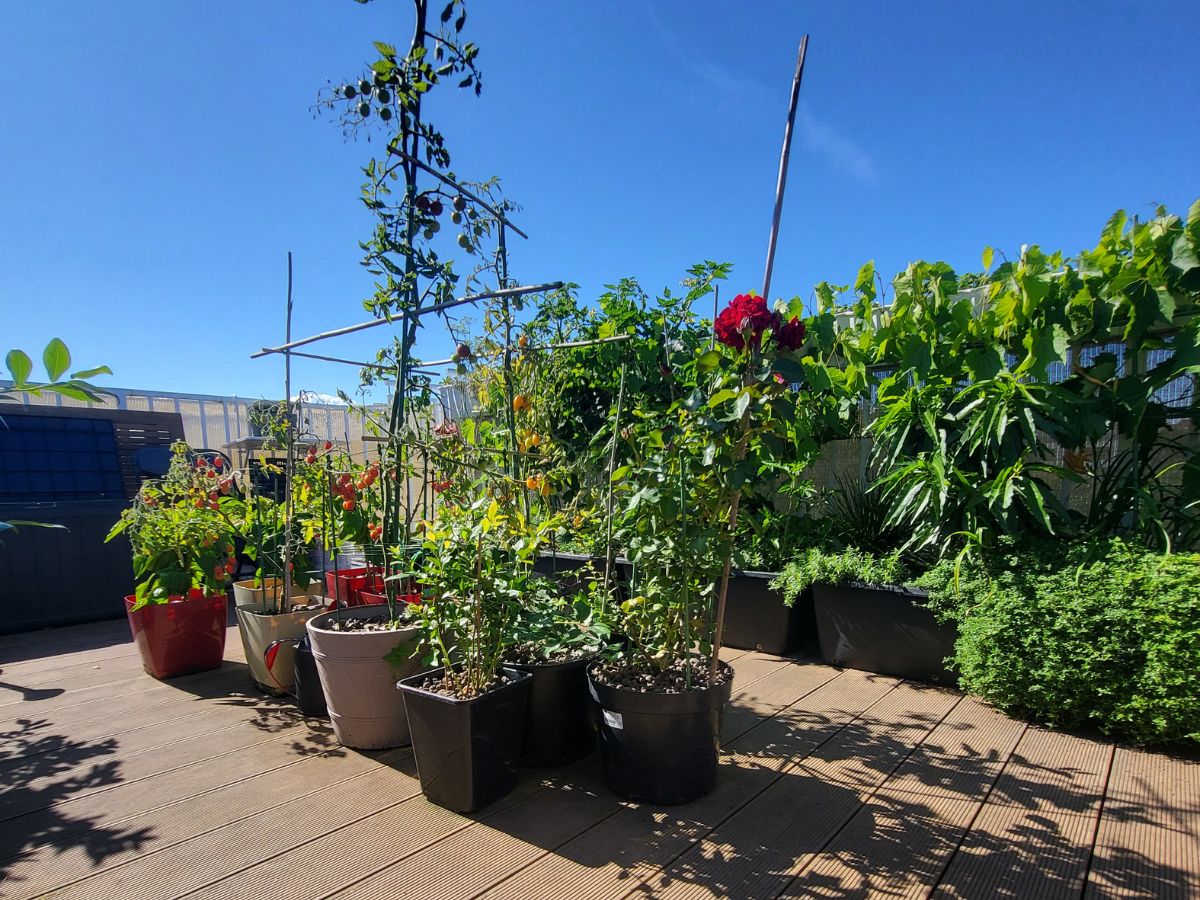
One of the first questions new balcony gardeners ask is simple:
What can I actually grow here?
The answer is usually: much more than you think.
A balcony or rooftop garden can produce vegetables, herbs, fruit, and ornamental plants — even when space is limited. The key is choosing plants that match your sunlight, climate, container size, and the amount of care you want to give them.
I grow a mixture of vegetables, fruit, herbs, and ornamental plants in containers on a rooftop garden. Some plants are remarkably easy. Others need more space, support, regular watering, or special soil.
For beginners, the best approach is not to start with everything at once.
Choose a few reliable plants, learn how they behave in containers, and expand from there.
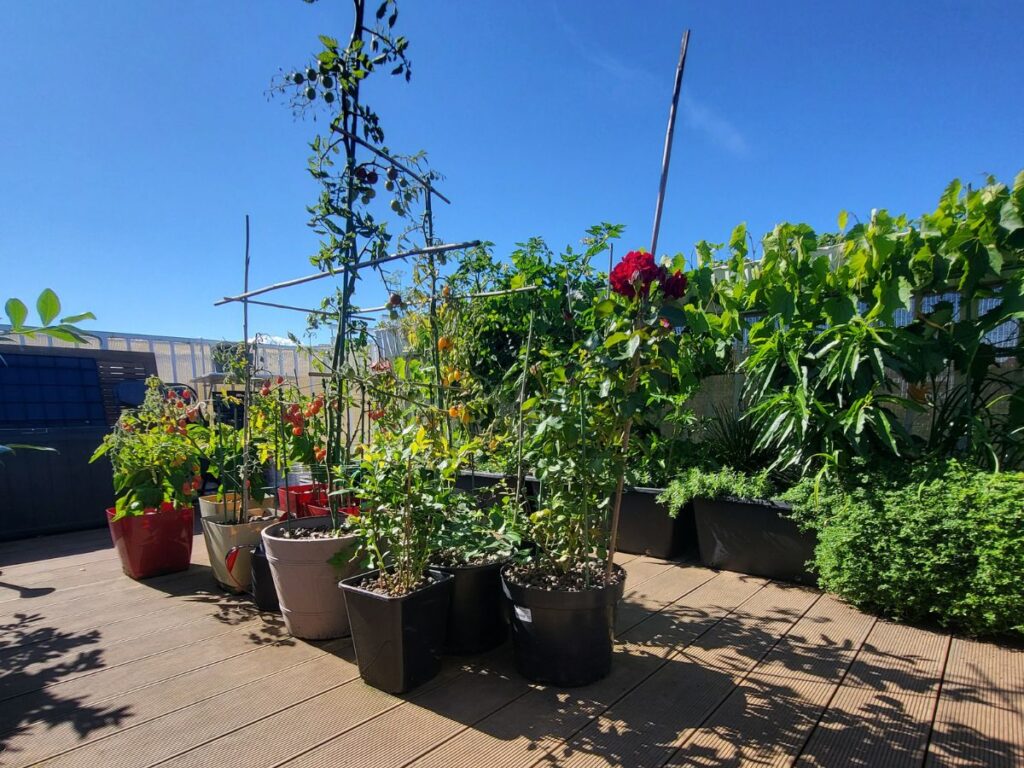
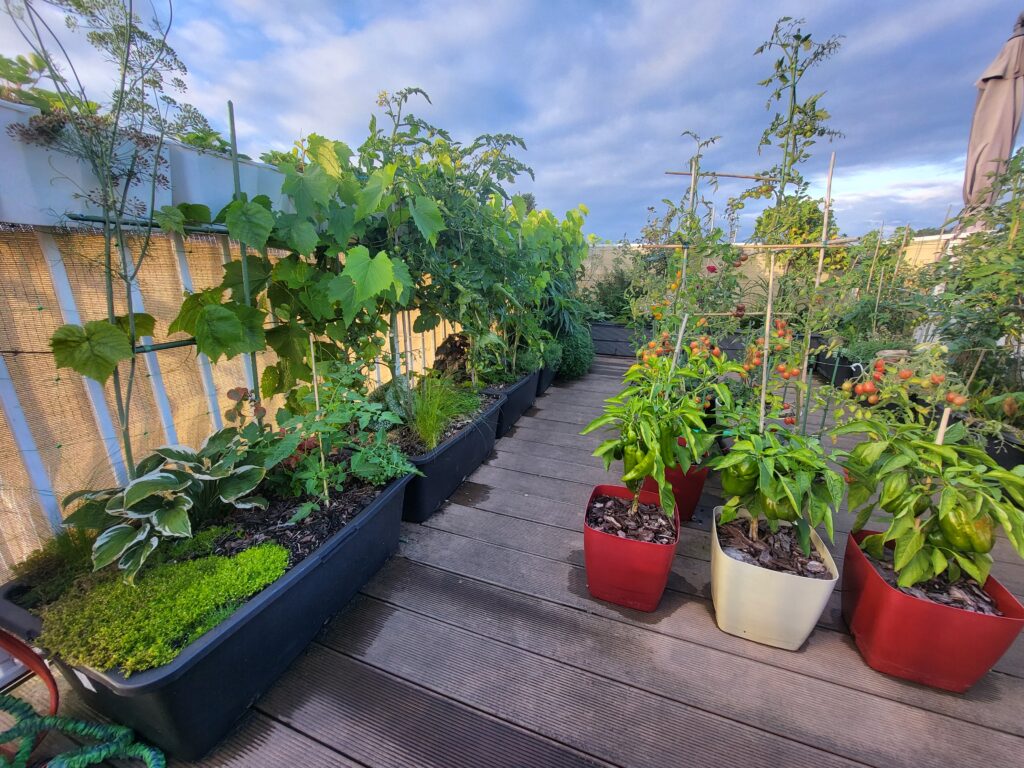
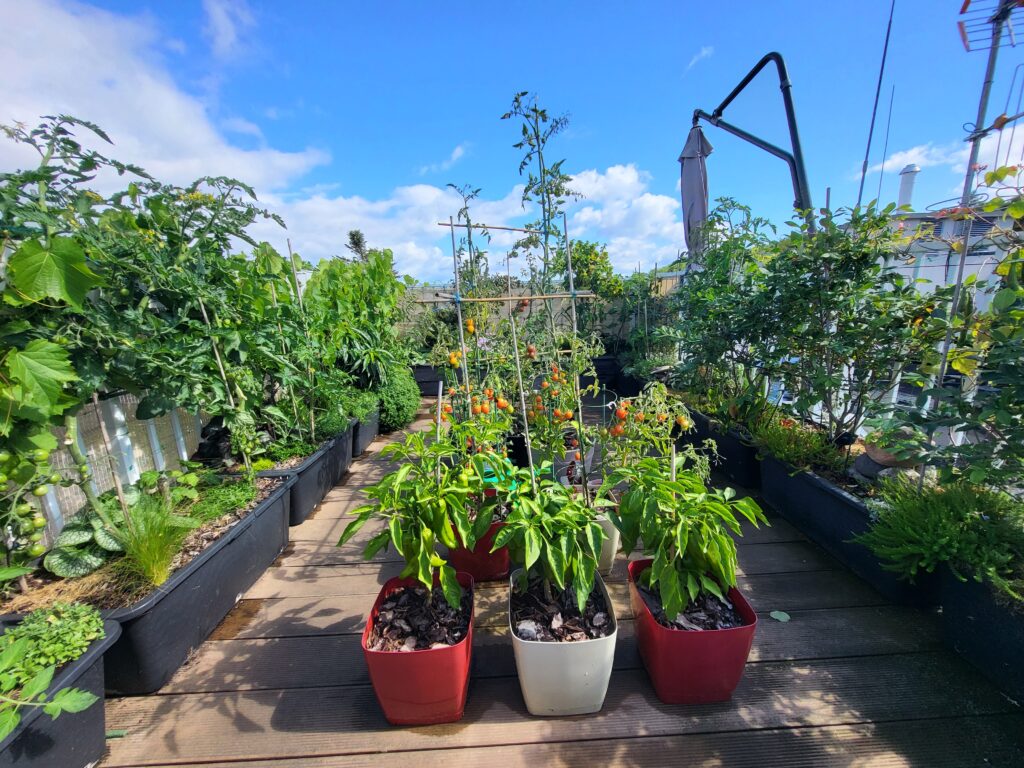
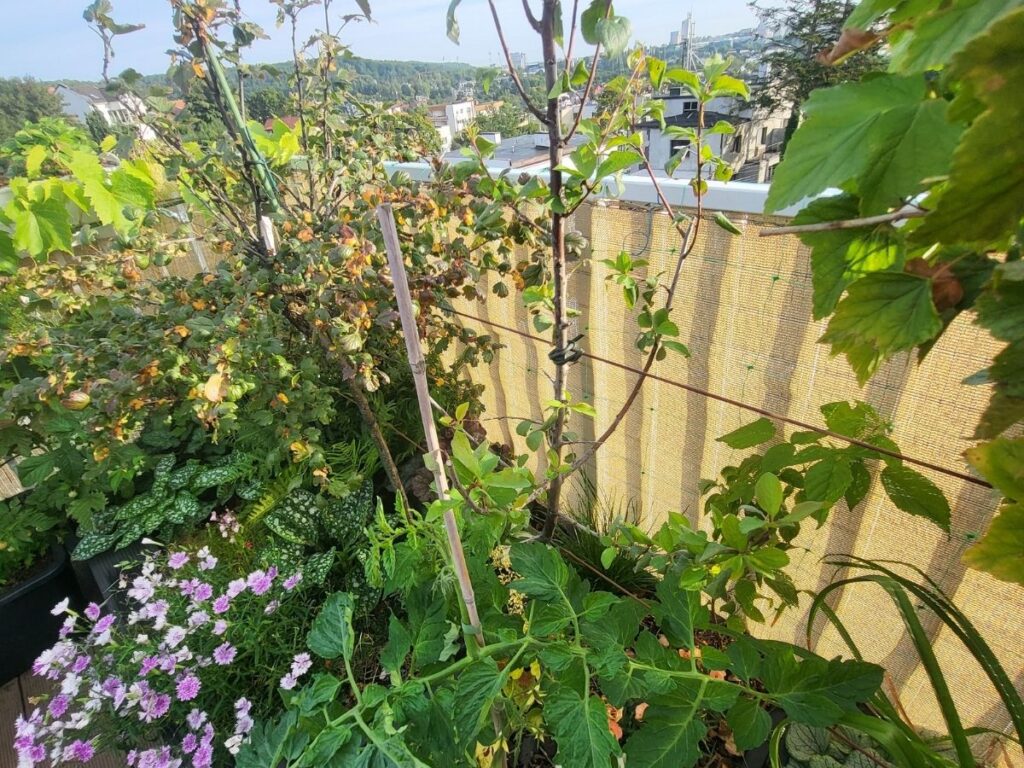
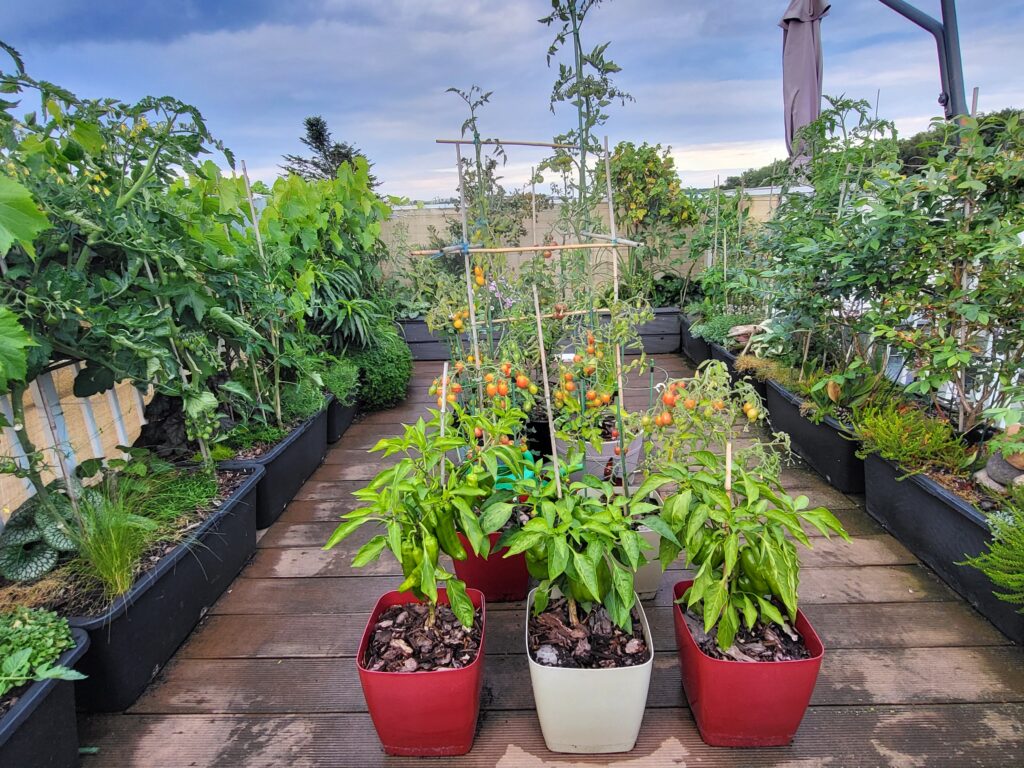
A small-space garden can combine vegetables, fruit, herbs, and ornamental plants in the same rooftop or balcony space.
Start With the Conditions You Have
Before choosing plants, look at your balcony rather than at a seed catalogue.
The most important questions are:
- How much direct sun does the space receive?
- Is it exposed to strong wind?
- How large can your containers realistically be?
- Does the space become very hot in summer?
- Will your plants stay outside during winter?
- How much time do you want to spend watering and caring for them?
A sunny balcony may be ideal for tomatoes, peppers, herbs, strawberries, and many flowering plants.
A balcony with less direct sun can still support leafy greens, some herbs, hostas, ferns, and other shade-tolerant ornamentals.
If you are not sure about your light conditions, start with How Much Sun Does a Balcony Garden Need?
Easy Vegetables to Grow on a Balcony
Vegetables are often what bring beginners into container gardening.
Fortunately, many popular vegetables grow very well in pots.
For this guide, I use a simple difficulty scale:
🟢 Easy
🟡 Moderate
🔴 More demanding
Tomatoes — 🟡 Moderate
Light: Full sun
Container: Large
Season: Warm-season annual
Tomatoes are one of the most popular balcony crops, and for good reason.
They can produce a surprising amount of food from a relatively small footprint.
For beginners, compact, bush, dwarf, patio, or cherry varieties are usually easier to manage than very vigorous types.
The important thing to remember is that a tomato plant can become much larger than it looks when you buy it as a young seedling.
It may need:
- a large container,
- strong support,
- regular watering,
- feeding during the growing season,
- plenty of sun.
Tomatoes are not difficult, but they are not completely carefree either.
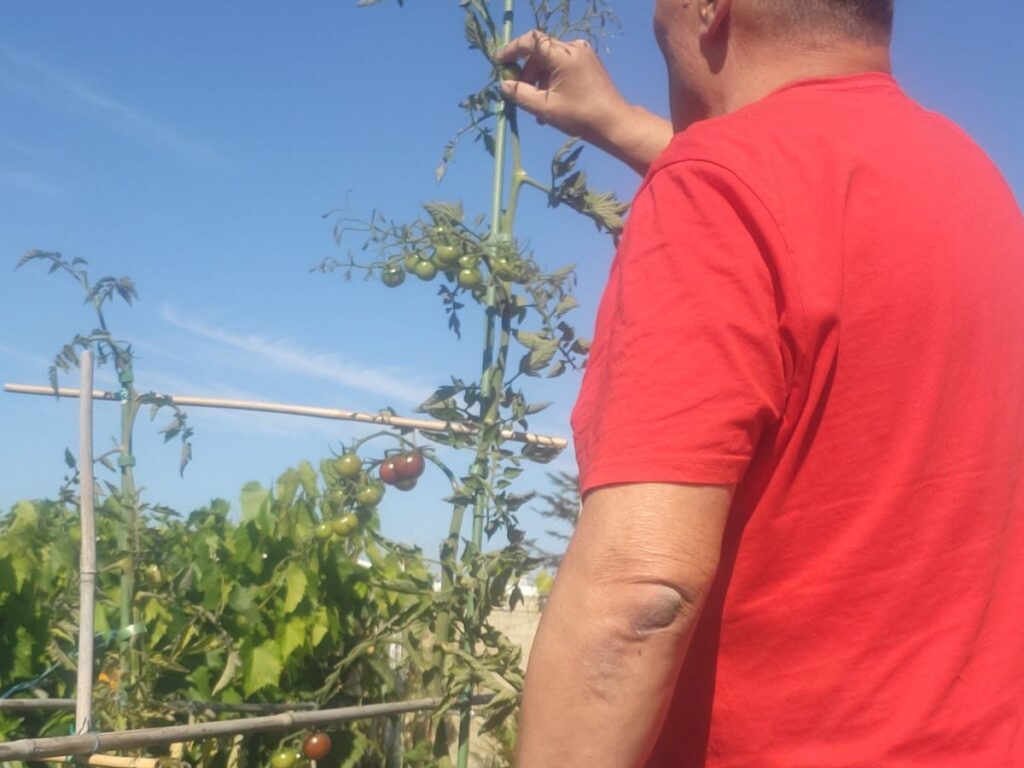
Tomato plants can become much larger than beginners expect, so allow enough space and provide strong support.
Peppers / Capsicum — 🟢 Easy to 🟡 Moderate
Light: Full sun
Container: Medium to large
Season: Warm-season annual
Peppers are excellent container plants.
They stay more compact than many tomatoes and usually do not need complicated support.
They also work well in mixed container gardens.
In North America and the UK, you will often see the word pepper.
In Australia, capsicum is commonly used for sweet peppers.
Whatever the name, they are a very good choice for a warm, sunny balcony.
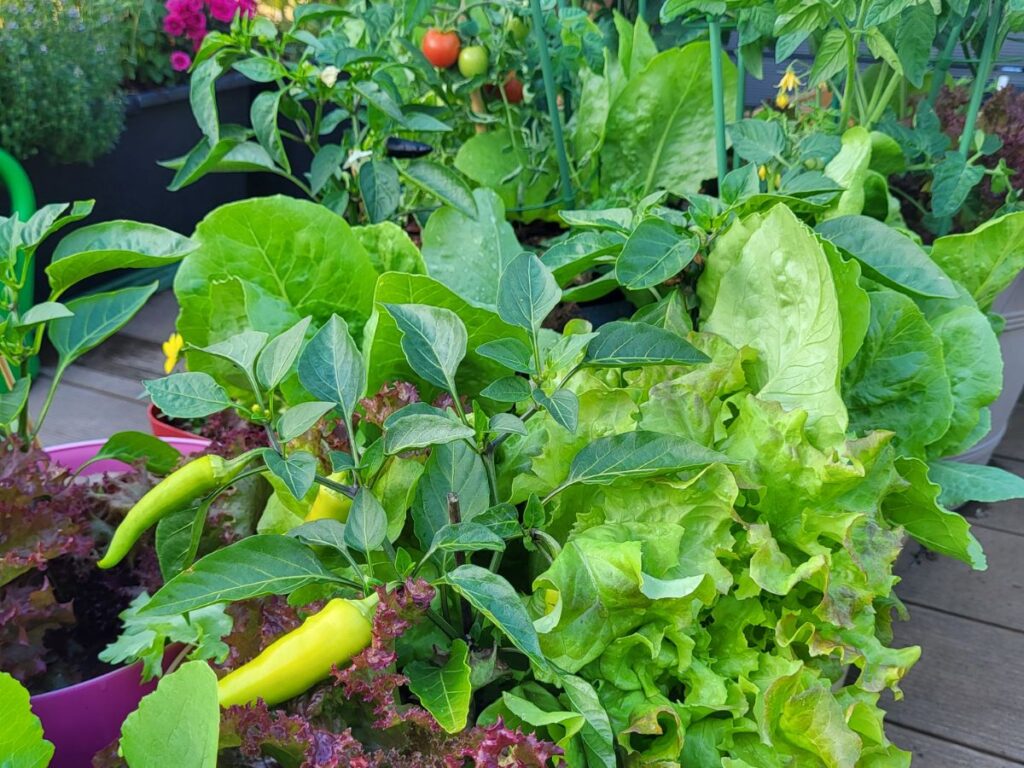
Peppers work well in containers and can be grown alongside leafy vegetables such as lettuce.
Lettuce and Salad Greens — 🟢 Easy
Light: Sun to partial shade
Container: Small to medium
Season: Usually cool-season
Lettuce is one of the easiest crops for beginners.
It grows quickly, does not need a deep container, and can be harvested leaf by leaf.
Salad greens are especially useful for small balconies because you do not need to dedicate a huge pot to one plant.
They are also a good choice for spring and autumn, when heat-loving vegetables may grow more slowly.
In very hot climates, including many parts of Australia and the southern United States, lettuce often performs better during cooler parts of the year.
Radishes — 🟢 Easy
Light: Sun to partial shade
Container: Small to medium
Season: Cool-season
Radishes grow quickly and need relatively little space.
That makes them ideal for beginners who want to see results fast.
Choose a container deep enough for the roots and keep the soil evenly moist.
They are particularly useful as an early or late-season crop.
Carrots — 🟢 Easy
Light: Full sun
Container: Medium depth
Season: Cool-season
Carrots can grow very well in containers.
For smaller pots, choose shorter or compact varieties.
Loose, stone-free potting mix is important because compacted soil can cause distorted roots.
This is a good example of why container gardening can sometimes be easier than growing directly in poor garden soil — you control the growing medium.
Beans — 🟢 Easy
Light: Full sun
Container: Medium to large
Season: Warm-season
Beans are productive and relatively simple to grow.
Bush beans stay compact.
Climbing beans use vertical space, which makes them especially useful on balconies.
A railing, trellis, or other support can turn unused vertical space into productive growing area.
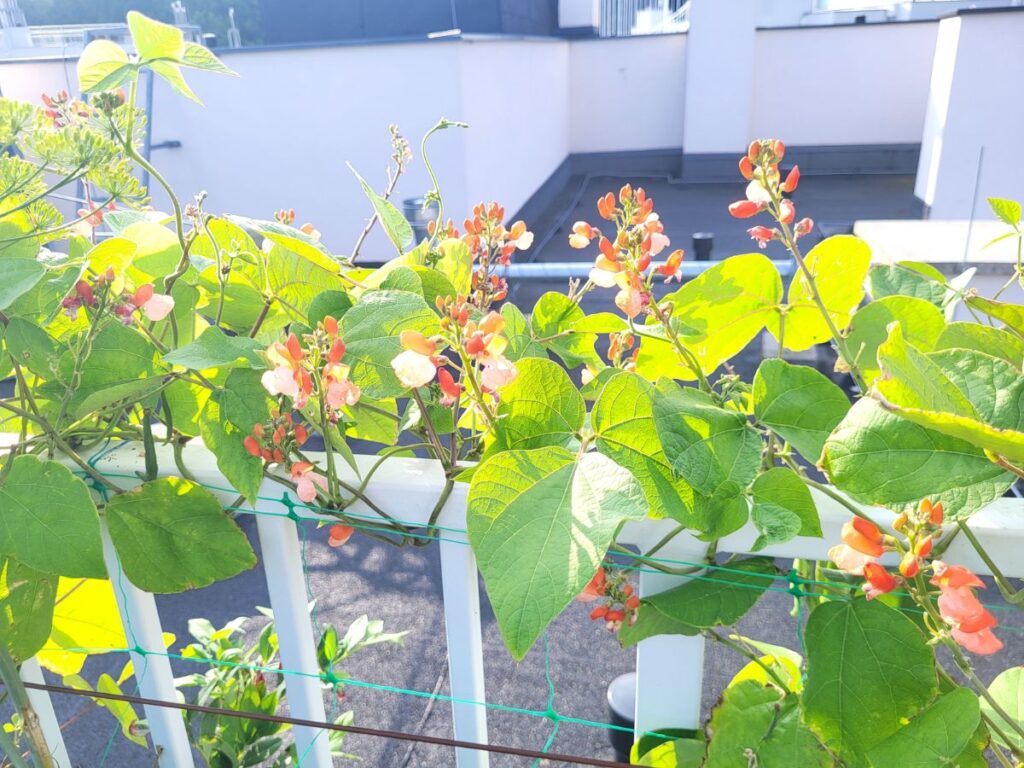
Climbing vegetables such as beans can make excellent use of vertical balcony space.
Easy Herbs to Grow in Containers
Herbs are among the best plants for beginners.
Most do not need enormous containers, and you can harvest them regularly throughout the season.
They are also ideal for balconies because even a few pots close to the kitchen can be genuinely useful.
Basil — 🟢 Easy
Light: Full sun
Container: Small to medium
Season: Warm-season annual
Basil loves warmth.
It works well in pots and can be harvested repeatedly.
Cold weather is its main limitation.
In cooler regions of Canada, the UK, and the northern United States, basil is usually grown only during the warm season.
Parsley — 🟢 Easy
Light: Sun to partial shade
Container: Small to medium
Season: Cool to mild conditions
Parsley is reliable and useful.
It tolerates less-than-perfect conditions better than many heat-loving herbs.
It also works well in mixed containers.
Chives — 🟢 Easy
Light: Sun to partial shade
Container: Small
USDA: approximately Zones 3–9
Chives are one of the easiest perennial herbs to grow in containers.
They tolerate cold climates well and can return year after year in suitable conditions.
Thyme — 🟢 Easy
Light: Full sun
Container: Small to medium
USDA: approximately Zones 5–9, depending on variety
Thyme likes good drainage and does not need a large container.
It is particularly useful for sunny balconies.
Once established, it generally prefers slightly drier conditions than thirsty vegetables such as tomatoes.
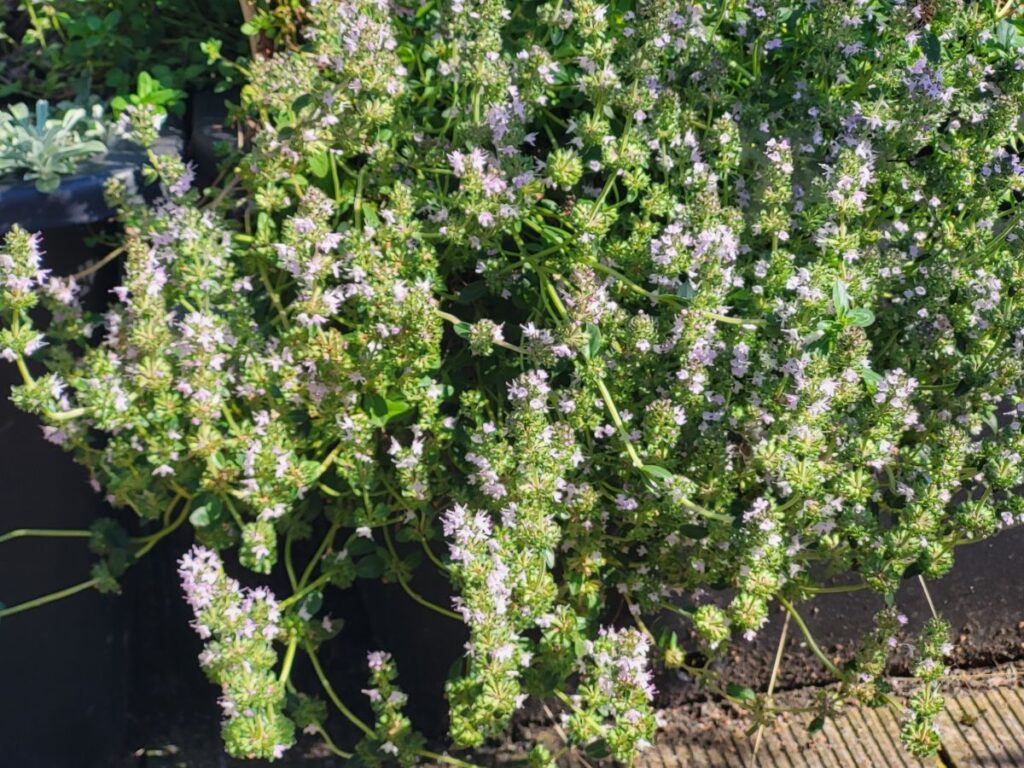
Thyme is a compact, sun-loving herb that works very well in containers.
Mint — 🟢 Easy
Light: Sun to partial shade
Container: Small to medium
USDA: often Zones 3–9, depending on species
Mint is extremely easy to grow.
In fact, growing it in a container is often better than planting it in the ground because its roots can spread aggressively.
Keeping mint in its own pot makes it much easier to control.
Rosemary — 🟡 Moderate
Light: Full sun
Container: Medium
USDA: usually around Zones 8–10, depending on variety
Rosemary is easy in warm climates but becomes more complicated where winters are cold.
In much of the UK and warmer parts of the United States, it may survive outdoors with suitable conditions.
In colder areas of Canada or the northern United States, container plants may need winter protection.
Easy Fruits to Grow on a Balcony
Fruit takes a little more planning than herbs or lettuce, but several types are very well suited to containers.
Strawberries — 🟢 Easy
Light: Full sun
Container: Small to medium
USDA: commonly Zones 3–10, depending on variety
Strawberries are one of the best fruits for beginners.
They grow in:
- pots,
- troughs,
- window boxes,
- hanging baskets,
- larger mixed containers.
They also begin producing relatively quickly compared with fruit trees.
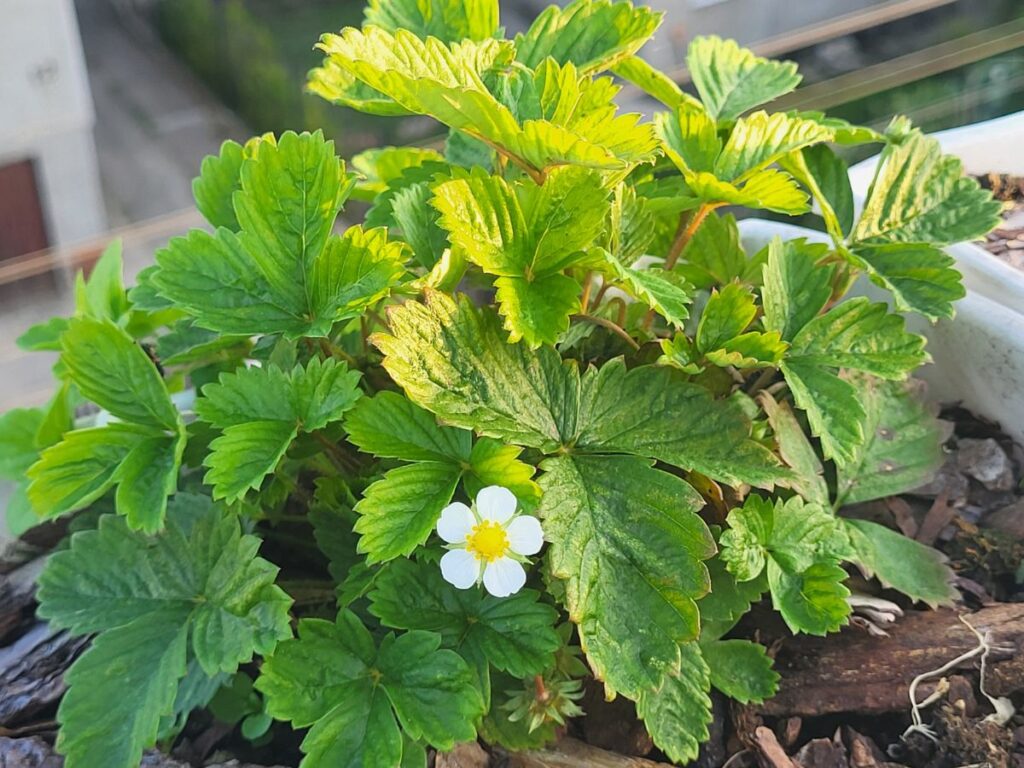
Strawberries are one of the easiest fruits to grow in small containers.
Blueberries — 🟡 Moderate
Light: Full sun to partial sun
Container: Large
USDA: commonly Zones 3–8, depending strongly on variety
Blueberries are excellent container plants, but they have one important requirement:
acidic soil.
This is actually one reason containers can work so well for them.
Instead of trying to change the soil in an entire garden, you can provide suitable acidic potting mix in one container.
Choose a variety suited to your climate.
There are major differences between cold-hardy northern blueberries and varieties intended for warmer climates.
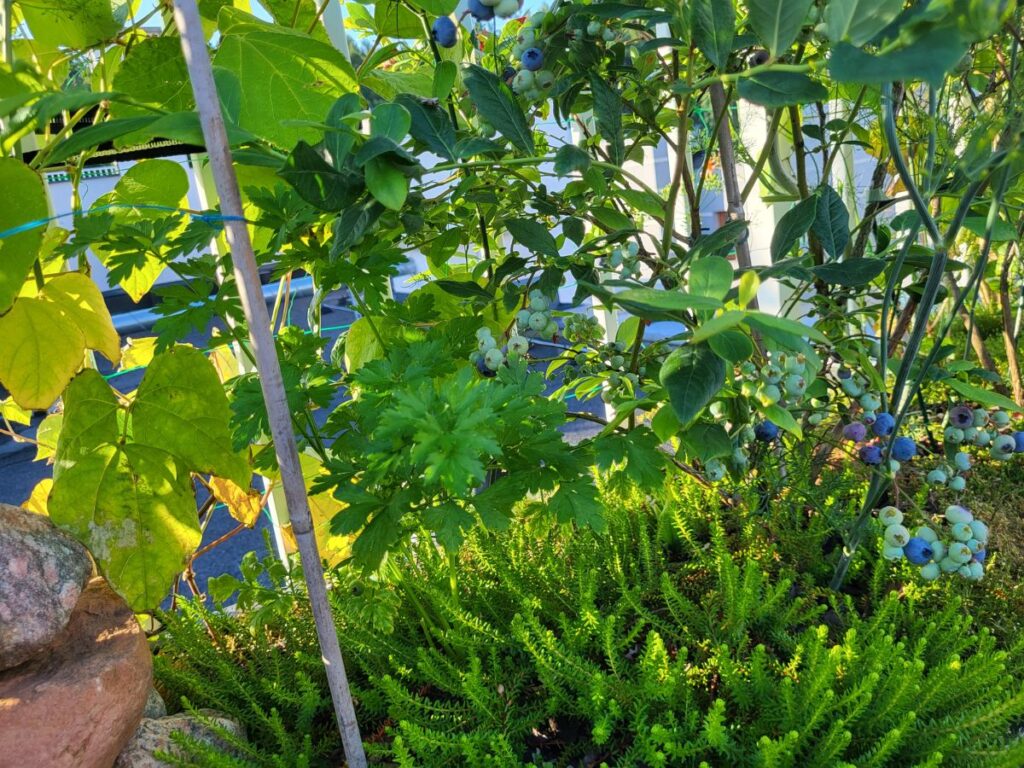
Blueberries grow well in containers when they are given acidic potting mix and a variety suited to the local climate.
Compact Raspberries — 🟡 Moderate
Light: Full sun
Container: Large
USDA: commonly Zones 3–8, depending on variety
Raspberries can grow in containers, especially compact varieties.
They need more space than strawberries and may require support.
Cold-hardy varieties are particularly useful in the UK, Canada, and cooler parts of the United States.
Dwarf Fruit Trees — 🔴 More demanding
Light: Usually full sun
Container: Large
USDA: depends completely on species, rootstock, and variety
A large balcony or rooftop can even support fruit trees.
Possible choices include:
- apple,
- pear,
- peach,
- nectarine,
- some citrus,
- other dwarf fruit trees suited to the local climate.
The key word is dwarf.
A fruit tree intended for a garden orchard is usually not the same thing as one selected for container growing.
Rootstock matters.
Climate matters.
Winter temperatures matter.
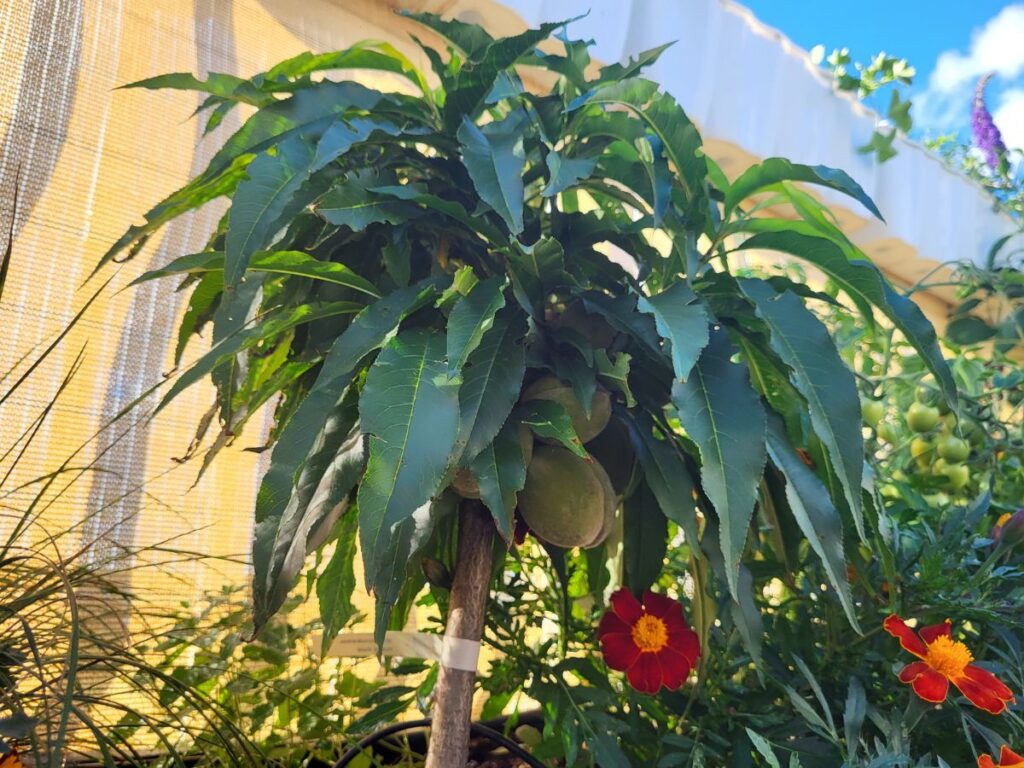
Dwarf or compact fruit trees can grow successfully in large containers when the variety and rootstock suit the climate.
Easy Ornamental Plants for Balcony Containers
A productive balcony does not need to contain only edible plants.
Flowers and foliage plants can make the space more attractive, support pollinators, and fill areas that are unsuitable for vegetables.
The best ornamental plants depend heavily on sunlight and climate.
Geraniums / Pelargoniums — 🟢 Easy
Light: Full sun
Container: Small to medium
Pelargoniums are classic container plants.
They tolerate sun well and flower for a long period.
They are widely used on balconies in Europe, North America, and Australia.
Petunias and Calibrachoa — 🟢 Easy
Light: Full sun
Container: Small to medium
Season: Usually grown as annuals
These are excellent choices for sunny balconies.
They produce a lot of flowers without requiring a huge container.
They are especially useful for railing planters and hanging containers.
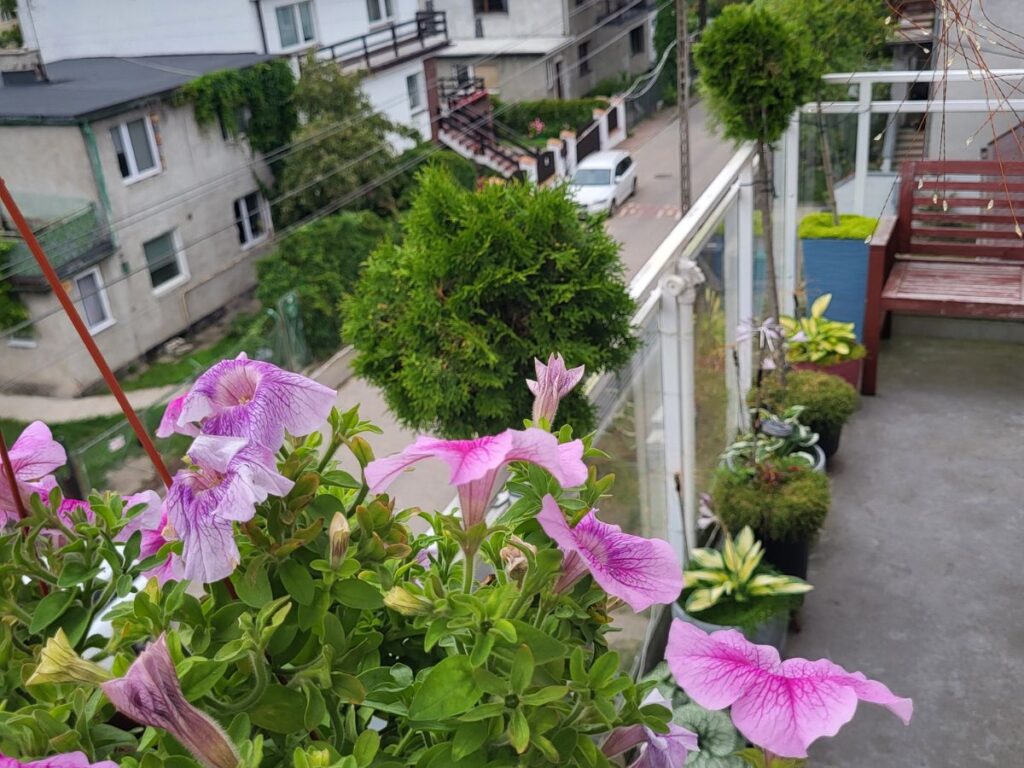
Petunias are easy flowering plants for sunny balconies and work well in containers and railing planters.
Lavender — 🟡 Moderate
Light: Full sun
Container: Medium
USDA: often Zones 5–9, depending on species and variety
Lavender prefers sun and very good drainage.
It dislikes constantly wet soil.
In cold climates, winter survival in containers can be less reliable than survival in the ground.
Sedum — 🟢 Easy
Light: Full sun
Container: Small to medium
USDA: varies widely by species
Sedums are excellent for sunny, relatively dry containers.
Many are low-maintenance and tolerate periods of dryness better than thirsty vegetables.
Hostas — 🟢 Easy
Light: Partial shade to shade
Container: Medium to large
USDA: approximately Zones 3–9
Hostas are excellent container plants for balconies without strong direct sunlight.
Their foliage can be just as decorative as flowers.
They also combine very well with ferns and heucheras.
Heucheras — 🟢 Easy
Light: Sun to partial shade, depending on variety
Container: Small to medium
USDA: commonly Zones 4–9
Heucheras are useful because their foliage adds colour for a long period.
They work especially well in mixed ornamental containers.
Ferns — 🟢 Easy
Light: Partial shade to shade
Container: Medium
USDA: depends on species
Ferns are ideal for cooler, shaded parts of a balcony.
Choose a species suitable for your climate, especially if you want it to survive outdoors through winter.
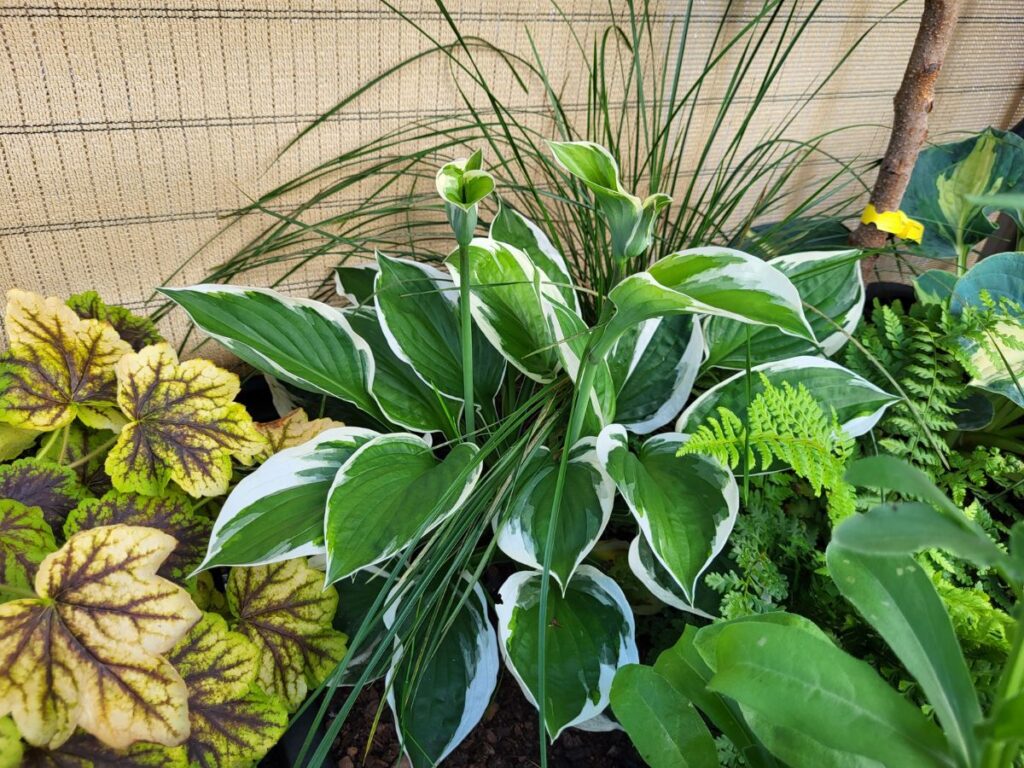
Shaded balconies can support attractive container plantings with hostas, heucheras, and ferns.
A Quick Note for Gardeners in Different Countries
The same plant list does not work perfectly everywhere.
Climate matters.
United States
The United States covers an enormous range of climates.
A balcony in Florida has very different conditions from one in Minnesota.
Use your local USDA hardiness zone mainly for perennial plants, fruit bushes, herbs that overwinter, and fruit trees.
For annual vegetables, pay more attention to your growing season, frost dates, and summer temperatures.
United Kingdom
Many classic container plants perform very well in the UK.
Good beginner choices include:
- lettuce,
- peas,
- beans,
- tomatoes,
- herbs,
- strawberries,
- blueberries,
- raspberries,
- apples and pears on suitable rootstocks.
Warm-season plants such as peppers and tomatoes benefit from the sunniest, most sheltered position available.
Canada
Cold winters make plant selection especially important.
Annual vegetables and herbs can still be excellent balcony crops during the growing season.
For perennial fruit, herbs, and ornamental plants, choose varieties hardy enough for your region.
Remember that roots in containers can be more exposed to cold than roots planted in the ground.
Australia
Australia also contains many very different climates.
In warmer areas, growing seasons can be much longer than in Canada or northern Europe.
Some cool-season vegetables may perform best outside the hottest part of the year.
Alongside the plants listed above, Australian gardeners can also consider compact native ornamentals such as:
- Brachyscome,
- Lomandra,
- compact Grevillea varieties.
Dwarf citrus can also be an excellent container option in suitable climates.
Do Not Choose Plants by Country Alone
Country is only the beginning.
Your actual balcony matters more.
Two people living in the same city may have very different growing conditions.
One balcony may face south and receive hours of intense sun.
Another may be shaded by the building for most of the day.
One may be protected from wind.
Another may be exposed on the tenth floor.
Choose plants based on:
- sunlight,
- temperature,
- wind,
- container size,
- local climate,
- how much care you want to provide.
That will give you better results than simply copying someone else’s plant list.
A Good Beginner Combination
If you are starting your first balcony garden and do not know what to choose, keep it simple.
A very manageable first collection might be:
- one tomato or pepper plant,
- one container of lettuce,
- basil or chives,
- strawberries,
- one flowering container.
That already gives you:
vegetables + herbs + fruit + flowers
without turning your balcony into a full-time job.
Once you know how quickly your pots dry, how much sun you receive, and which plants perform well, you can expand.
That is how a container garden grows naturally — one successful plant at a time.
Final Thoughts
The best balcony plants are not necessarily the most unusual ones.
For beginners, reliable plants are better.
Choose crops that:
- suit your sunlight,
- fit your containers,
- match your climate,
- provide a realistic chance of success.
Tomatoes, peppers, lettuce, herbs, strawberries, blueberries, and simple ornamental plants can already create a varied and productive balcony garden.
Later, you can experiment with larger fruit plants, climbers, specialist varieties, and more demanding containers.
The goal at the beginning is simple:
grow something successfully and enjoy doing it.
Want the Complete Step-by-Step Guide?
Balcony & Rooftop Gardening for Beginners
A Practical Guide to Containers, Soil, Watering, and Starting Your First Garden
The book goes deeper into planning your space, choosing containers, preparing soil, watering correctly, dealing with rooftop conditions, setting up different types of small-space gardens, and caring for your plants during their crucial first weeks.
Digital edition · PDF + EPUB · Instant download · $14.99
Interested in reading future Garden Above the City books early?
Join the Reader Team for occasional opportunities to read selected books and resources before or around publication.