How Much Sun Does a Balcony Garden Need?
One of the first questions new balcony gardeners ask is simple:
How much sun do my plants need?
The answer is not as simple as “the more, the better.”
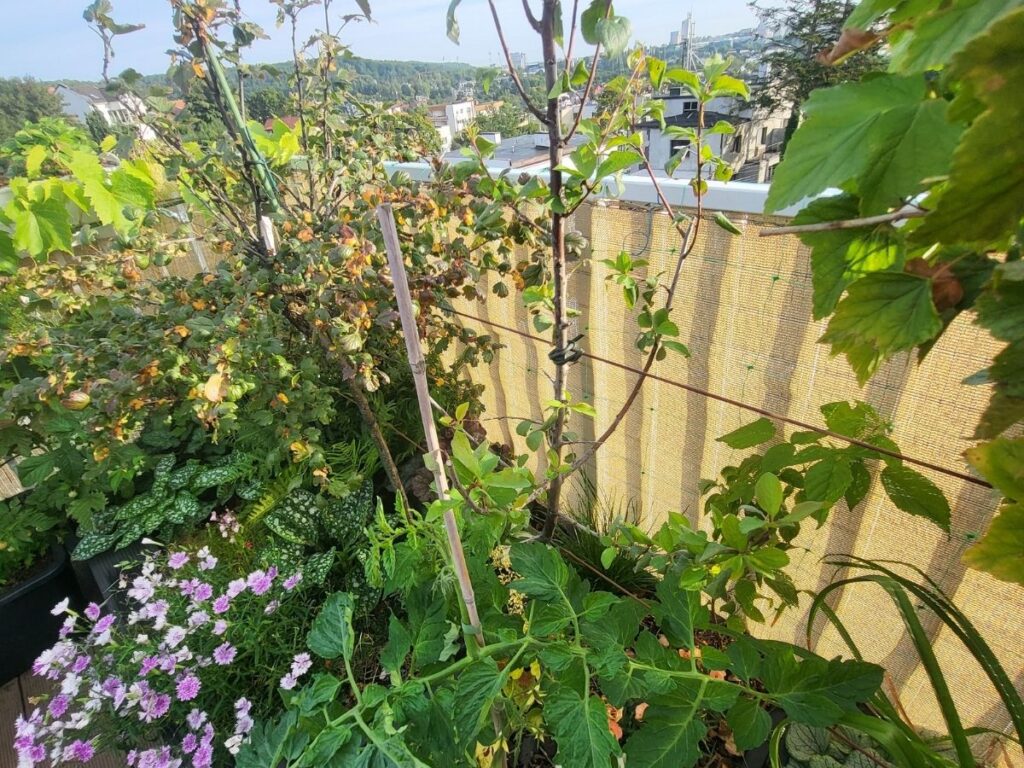
A balcony or rooftop is rarely equally sunny everywhere. One corner may receive strong direct sunlight for most of the day, while another may be shaded by a wall, railing, neighboring building, or even by other plants.
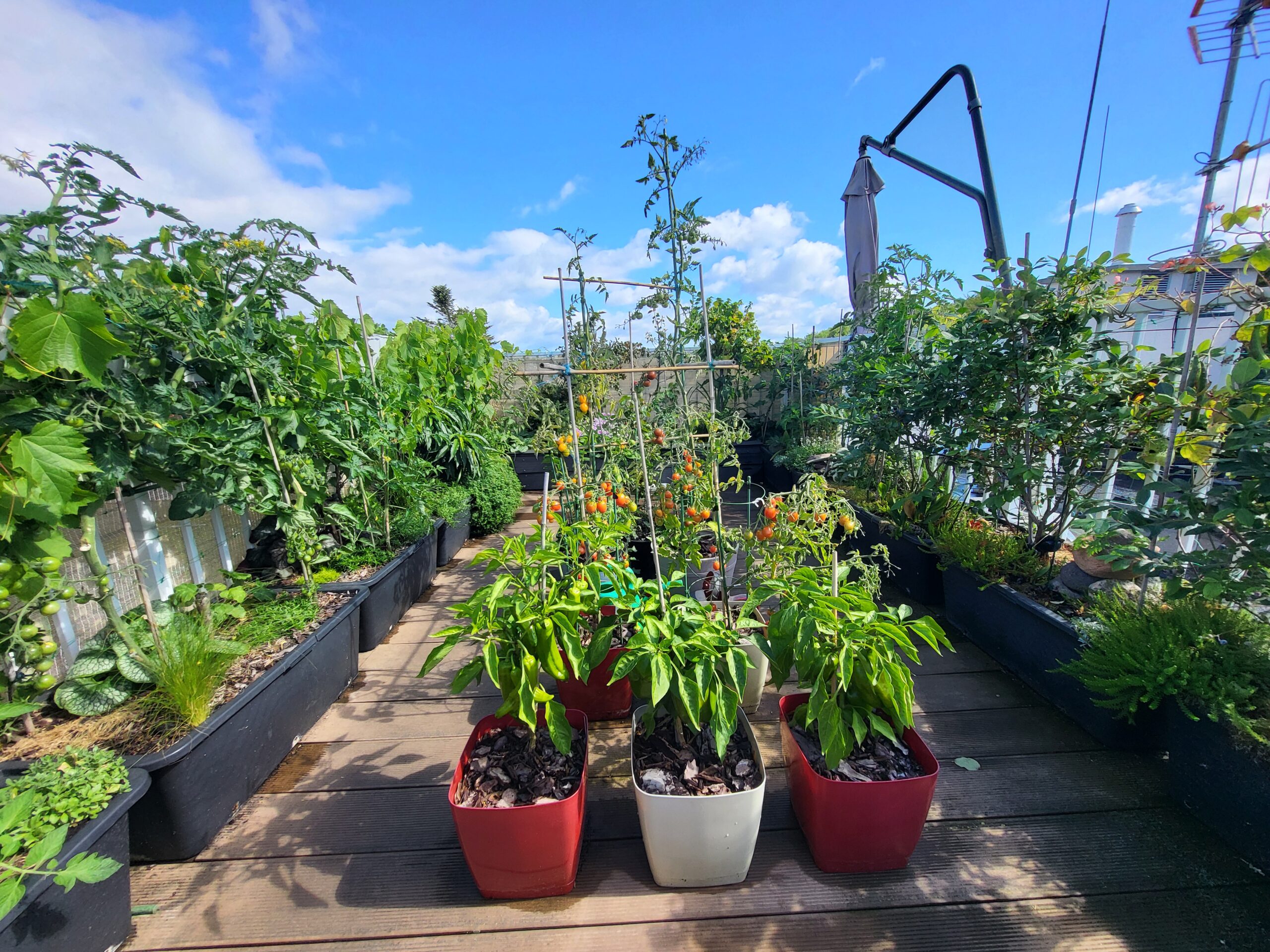
My own rooftop garden is a good example.
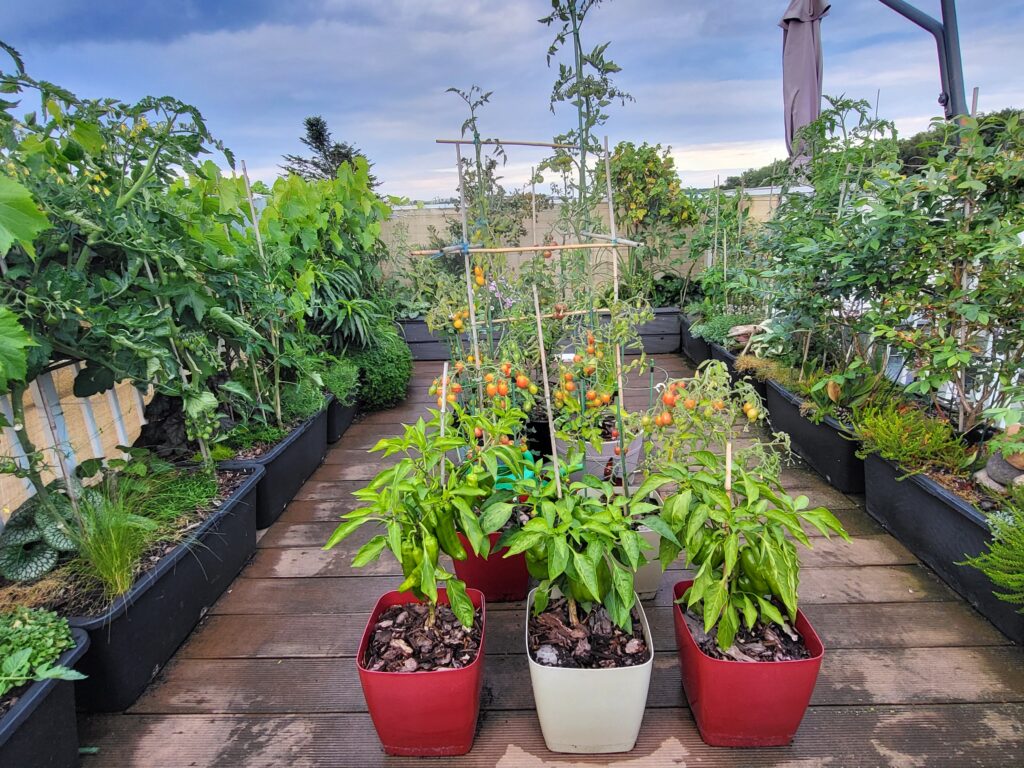
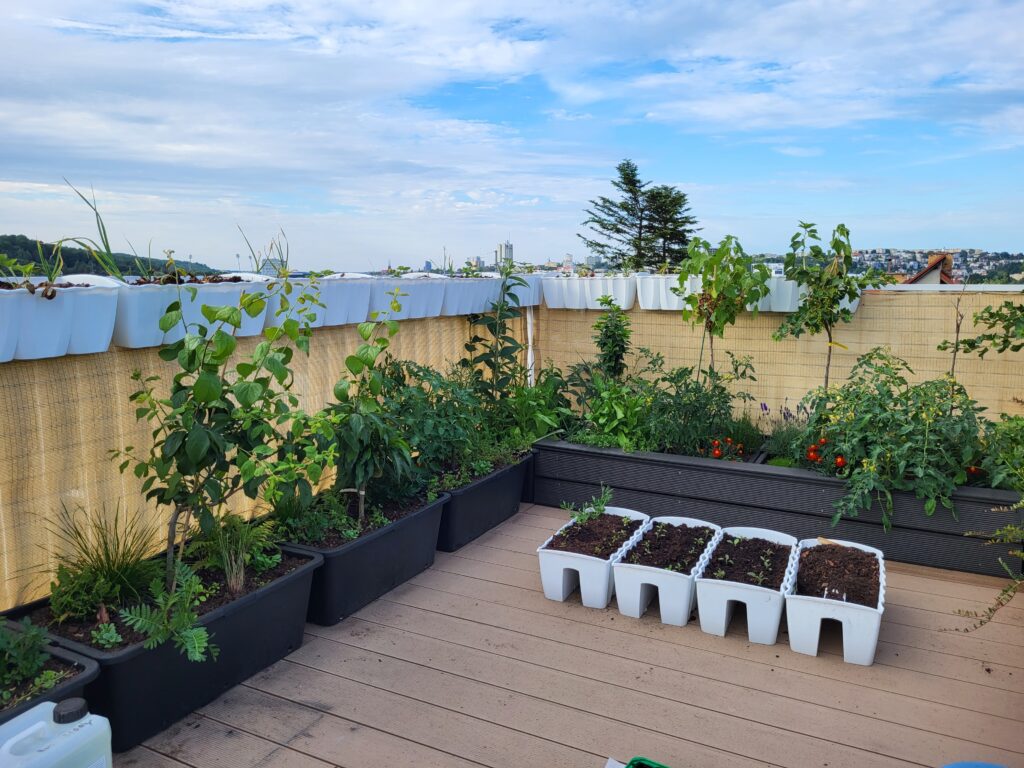
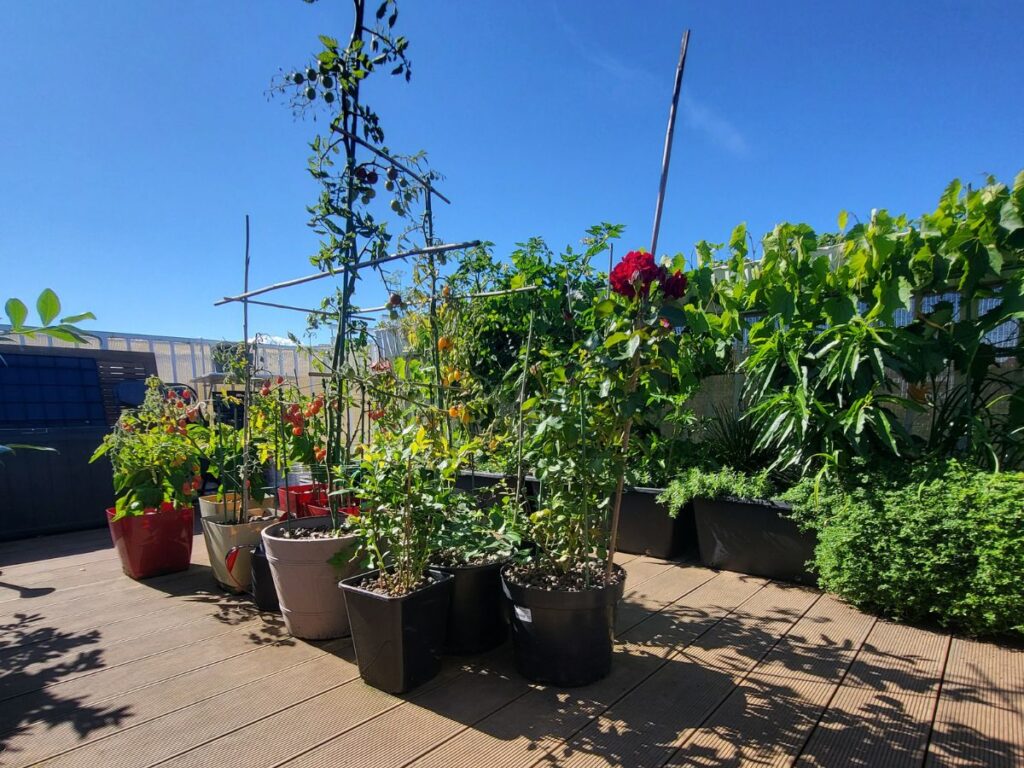
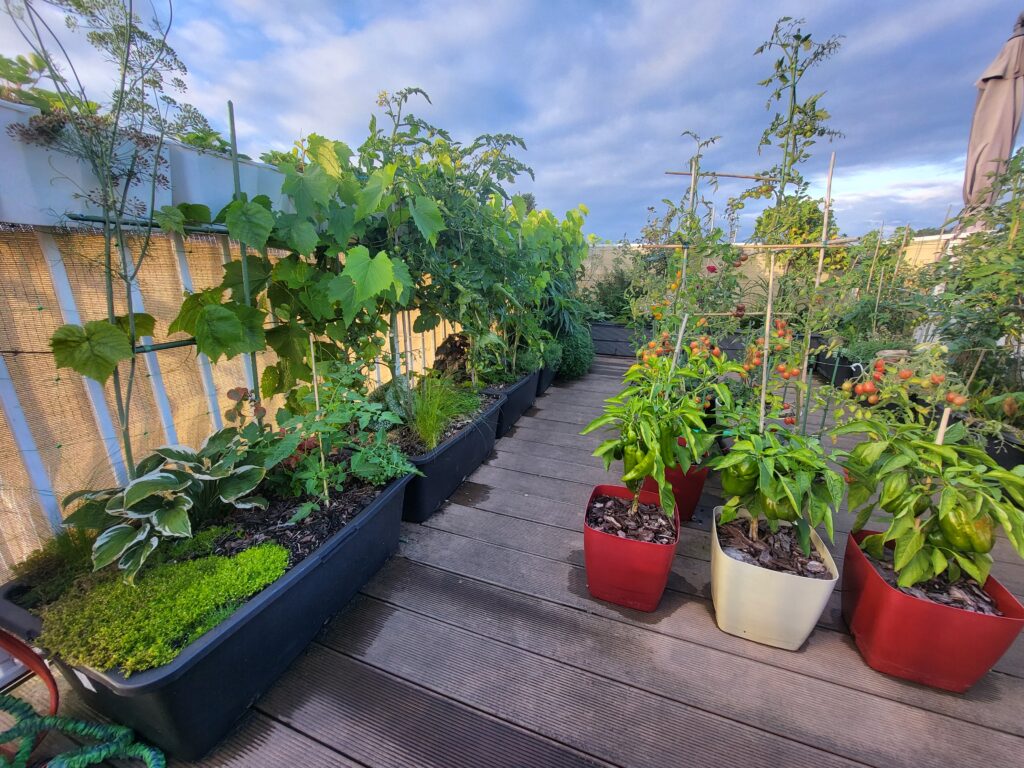
On a sunny day, some containers receive hours of strong direct sunlight. At the same time, other parts of the garden are in partial shade. As the sun moves across the sky, these conditions change again.
That is not a problem.
In fact, once you understand how sunlight moves through your space, those differences can become an advantage.
1. Do Not Judge Your Balcony by One Moment
Walk onto your balcony at noon on a sunny day and it may look like a very sunny place.
Come back a few hours later and the situation can be completely different.
Buildings cast shadows. Railings block part of the light. Walls create shaded areas. On a rooftop, taller plants can eventually shade smaller containers.
This is why I would never choose plants after looking at a balcony only once.
Observe your space.
Look at it in the morning, around midday, and later in the afternoon.
Do this on several clear days if possible.
You are trying to discover how your balcony actually behaves — not how sunny you think it is.
2. What Does “Full Sun” Really Mean?
When plant labels say full sun, they generally mean that the plant needs several hours of direct sunlight each day.
For a beginner, there is no need to stand outside with a stopwatch.
The important distinction is between a place receiving substantial direct sunlight and one that remains shaded for most of the day.
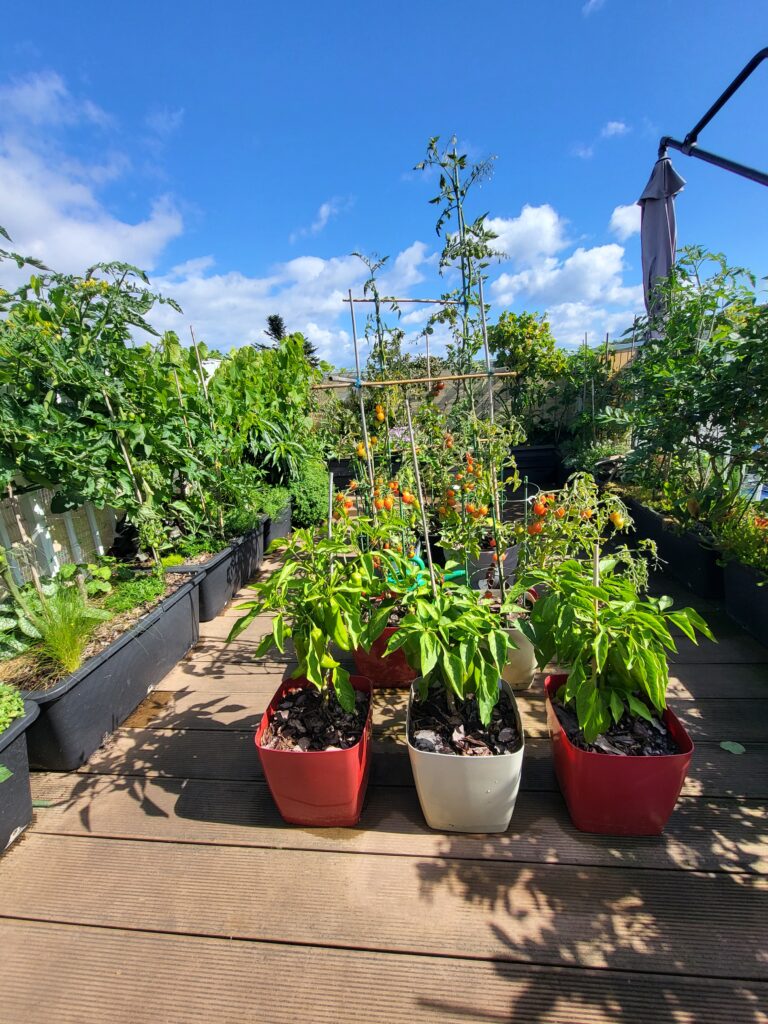
Tomatoes and peppers are good examples of plants that appreciate sunny conditions.
On my rooftop, I place sun-loving productive plants where they can receive plenty of direct light.
But there is another factor to remember.
A sunny rooftop or balcony can become hot.
Containers heat up more quickly than garden soil, and they can also dry out much faster. Add wind, and a plant in a container may need very different care from the same plant growing in the ground.
Sunlight is therefore only part of the equation.
3. Fruiting Plants Usually Appreciate the Sun
Many of the plants we grow for their fruit perform best when they receive good light.
Tomatoes are the most obvious example in my garden.
During summer, the plants receive strong sunlight and produce fruit at different stages of ripening.
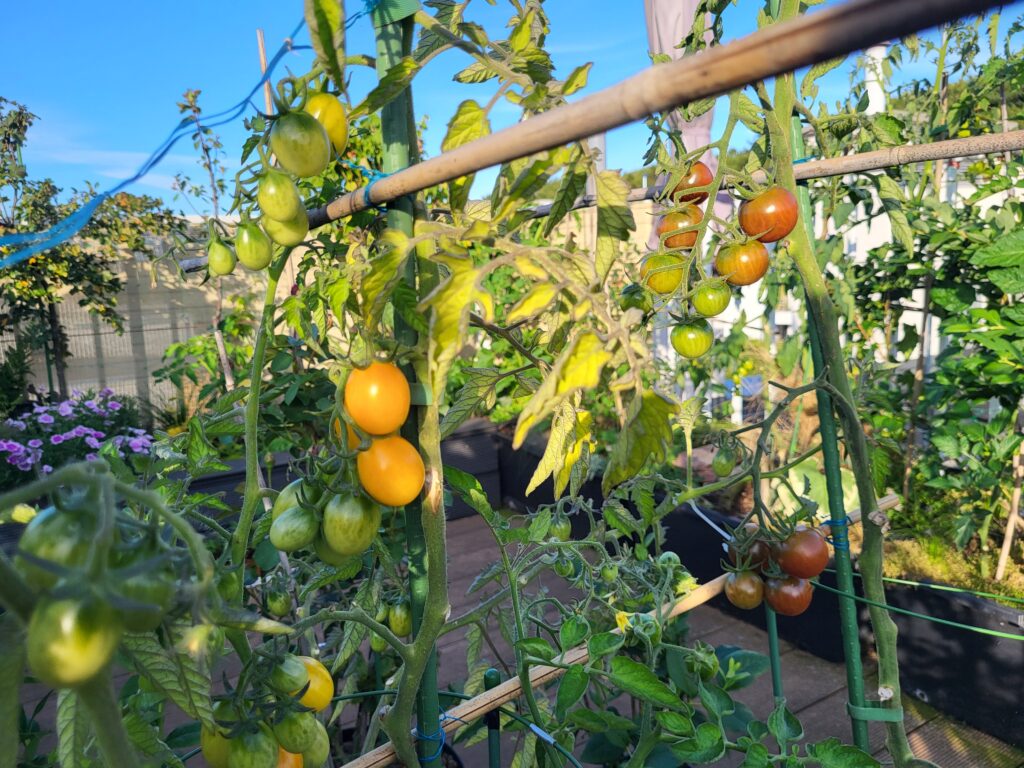
I also grow peppers, berries, grapes, and other edible plants in containers.
The lesson is not that every fruiting plant requires exactly the same conditions.
It is that you should give the sunniest positions to plants that can make good use of them.
On a small balcony, the best sunny spot is valuable real estate.
Use it wisely.
4. Partial Shade Is Not Wasted Space
Beginners sometimes look at a shaded part of a balcony and think:
Nothing will grow there.
That is usually not true.
Partial shade simply means you need to choose different plants.
Some plants do not need — or even want — strong sunlight from morning until evening.
That gives you an opportunity to use several different microclimates within the same small garden.
A container can receive morning sun and afternoon shade.
Another may be shaded in the morning but receive direct sunlight later in the day.
A third may receive filtered light through surrounding plants.
These are different growing conditions, even if the containers stand only a few feet apart.
5. Plants Can Create Shade for Other Plants
This is something that becomes much more obvious as the season progresses.
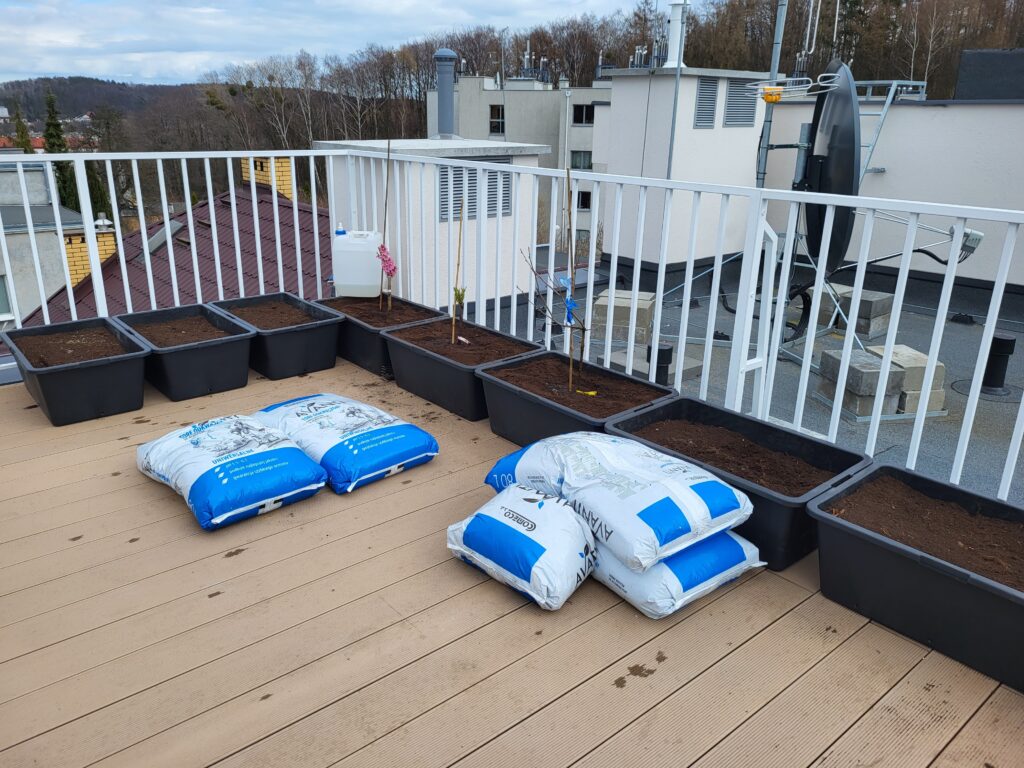
Your balcony in April is not the same balcony in July.
Small plants grow.
Tomatoes become tall. Grapevines develop large leaves. Shrubs fill out. Climbing plants begin covering supports.
As a result, the garden starts creating its own shade.
I see this every season on my rooftop.
An area that was exposed to direct sunlight in spring may become partially shaded later because nearby plants have grown.
This means that planning a container garden is not a one-time job.
Watch how the garden changes.
6. Sun and Partial Shade Can Exist Side by Side
One of the advantages of growing many different plants is that you begin to see how differently they use the available space.
Vegetables, fruit plants, herbs, and ornamental plants do not all need identical conditions.
That is useful.
It allows a relatively small rooftop or balcony to support much more variety than you might expect.
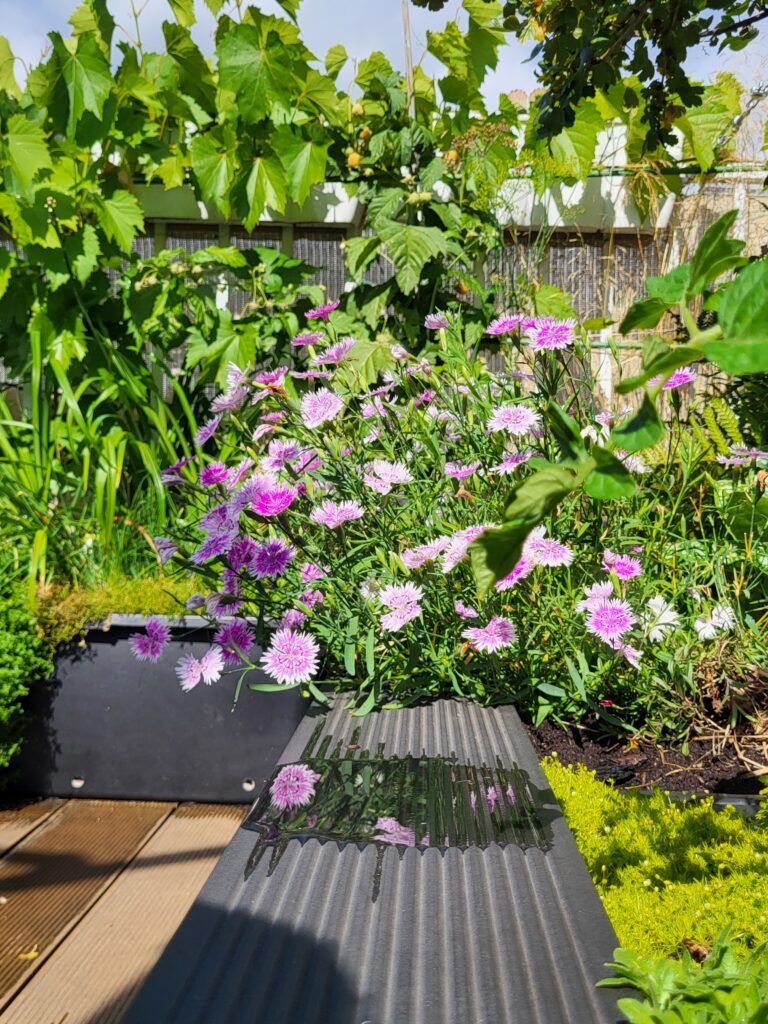
In my garden, edible and ornamental plants grow side by side.
I do not separate the rooftop into a “vegetable garden” and a “flower garden.”
They are all part of the same garden.
A productive garden can also be a beautiful garden.
7. Shade Can Be an Opportunity
The more shaded parts of a balcony do not have to remain empty.
This is where ornamental plants can become especially useful.
Hostas, for example, are valued primarily for their foliage and can work very well in places that are not exposed to strong direct sun all day.
Brunnera is another plant that can add attractive foliage to a more shaded container arrangement.
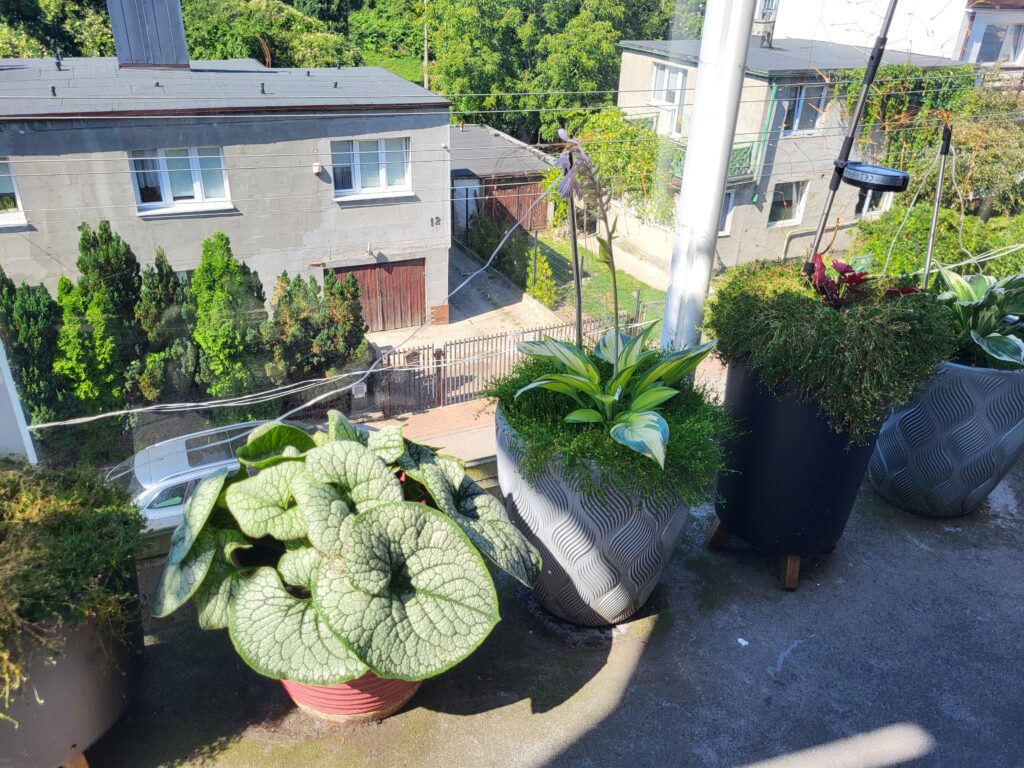
This is one of the reasons I recommend looking at your balcony as a collection of different growing areas rather than one uniform space.
Do not ask only:
“Is my balcony sunny?”
Ask:
“Which parts are sunny, which receive partial shade, and which stay shaded?”
That is a much more useful question.
8. Watch the Sun Before Buying Plants
A common beginner mistake is to do things in the opposite order.
You visit a garden center.
You see a beautiful plant.
You buy it.
Then you return home and try to find somewhere to put it.
I prefer the reverse approach.
First understand your space.
Then choose plants.
Spend a few days observing the sun.
Notice where direct sunlight first appears in the morning.
See which areas are sunny around midday.
Check where the shadows fall in the afternoon.
Only then start deciding what should grow where.
This simple habit can prevent a surprising number of problems.
9. Remember That Sunlight Changes Through the Year
The position of the sun changes with the seasons.
A place that receives plenty of sunlight during one part of the year may receive considerably less during another.
Neighboring trees can also change the situation. A deciduous tree may allow plenty of light through in early spring and create significant shade after its leaves appear.
The same applies to your own garden.
As climbing plants, tomatoes, shrubs, and other plants develop, the pattern of light changes.
That is why observation is more useful than rigid rules.
Your garden will tell you a lot if you pay attention to it.
10. Match the Plant to the Place
This is the principle I would remember above all others:
Do not try to force the balcony to suit the plant. Choose plants that suit the balcony.
Use your sunniest locations for plants that benefit from strong direct light.
Use partially shaded locations for plants that can thrive with less.
Use more protected and shaded areas for suitable foliage and ornamental plants.
And remember that conditions on a balcony or rooftop are influenced by more than sunlight.
Wind, container size, watering, temperature, and local climate all matter.
The goal is not to create identical conditions everywhere.
The goal is to understand the conditions you already have.
Your Balcony Does Not Need to Be Sunny Everywhere
A good balcony garden can contain sunny areas, partially shaded areas, and shaded corners.
That variety is not a defect.
It gives you more options.
My own rooftop garden contains vegetables, fruits, herbs, flowers, shrubs, and other ornamental plants growing within the same relatively small space.
Some enjoy strong sunshine.
Others grow where direct sunlight reaches them for only part of the day.
The important thing is matching each plant to the right place.
Before buying your next plant, spend some time watching the light.
Morning.
Midday.
Afternoon.
You may discover that your balcony contains several different gardens in one.
Want the Complete Step-by-Step Guide?
Balcony & Rooftop Gardening for Beginners
A Practical Guide to Containers, Soil, Watering, and Starting Your First Garden
The book goes deeper into planning your space, choosing containers, preparing soil, watering correctly, dealing with rooftop conditions, setting up different types of small-space gardens, and caring for your plants during their crucial first weeks.
Digital edition · PDF + EPUB · Instant download · $14.99
Interested in reading future Garden Above the City books early?
Join the Reader Team for occasional opportunities to read selected books and resources before or around publication.